
Abstract:
As one of the three top consumer technology exhibitions in the world, IFA has never lacked innovation. In 1930, radio was still an emerging breakthrough technology that had not yet reached the masses. At that time, IFA invited Einstein, the most prestigious scientist in the world at the time, to be the opening keynote speaker. His first words were: ("Dear everyone here and everyone not here!"). This sentence was transmitted to hundreds of thousands of listeners in real time via radio waves. For the first time, they intuitively felt the shock of "the future is here".
In that live speech, Einstein reminded people to maintain awe and insight into technology. "Those who enjoy the wonders of technology without ever thinking about the knowledge behind them should be ashamed - like a cow enjoying plants but knowing nothing about botany," he said. This passage has established the temperament of IFA in the past century: it not only shows the evolution of technology, but also records how technology reshapes the public's lifestyle and social form.
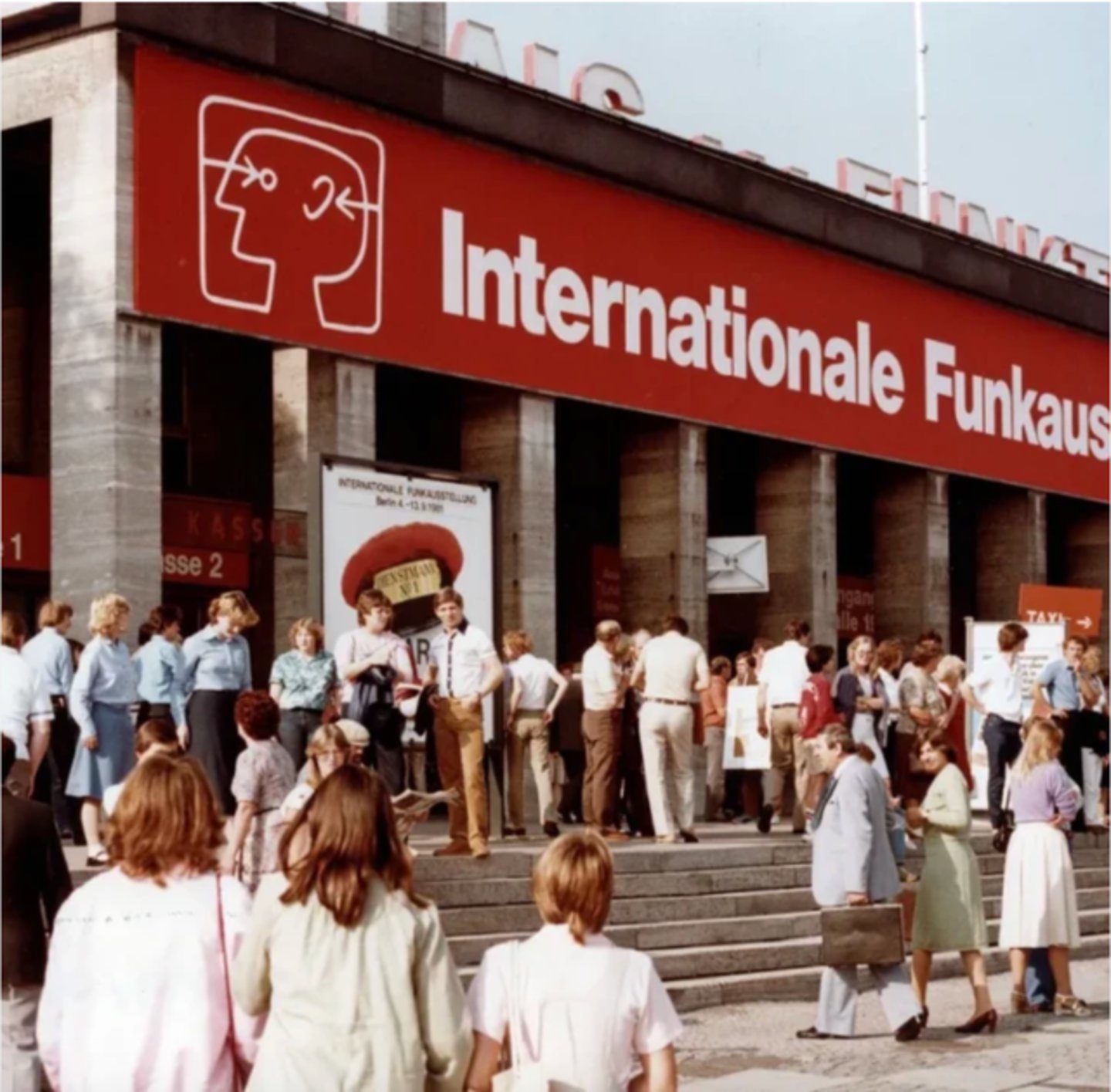
In the following hundred years, many world-class innovative technologies made their debut at IFA. In 1931, the world's first public demonstration of all-electronic television transmission; in 1963, Philips released the world's first cassette tape at IFA; in 1981, the CD made its world debut at IFA...
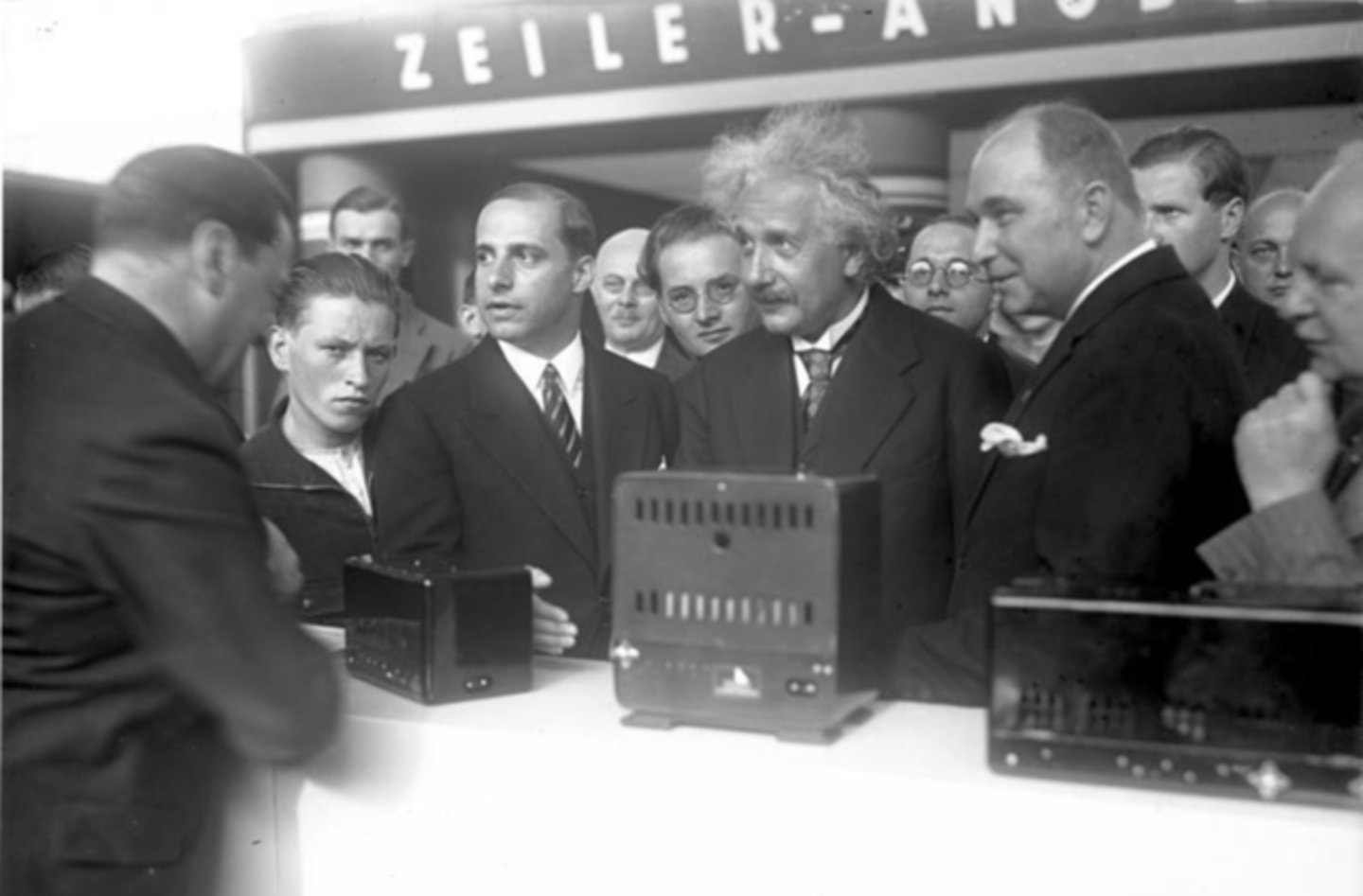
Einstein attending IFA in 1930
The 102nd IFA arrived as scheduled, and Xiaguang News Agency went to Berlin, Germany for on-site reporting. The theme of this year is “The Future Is Now”. When explaining the theme, IFA official CEO Leif Lindner pointed out that this slogan represents a change in the way of thinking, that is, the technology that was just out of reach and only stayed in the presentation PPT a few years ago has now truly integrated into and changed people’s daily life.
This also seems to show the attitude of the Germans towards dreaming about the future. Don’t let me dream about tomorrow forever. What functions the product can use now is more important. The perfect collision of "rigorous and pragmatic" and "future innovation" can be found at the exhibition site.
Some exhibitors feel that it is more lively because Chinese companies are paying more attention to IFA. This is the year with the largest number of Chinese companies participating.
According to official statistics of the IFA exhibition, among the approximately 1,900 global exhibitors this year, the number of Chinese companies has reached 932, accounting for approximately 49%. Compared with the scale of about 700 Chinese exhibitors in 2025 (accounting for about one-third), the number of Chinese companies participating in the exhibition in 2026 has increased significantly by about 35%. However, since the official statistics actually come from the countries marked by the brand entities, the number of Chinese companies perceived by Xiaguang Society is actually higher.From this perspective, it may be simply understood that the European market wants to showcase the world's most practical innovative products, and half of them come from China. For this reason, some Chinese who have lived in Berlin for a long time told Xiaguang News, "After entering the venue, the concentration of Chinese exhibitors was very high, and I felt like I was returning to my hometown." Some exhibitors also said, "I met countless old friends from China in Berlin, and we always meet each other at domestic exhibitions."
Some exhibitors also felt a little deserted. This is not surprising. Judging from the flow of people, IFA expects to welcome 220,000 visitors during the exhibition. This number is not surprising, because as early as 2015, the IFA exhibition attracted 245,000 visitors and 1,645 exhibitors.
In addition, compared to some exhibitions that are more inclined to show off skills and showcase technological advancement, IFA seems a bit boring.
As one of the countries with the highest propensity to save in Europe (German residents’ savings rate has remained above 10%-11% for a long time), Germans rarely pay for pure showoff and place great emphasis on the durability, functionality and after-sales guarantee of products.
Therefore, most manufacturers will display two products. One is already on sale, with basic information such as technical parameter cards, prices, application scenarios, etc. Buyers will usually compare a few units, try them out, and then calculate the cost performance; the other is product prototypes that are still not on sale but are planned to be launched. If customers are interested in booking in advance, they can get a good discount price.
The technologies on display at the exhibition are no longer visionary research for the next few years, but real technologies that consumers can place orders for today and use in their living rooms and lives in the near future. Some exhibitors told Xiaguang News that pragmatism is the real source of business operation and sales. Spending a lot of money to show off your skills may only get results that are glamorous on the surface but zero sales in reality.
What is even more noteworthy is that IFA CEO Leif Lindner said that most visitors to this IFA are under the age of 35.
Therefore, this will be a platform for "the next generation of people to meet the next generation of technology"
. "We need to understand what these technologies mean to us, because 'trust' cannot be downloaded. Trust is built on practice and trial, and this is what the Berlin exhibition will present."Innovation is perhaps the most unique charm of IFA for exhibitors.
Who is new?
This is
Xiaomi’s first official participation in IFA.
The exhibition hall of more than 3,000 square meters covers Xiaomi's entire business lines of people, cars and homes, covering more than 380 products. According to Xiaomi staff, in the eyes of European consumers, consumers still understand Xiaomi as a mobile phone company, but this time it brings a full ecological product line to show that Xiaomi products are no longer just cars.
Lu Weibing, partner and president of Xiaomi Group, said in an on-site interview, "IFA is an exhibition for consumer electronics and home appliances. This is also closely related to the rapid development of our IoT business and major appliance business in the past few years. Our coming to IFA is also a milestone, because a very important thing next year is that our cars will also come here. This is our overall rhythm arrangement."
In his view, Xiaomi’s arrival at IFA is also an external display of China’s technology, ecology and business model at IFA. Among the products displayed this time, Xiaomi's first flagship mid-folding mobile phone Mi 18 Fold made its world debut, and Xiaomi's humanoid robot was also exhibited overseas for the first time.
In terms of home appliances, Xiaomi’s Mijia smart home brand officially announced its large-scale entry into Europe at IFA. In the "AI Today" exhibition area, Xiaomi brought AI capabilities into living spaces such as kitchens, living rooms, bedrooms, and study rooms, demonstrating to local consumers the experience of AI synergizing with smart homes, smart homes, and personal devices;
At the end of September last year, Xiaomi also officially opened its first official retail store in Germany at the Linbeck Plaza shopping mall in Essen, Germany, covering an area of 99 square meters, displaying products such as smartphones, TVs, vacuum cleaners, mopping robots, kitchen appliances, and electric scooters.
Compared with home appliances, Xiaomi’s automotive products entered Europe a year later. The Vision Gran Turismo concept car, SU7 Ultra and SU7 Max were displayed at the booth. Since March, SU7 and SU7 GT models have been tested in France, Poland and the Netherlands. It is reported that Xiaomi plans to launch commercial sales in Europe in 2027.
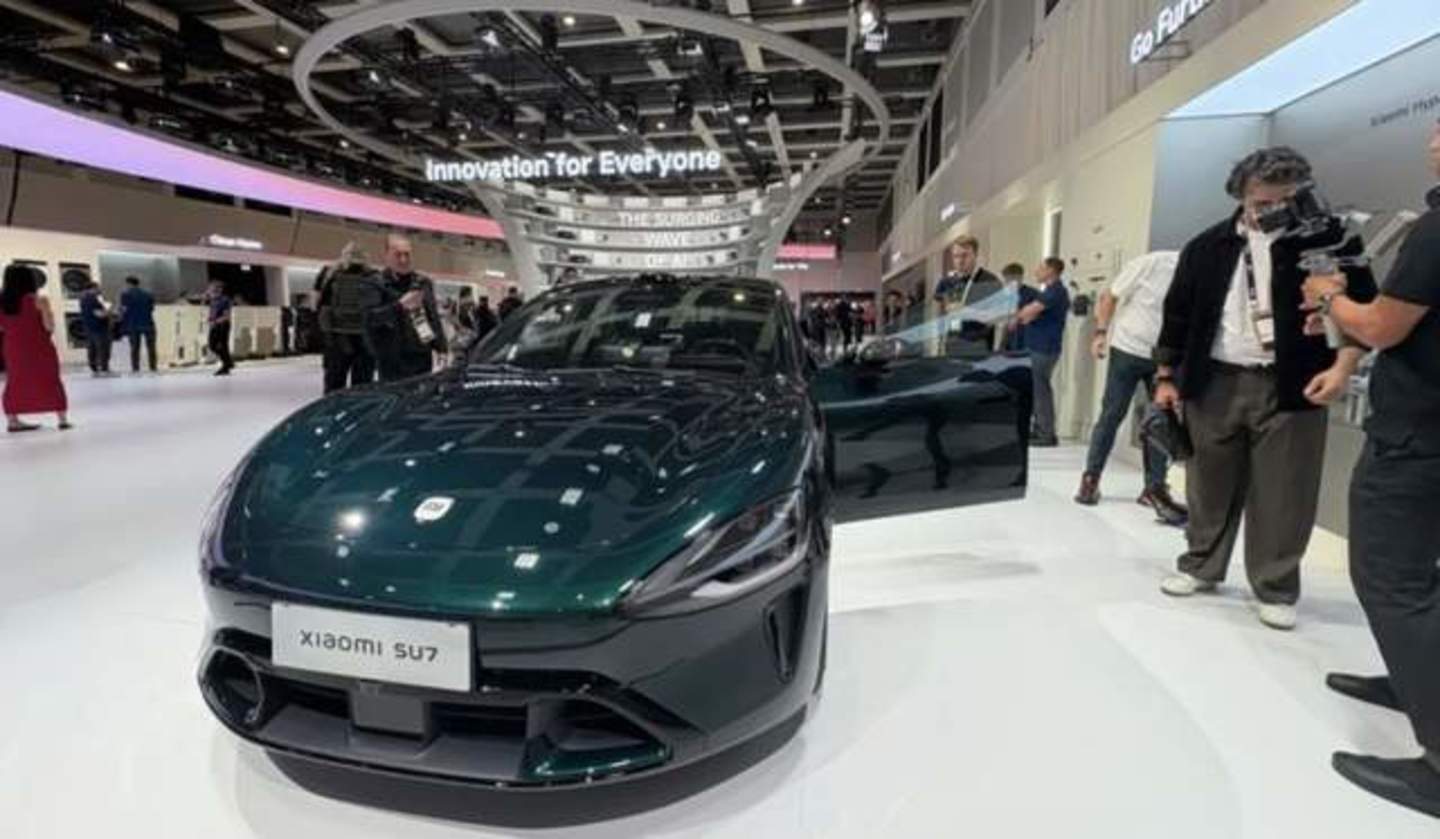
Xiaomi car showroom at IFA
IFA is a key step for Xiaomi Motors to enter the European market. The European automobile industry itself has strong local brands and the most difficult market. This is the key reason why companies choose Europe as the first stop for overseas expansion. According to data disclosed by Xiaomi, IFA has signed contracts with 8 leading German dealers this year to prepare for the entry of cars into Europe in 2027.
In addition to mobile phones, home appliances, and cars, Xiaomi has also brought the three Xuanjie chips O3, O100, and D100 that were just released in China not long ago to European users. In the future, these three chips will become the computing power base of Xiaomi's "full ecology of people, cars, and homes."
Another interesting new product comes from the AI diet management brand ODYSS. At IFA, it showed for the first time the upcoming AI diet management necklace ODYSS N1.
Wearable devices have been quite mature in sleep and exercise tracking, but diet management has always been the missing piece in the personal health management puzzle. The emergence of ODYSS N1 breaks this deadlock.ODYSS N1 collects eating data in real time to complete the user's health panorama. It generates three dietary scores: nutritional quality, energy supply and eating pattern; and analyzes the specific impact of each meal on body energy, fatigue recovery and sleep quality. It works quietly in the background, becoming a nutritional companion that seamlessly integrates into the user's daily life.
Xiaguangshe experienced it on site and tried to put it on, and you will find that the advantage of the necklace is that it is light enough. The weight of a few dozen grams is enough to achieve all-weather wear without feeling. After being equipped with a low-power visual perception camera module, it solves the pain point of traditional wearable devices that cannot accurately capture "dietary data".
In addition, in Europe, which pays particular attention to privacy and security, ODYSS also specifically pointed out its emphasis on privacy protection. A dedicated physical switch can turn on or off all sensing functions with one click; the "sleep mode" will automatically reduce the operating intensity when the user is not eating. At the software level, ODYSS only processes food-related information, automatically filters irrelevant content, and blurs faces and personal features in the image. The original image will be deleted after the processing is completed. The comprehensive protection mechanism allows users to wear it with peace of mind without worrying about privacy leakage.
Odyss also won the 2026 IFA Innovation Award this time.
Hypershell, the leading company in the field of consumer exoskeletons, has also moved its new product release venue to IFA. The core breakthrough of its new generation flagship product, Halo, is to increase the dimension of assistance from the local area to the entire lower limb.
Through 4 coordinated control assist motors integrated on the left and right sides of the hip joint and knee joint. Halo has achieved true full-leg power coverage for the first time, and it is also the world’s first super-flagship full lower-limb exoskeleton.Compared with the mechanical logic of previous generation products or traditional exoskeletons that only provide a single point of assistance at the moment of "raising the leg", Halo attempts to reconstruct the power compensation of the entire movement cycle. From leg lifting, landing, going downhill to squatting, its control system can perform dynamic millisecond-level switching based on the real-time posture of the human body. Whether it is lifting when going up a steep slope or cushioning the impact when landing on a downhill slope, power following can achieve seamless connection.
In order to lower the physical threshold and cognitive barriers of this type of hard-core equipment, Jike has also equipped Halo with a "large model brain": the first AI Agent "Shelly" in the exoskeleton industry is built-in. Users do not need to tediously switch between complex physical buttons or APP parameters. They can complete assist mode settings, route planning and real-time exercise guidance through natural language dialogue. Even when wearing it for the first time, Shelly can provide step-by-step interactive guidance, minimizing the cost of getting started for zero-experience users.
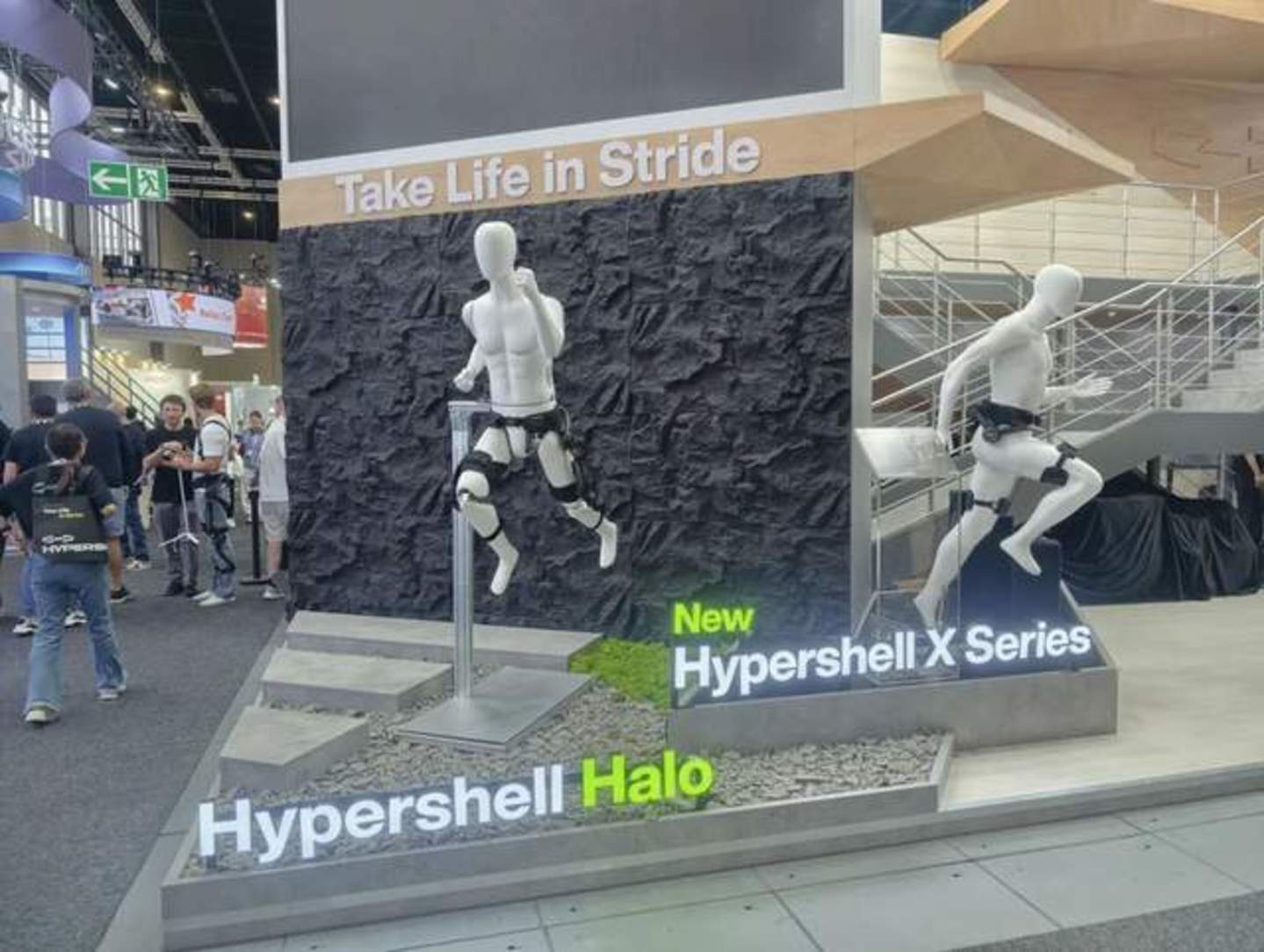
Hypershell Exhibition Hall
Previously, Hypershell X, the first generation product of Hypershell, has delivered a total of 30,000 units worldwide in 2025.
At IFA, compared to the popularity of wearable devices in the Chinese market, this is the weakest category at the exhibition. Garmin, Apple, Fitbit, Huawei, Oura and Polar did not appear on the exhibitor list. However, this also gave more attention to the brands present. RingConn on-site staff told Xiaguang News that this IFA is its official self-introduction to European consumers.
Who is hot?
At this year's exhibition,
Consumer-grade robots are the category with the strongest sense of commercialization urgency and the highest level of on-site crowding.
In the product display session, each company showed off the "stair-climbing" capabilities of its machines on site to demonstrate the performance of its products. Unlike other technology shows that prefer to show exquisite concept rendering videos, the IFA show has always been known for displaying hardware products with clear selling prices and shipping dates rather than just showing concept videos. This also makes it an excellent platform to evaluate whether robots will stay in the laboratory or whether they can truly enter the living room of the public.
It can be seen on site,
More cleaning robots are beginning to move towards multi-categories, rather than being limited to a single scene.
For example, Ecovacs also moved Chuangbao’s cleaning display to IFA, with real-life window cleaning all day long, allowing European consumers to intuitively see the real effect of the product. The latest data shows that Ecovacs window cleaning robot ranks first in the global market, with a domestic market share of more than 65%.
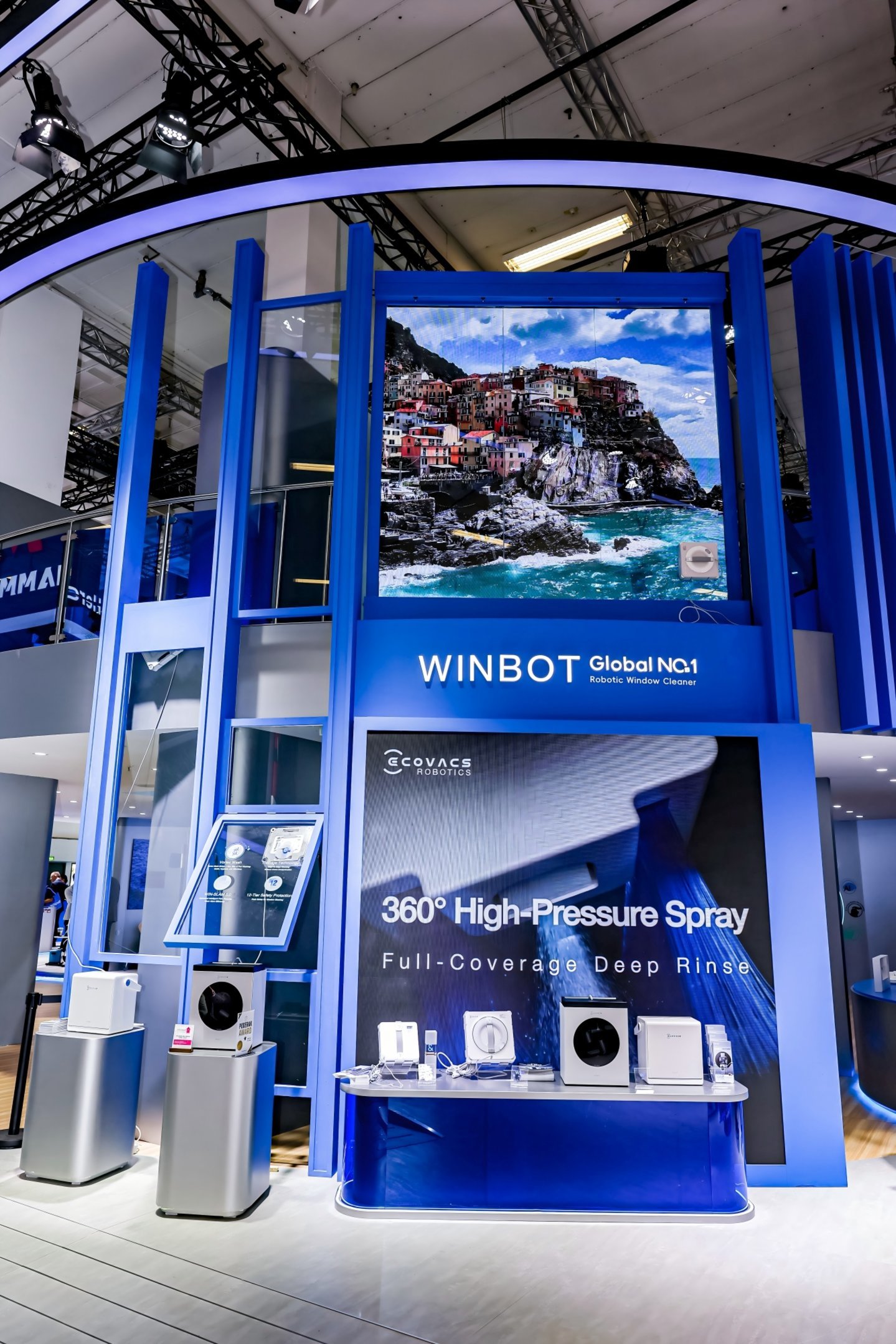
Covos booth
As for the courtyard scene, almost every Chinese cleaning robot company has artificially built small swimming pools and green lawns on their booths. The selling points of various product announcements have evolved into how many extreme slopes the lawn mowing robot can challenge, and whether it can overcome the difficult edge scene of "lawn trimming". The A4 AWD PRO lawn mowing robot released by Zhumi is mainly capable of coping with extreme terrains such as 42° steep slopes, and can achieve 0cm edge cutting. The S2 Max lawn mowing robot released by Anker's innovative sub-brand Eufy is directly equipped with a telescopic and rotating mechanical arm on the body, and is specially designed to deal with the problem of trimming complex garden boundaries.
At the other end of the exhibition hall, Chinese embodied intelligence companies, including Unitree, AgiBot/EngineAI, and Deep Robotics, also collectively brought their embodied humanoid robots to the scene.
According to on-site exhibitors,
The popularity of robots at IFA is also the result of the "diversion" of the market.
On July 28 this year, the U.S. Federal Communications Commission (FCC) added foreign-made advanced robotic equipment to its "Covered List." The list covers mobile devices that weigh more than 4.4 pounds (including base), have movement, navigation and obstacle avoidance capabilities, and can be operated remotely. Cleaning robots also fall into this category.
Existing inventory of products that have been certified before this date can continue to be sold; however, if you want to introduce new flagship models to the US market, you must apply for an exemption, and the application conditions include a commitment to transfer production lines to the United States.
As a result, as a grand event for overseas consumers, these companies turned their attention to Berlin. This has also changed the attention of relevant companies to IFA. In the past, IFA was regarded as a stop on the global exhibition tour; while the 2026 exhibition looks more like a "last choice" market, it has quietly transformed into a "first choice" market.
Who is rich?
IFA’s billboards filled the streets of Berlin. The moment it landed at Brandenburg Airport, the huge billboard at the baggage claim area was precisely targeted by Stone Technology; outside the terminal, in the public spaces on the streets, emerging hardware brands such as GreenLink, RuiLink and Govee were overwhelmingly posted. At the core viewport outside the main entrance of the Berlin Exhibition Center, what you encounter is the huge outdoor giant screen - "EMPOWER YOUR DREAM LIFE".
Outside the IFA venue, what is oncoming is Zhumi’s large advertisement. Zhuimi will participate in the upcoming IFA 2026 with the theme of "EMPOWER YOUR DREAM LIFE", focusing on displaying more than 100 products and multiple first-of-its-kind technologies covering more than 16 categories, covering multiple home scenarios such as smart cleaning, living environment appliances, personal care, window cleaning, and small kitchen appliances.
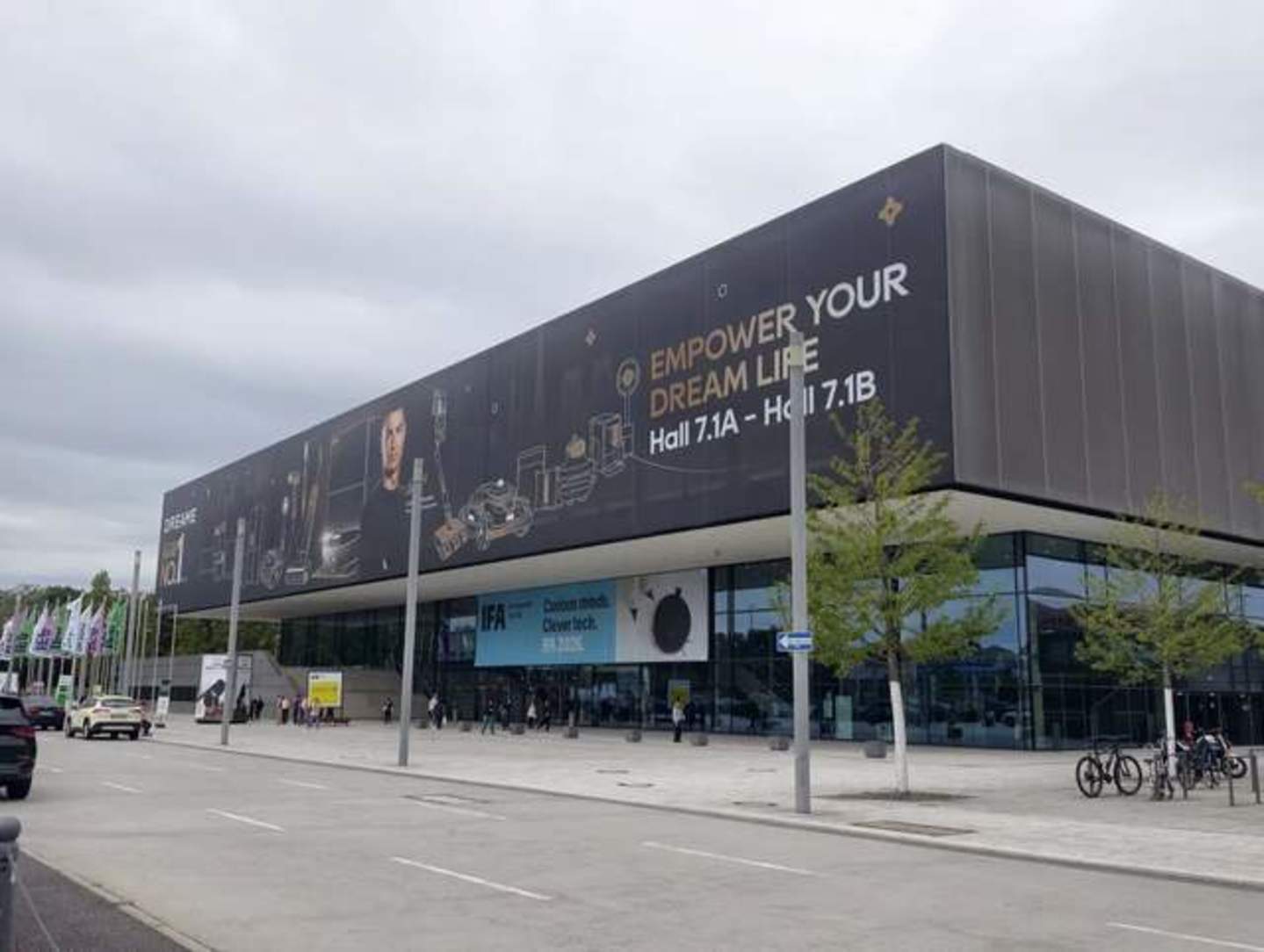
Chasing huge advertisements
Smart cleaning is still the focus of this IFA. Zhuimi sweeping robots will debut 180°C steam technology, which has recently been certified by Euromonitor International; floor washing machines will display products such as the T16 Pro Steam, T16 Pro Heat series, and three-mode floor washing robots, as well as a number of world-first technologies such as external expansion cleaning roller brush technology and automatic switching technology of dry and wet roller brushes; vacuum cleaners will display V40 and Z40 series products, which will continue to iterate around specific use links such as floor brush structure, hair treatment, and dry and wet cleaning.
If
up-and-coming hardware manufacturers rely on point-based breakthroughs and marketing blasts, then traditional home appliance giants rely on giant exhibition halls of thousands of square meters to support the IFA's appearance.
Major home appliance manufacturers are still in charge of IFA. Giants such as TCL, Hisense, Haier, Midea and Changhong have all come up with the narrative of "full scene AI", and the venues are often thousands of square meters.
TCL occupied Hall 21A, lined up the latest SQD-Mini LED eye protection display, NXTPAPER eye protection tablet, and RayNeo smart glasses, and launched the world's first upgraded version of the NXTHOME smart home platform; Hisense brought its own display products and smart life solutions, as well as the world's first 116-inch "Exquisite 4-core true color backlight RGB-Mini LED" TV UX2026 payment. Relying on 43,008 color control zones and 10,000 nits of true color brightness, Hisense attempts to unlock 120 million extreme colors on top of the 1.07 billion basic colors, using the ultimate hardware parameters to shock European buyers who are extremely picky about audio-visual experience.
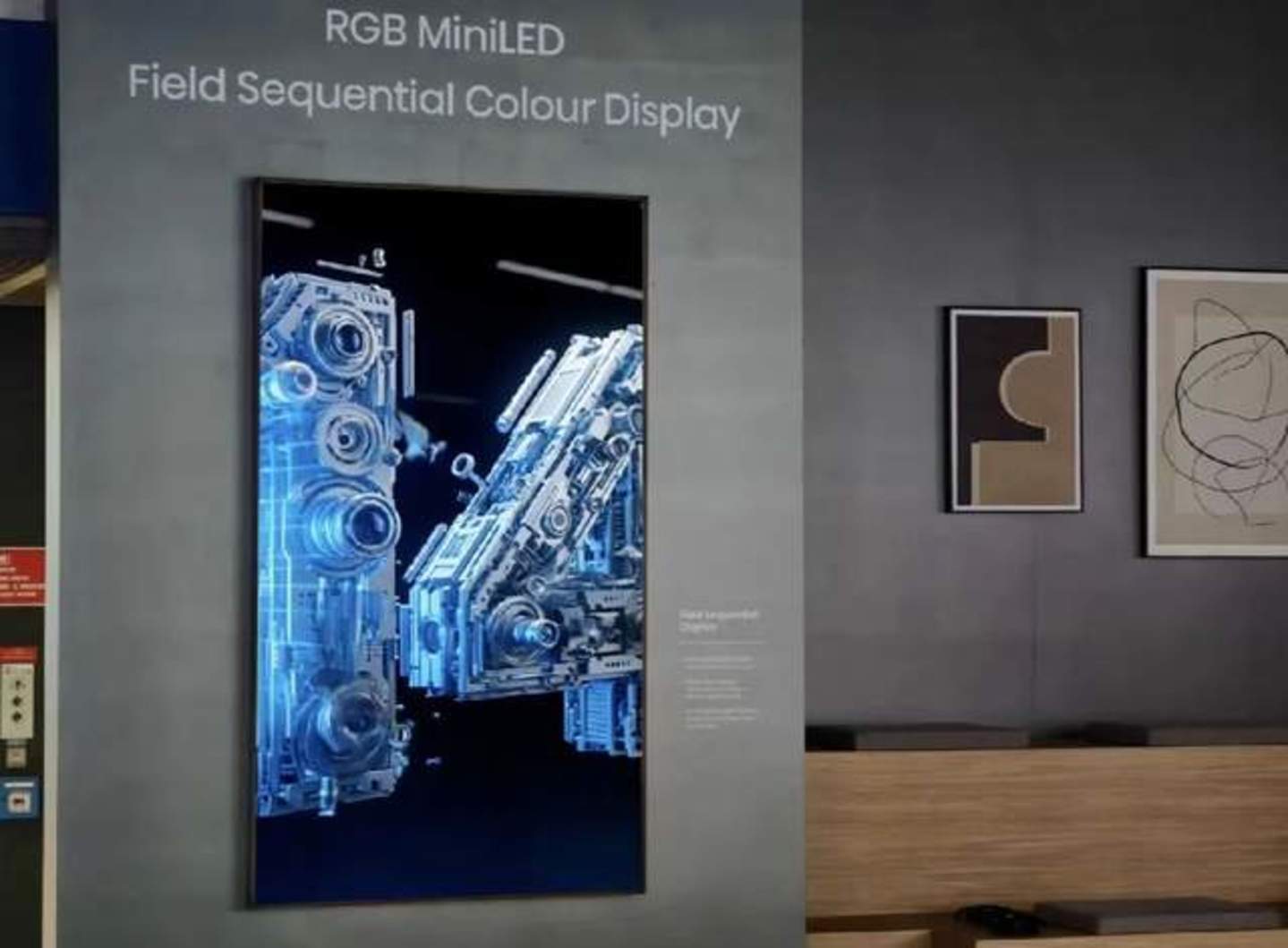
Hisense Exhibition Hall
Over the past decade, Europe's high-end consumer electronics and home appliances have been firmly guarded by the two Korean giants, Samsung and LG. Today, Chinese giants represented by TCL and Hisense may be seizing the needs of high-end European consumer groups with their more resilient supply chain depth, faster technology iteration rhythm, and more lethal cost structure.
What is changing?
Lenovo, Samsung and other consumer electronics giants did not directly participate in the exhibition, but held independent press conferences in Berlin during the same period. Lenovo exhibited the AI PC "Family Bucket", with roll-up and flip-down screens taking turns, and notebooks equipped with NVIDIA RTX Spark chips that can run hundreds of billions of parameter models locally. These new PCs once became a hot topic during IFA.
Samsung moved its position to Humboldt Carré in the center of Berlin two days before the official opening of the exhibition, and held an IFA product launch conference, closed-door meetings with European retailers, B2B negotiations and media briefings in one go. For the past twelve years, Samsung has been the absolute protagonist of the City Cube exhibition hall at the Berlin Messe Center, occupying a huge booth of 8,700 square meters. This is also the first time in 35 years since Samsung first participated in the exhibition in 1991 that it has moved its core exhibition area away from the Berlin Exhibition Center. In view of its huge commercial volume, IFA officials even had to make an exception to include this self-organized event in the city into the official schedule.
However, Samsung still retains its status as the main sponsor of the "Creators Center" at the Palais am Funkturm (Radio Tower Palace) in the main venue. This shift perfectly replicates its strategy for CES in 2026: At that time, Samsung chose to set up an exclusive display space at the Wynn Hotel instead of entering the Las Vegas Convention Center. Although this approach sacrificed the number of visitors, it gained more in-depth product demonstrations, better shooting effects, and stronger control over the visitor group.
But this does not mean that they are leaving IFA, but they tend to "do more with less money." With the popularity of IFA, big brands that are already well-known tend to hold side events, which can more directly and accurately cater to customers from afar.
However, saving money comes at a cost. It loses the unique "encounter" effect of a traditional exhibition site - on the way between exhibition halls to the conference venue, people often pass by the TV products of three competitors and the washing machine booth of another competitor. Moving the conference elsewhere in the city avoided such an unexpected encounter during the busiest press day of the week, ceding attention that might otherwise have gone to Samsung to LG, TCL and Hisense - all of which retained booths in the exhibition hall.
In fact, not only the participating companies, but also the organizers will also consider the "wallet" issue more.
For a long time, IFA's operating model has been the cooperation model of "gfu (German Consumer Electronics Association, which owns the IFA brand ownership) + Messe Berlin (Berlin Messe GmbH, responsible for specific actual operations and venue provision)".
Between 2020 and 2022, affected by the global COVID-19 epidemic, IFA has experienced several cancellations and reductions. Faced with the overall acceleration of CES in the United States and MWC in Spain, the organizer gfu hopes that IFA can quickly internationalize and commercialize, not only serving the European mainland, but also introducing more global start-ups and emerging technologies (such as AI, robots). As a semi-public venue, Messe Berlin’s traditional state-owned enterprise management thinking is difficult to meet its requirements.
Therefore, in order to fundamentally change the business vitality of IFA, gfu began to look for capital and operating partners in the global market, and finally chose UK-based Clarion Events (one of the world's largest independent exhibition organizers).
In November 2022, gfu and Clarion Events jointly established a new joint venture company-IFA Management GmbH. Clarion Events takes control of the joint venture (owning 51% of the equity) and officially takes over IFA's global investment promotion, marketing, digital operations and daily management; gfu maintains brand ownership and provides industrial resource support. The original operator, Messe Berlin, has completely transformed into a "venue service provider" and is no longer involved in IFA's core business strategy operations.
Starting from the 2023 exhibition, IFA Management GmbH (dominated by Clarion) officially operates all operations of IFA. After Clarion Events took over, it introduced the IFA Next innovation accelerator, greatly increased the proportion of AI and robotics tracks, comprehensively optimized global investment services for technology brands such as China, Japan and South Korea, and promoted the youthfulness and trendy branding of the exhibition.
Looking for emerging technologies, IFA will set its sights on Chinese companies seeking growth in overseas markets. This may be more of a market initiative.
However, after Clarion Events took over, the external environment was still not very friendly. The 2025 show has been plagued by factors such as trade disruptions, inflation and slowing global growth, but this time the show faces new challenges: the ongoing memory chip crisis that drives up the price of high-tech products, the conflict between the United States and Iran, and other long-standing external challenges.
The good thing is that there is still more growth to look forward to.
According to the "2025 Foreign Enterprise Investment in Germany Report" released by the German Federal Trade and Investment Agency (GTAI), against the backdrop of an overall 9.3% decline in global investment in Germany, China has surpassed the United States (206) for the first time since 2017 and has once again become Germany's largest source of foreign investment projects.
At the intersection of European geography and business territory, Germany has always played a role of great strategic tension.
From a geographical perspective, Germany, located in the heart of Europe, borders Belgium and the Netherlands to the west, and has transportation arteries throughout Europe. As the world's largest inland port, the Port of Duisburg forms the core hub for the overland connection of China-Europe freight trains. The neighboring port of Rotterdam in the Netherlands, with the throughput of Europe's largest port, assumes the front-end role of "import, customs clearance, and sorting" for countless Chinese freighters. The goods land in Rotterdam and are then poured to Germany through a high-density land transportation network, and then radiate to the entire European continent. As the single market with the most dense population, the strongest purchasing power and the most complete industrial base in Europe, Germany naturally constitutes an excellent place for the outward extension of China's supply chain.
This determines that when Chinese companies go overseas to Europe, they often regard Germany as the irreplaceable "first bridgehead."
On the one hand, it is an important town on the consumer side. Germany has a highly urbanized social structure, strong unit prices and highly mature retail infrastructure. Its spillover effect as the EU's logistics hub allows companies to make secondary penetration into neighboring countries at very low costs.
What is more critical is the feedback from the supply and technology sides. Germany’s accumulation in the fields of Industry 4.0, automotive electronics, smart home and precision manufacturing provides Chinese companies with another possibility besides simply “selling goods”. Whether it is a smart terminal and home appliance giant like Xiaomi, or a platform player building cross-border e-commerce and logistics infrastructure, settling in Germany means the opportunity to deeply integrate its ultimate operational efficiency with Europe's local high-precision manufacturing, industrial supply chain and technology ecology.
Germany also has abundant R&D resources. The engineering applied research of RWTH Aachen University, the comprehensive academic accumulation of the University of Cologne, and the top scientific research cluster of the Jülich Research Center are becoming the core soil for Chinese technology companies to anchor technical talents overseas and carry out industry-university-research cooperation and local joint research and development.
From 1930, when Einstein used radio waves on the podium to warn people to gain insight into the "nature of technology," to today, nearly a thousand Chinese companies occupy half of the exhibition with sweeping robots, AI chips, full lower limb exoskeletons and electric vehicles. IFA has always been like a sensitive sedimentation tank, recording the shift in global industrial focus and business efficiency.
Intense domestic competition and drastic changes in the global geopolitical environment have forced Chinese companies to step out of the comfort zone of "simply selling goods" in the past. Germany is by no means a low-threshold springboard that can be "easily passed by". In the next few years, this expedition will no longer be just about the size of the exhibition hall, the coverage of marketing billboards, or the hand-to-hand combat of cost-effective parameters; it will be a long-distance race about compliance governance, brand trust, and the deep integration of localization teams and supply chains.
In the autumn scenery of Berlin, the encounter between the next generation of technology and the next generation of consumers has been completed. The Chinese technology companies’ answer to globalization has just written the most critical breakthrough.
Comments