
Abstract:
Intel CEO Lip-Bu Tan recently revealed in a fireside chat hosted by the China-American Semiconductor Professionals Association (CASPA) on October 24 that the company is actively promoting advanced processes and customer cooperation strategies. He said that Intel will not only compete for CPU performance leadership, but also explore potential opportunities for cooperation with rival AMD.
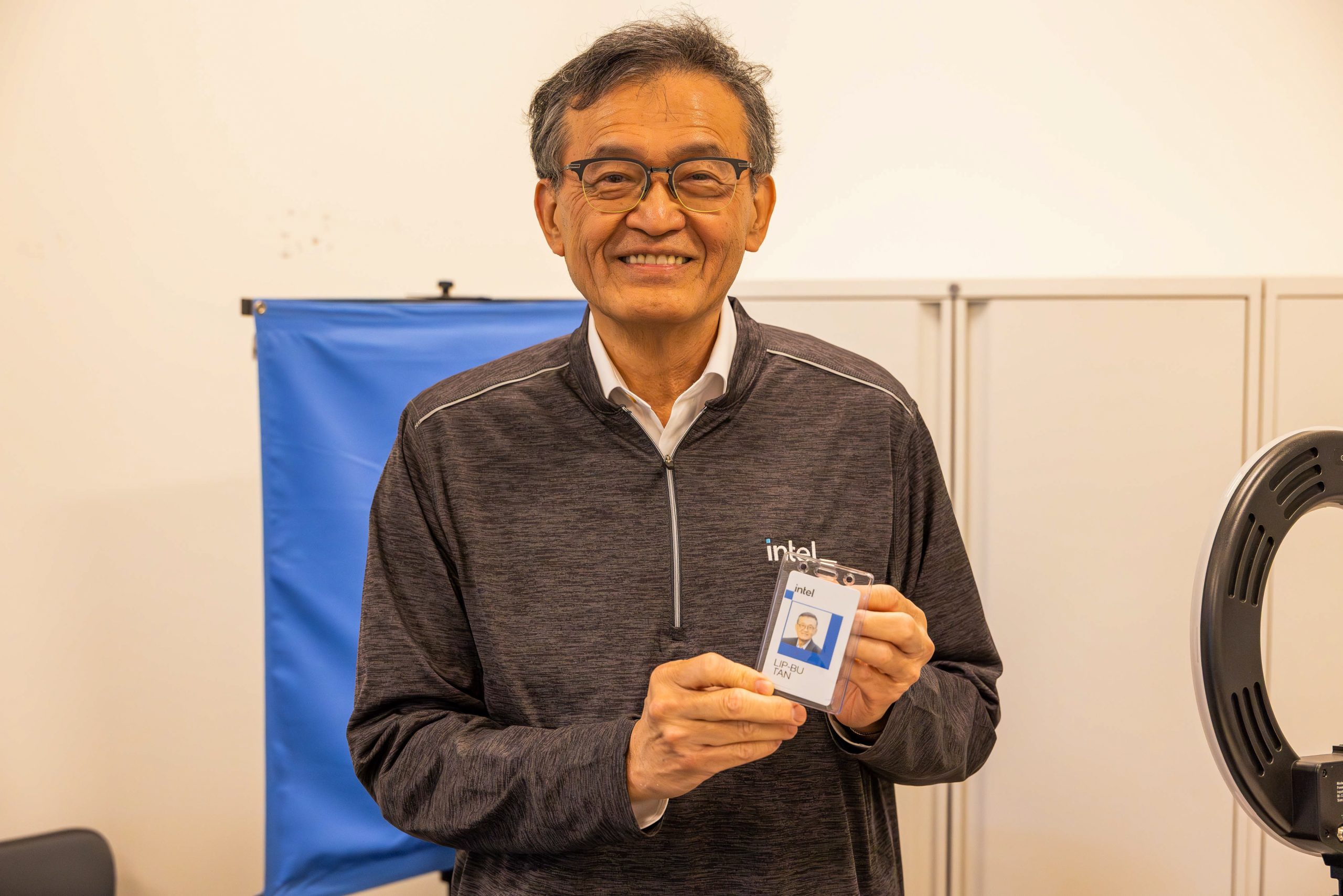
When Chen Liwu talked about Intel's foundry business at the event, he said that since he took office, the company has paid great attention to the two advanced processes of 18A and 14A. He revealed that the 18A process has entered the mass production stage, and the next-generation 14A process is progressing equally rapidly. Intel currently has version 0.5 PDK (Process Design Kit) for the 14A process, will release version 0.9 PDK soon, and plans to launch version 1.0 PDK early next year to support formal mass production.
Industry insiders pointed out that PDK is a set of design rules, models and technical documents provided by wafer foundries to chip design companies. Version 0.5 is usually in the early testing stage, while version 0.9 means that the process node has tape-out capabilities and can enter the risk trial production stage, which is an important milestone towards mass production.
During the conversation, Chen Liwu also revealed that he had communicated with AMD Chairman and CEO Lisa Su, and the two parties discussed possible areas of cooperation in the future. Although he did not disclose the specific direction of cooperation, this statement still attracted widespread attention in the industry. As long-term competitors, if Intel and AMD can cooperate in some business areas, it will undoubtedly become an important trend in the semiconductor industry.
Chen Liwu also shared a case of communicating with customers. He said that one customer had been waiting for 6 to 8 months, hoping that he would take over the position of Intel CEO. After the formal meeting between the two parties, the customer listed 15 problems that Intel had in the past. Chen Liwu said that in the past, the company's management sometimes even "preached" to customers instead of listening carefully to their needs. He then responded and solved these problems one by one, and finally won the trust of the customer, who decided to further deepen the cooperative relationship with Intel.
At the same time, a recent channel survey report released by investment bank KeyBanc shows that Intel has received multiple foundry orders, including the production of network switching chips for Broadcom and the production of server CPUs for Google. In addition, Microsoft server processors and Nvidia gaming GPUs are also said to be manufactured by Intel.
The report also mentioned that potential customers, including Amazon, Anthropic and SpaceX/Tesla Terafab, are still evaluating Intel's 18A-P and 14A process technologies, but most customers seem to be more inclined to choose the 14A process.
What is more topical is that KeyBanc believes that Apple has reached a long-term foundry agreement with Intel covering multiple generations of products, involving the production of M series and A series chips, and plans to use the 14A process instead of the 18A-P process that has been frequently rumored in the market. However, this statement has not been officially confirmed by Apple or Intel, and there are still different opinions in the industry.
In addition, KeyBanc also disclosed that the production yield of the substrates used in Intel's advanced packaging technology EMIB-T is currently about 50% to 60%. The main supplier Ibiden performs better, while the yield of another supplier UMTC remains at 20% to 30%.
As 18A enters mass production, 14A is about to be ready for tape-out, and more and more large technology companies are beginning to evaluate or adopt Intel's foundry services, Intel is trying to re-establish its competitive position in the advanced manufacturing field. Chen Liwu's public statement on exploring the possibility of cooperation with AMD has also added new imagination space to the future semiconductor industry pattern.
Comments