
Abstract:
The latest supply chain news shows that Intel partners are preparing to create a customized version with 512GB of video memory capacity based on the GPU D-series accelerator card. If the news is true, this will become one of the AI acceleration products with the highest memory capacity on the market and further strengthen Intel's layout in the field of artificial intelligence reasoning.
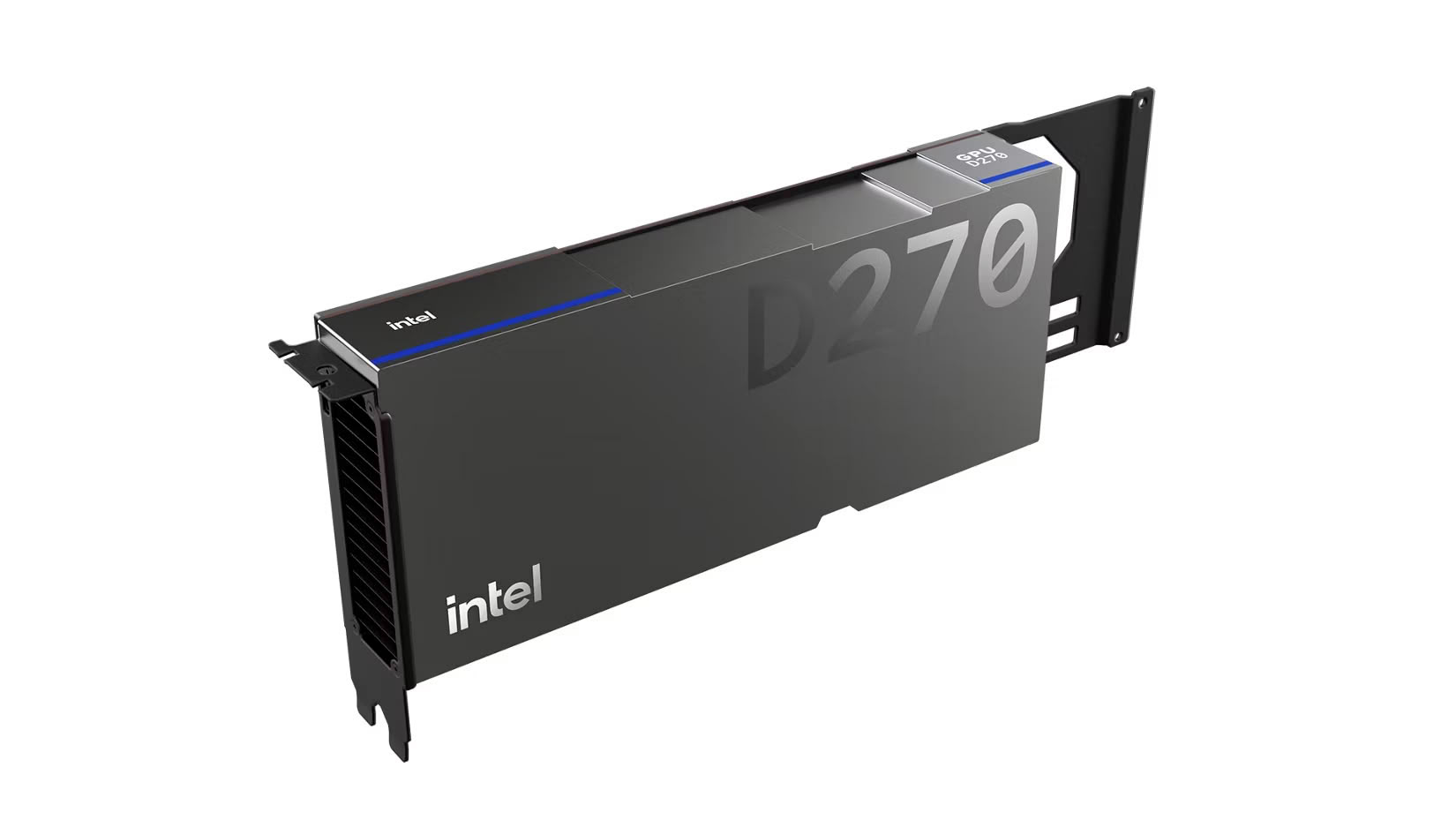
According to sources who broke the news, these products are not Intel’s official standard models, but are expanded and developed by partners based on the existing GPU D series platform. Its core selling point is to significantly increase the memory capacity to meet the growing memory needs of large language model inference, retrieval enhanced generation (RAG), and enterprise-level AI deployment.
In recent years, with the rapid development of generative artificial intelligence, the importance of video memory capacity has continued to increase. Although GPU computing performance is still a key indicator, for large model inference, whether the larger model can be fully loaded into the video memory is often more important. For many enterprise users, sufficient video memory capacity is even more practical than peak computing power.
The video memory capacity of most AI accelerator cards currently on the market ranges from tens of GB to more than 200 GB. If the rumored 512GB version eventually comes out, it will enable a single card to accommodate larger language models, reduce the need for cross-device communication, and improve inference efficiency.
Analysts believe that the main target of this type of product is not the training market, but the rapidly growing enterprise inference market. As more and more companies begin to deploy localized AI services, the ability to run large models on a single accelerator card has become an important selling point to attract customers.
At the same time, competition in the AI industry for large-capacity memory is continuing to escalate. Nvidia's latest generation of AI products continues to increase HBM capacity, and AMD is also promoting data center GPUs with higher memory specifications. If Intel launches the 512GB version of the product through its partners, it is expected to form a differentiated competitive advantage in terms of cost and capacity.
However, as of now, relevant news still comes from supply chain revelations, and Intel has not officially announced any 512GB GPU D series products. Therefore, the specific specifications, launch time and actual performance still need to be officially confirmed.
If this product is finally launched, it means that the focus of competition in the AI hardware market is gradually changing from simply competing for computing power to the comprehensive capability of "computing power plus memory capacity". In the future era of large model inference, having a data center accelerator card that can accommodate larger models may become a key factor in enterprise purchasing decisions.
Comments