
Abstract:
According to Nikkei Asia, the supercomputer "Fugaku" operated by Japan's government-backed research institution RIKEN recently suffered a cyber security intrusion. Attackers gained unauthorized access to its operating system. The personal information and related sensitive data of up to
4,597 people may have been leaked
. This incident also exposed the shortcomings of Japanese scientific research institutions in cybersecurity investment.
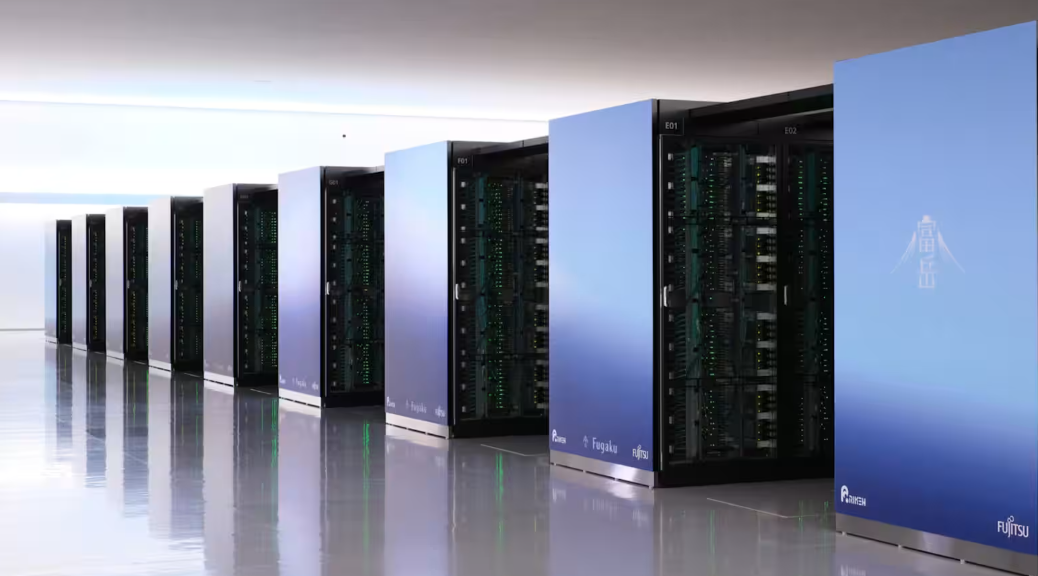
The RIKEN Institute of Science and Technology announced on Monday local time that it had discovered that the operating system of the Fugaku supercomputer had been accessed without authorization. The institute said the information that may have been stolen includes user names, research data and private keys used for system access, involving up to 4,597 people.
The report pointed out that the Japanese government’s budget in the field of science and technology is relatively limited. As the growth of government support stagnated, scientific research institutions such as National Universities and RIKEN began to seek external financial support through cooperation with enterprises.
In order to facilitate the use of external researchers, RIKEN has been improving the openness of Fugaku, including supporting functions such as network data exchange. However, the increased convenience of device access also means that the risk of cyberattacks increases.
According to reports, Fugaku’s operating expenses in fiscal year 2026 will be approximately
14 billion yen (approximately US$87.8 million)
, of which approximately13 billion yen
For power, utilities and other operating expenses. RIKEN said operating expenses include cybersecurity-related expenses, but acknowledged that security investments are small compared with utilities and other operating expenses.A senior official from Japan's Ministry of Education, Culture, Sports, Science and Technology said that in the past two or three years, Japan has been strengthening network security measures, including transforming information systems. However, the official pointed out that the escalation of cyber threats has accelerated significantly in recent months, and simply expanding on existing security measures is no longer enough to deal with current risks.
The impact of this incident has also begun to affect other scientific research institutions. According to Nikkei Asia, the relevant person in charge of Kyoto University stated that the scientific research field is currently urgently responding to the impact of this incident.
On the day the Fugaku security incident was exposed, Kyoto University's Information Environment Agency quickly decided to enable a multi-factor authentication mechanism to prevent attackers from using the private key leaked from Fugaku to gain unauthorized access to the school's own supercomputers.
Yokohama National University professor Katsunari Yoshioka questioned the damage control mechanism after the incident. He pointed out that multiple servers were found to have been compromised, and it was necessary to further verify whether key internal systems were effectively isolated from open Internet systems, and whether relevant access rights controls were in place.
Supercomputers carry not only the computing tasks of scientific research institutions, but also the core research results of universities, public research institutions and enterprises. As research involving economic security and industrial competitiveness such as artificial intelligence, quantum technology and advanced chips becomes increasingly important, corporate technical information and unpublished research results stored in high-performance computing facilities such as Fugaku are highly sensitive.
Unauthorized access may not only affect the normal development of scientific research work, but may also cause the leakage of core technologies and research results, thereby affecting the competitiveness of relevant institutions and enterprises. But on the other hand, if too many restrictions are imposed on external network connections, it may weaken the original intention of opening supercomputers to external researchers and promoting scientific research collaboration.
Yoshioka Katsunari said that how to find a balance between convenience of use and safety is a problem that scientific research institutions must face.
Comments