
Abstract:
Kioxia CEO recently released a signal that is more beneficial to major customers such as Apple: NAND flash memory prices have risen "almost" and the company will no longer forcefully push for further price increases when negotiating with customers. This means that the cost pressure on memory chips, which has continued to rise in the past few quarters, may begin to slow down, at least in the short term and will not continue to worsen at the same rate.
The core reason why this statement attracted attention is that Kioxia is an important supplier in the storage market, and Apple is one of its largest customers. Data shows that Apple accounts for approximately 20% of Kioxia's total revenue. Therefore, changes in Kioxia's pricing strategy will almost directly affect Apple's subsequent material costs and supply chain negotiation space.
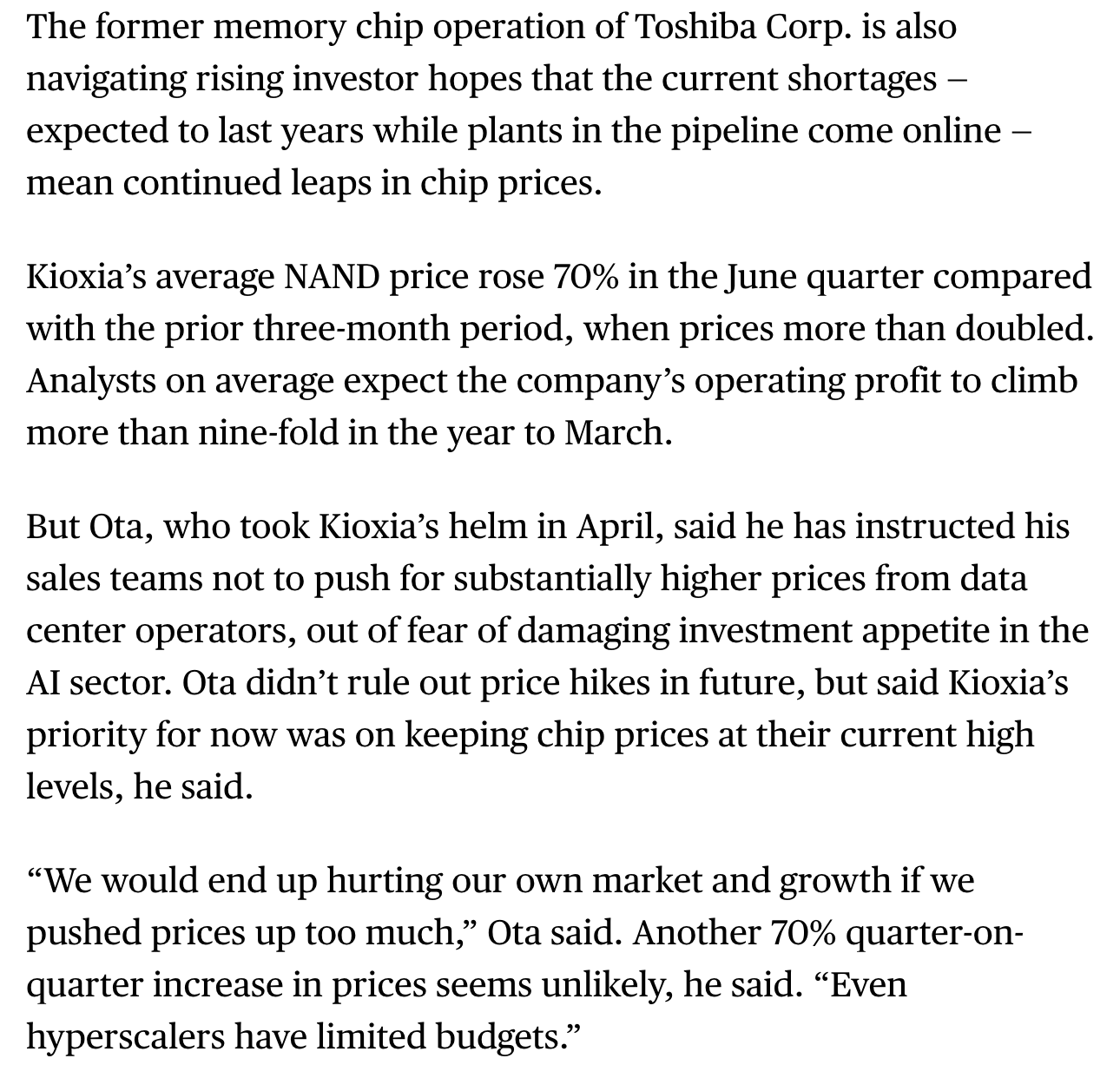
Kioxia CEO Hiroo Ota made it clear that he has asked the sales team not to significantly raise prices when negotiating with data center customers, saying that "prices have increased enough." He also mentioned that even very large-scale cloud vendors have limited budgets, which shows that Kioxia has internally begun to weigh the risk of backlash on market demand from continued price increases.
It is worth noting that Kioxia has not made any price increases before. The company's NAND product prices rose an aggressive 70% sequentially in the quarter ended in June. But after this sharp rise, Ota now believes that continuing to increase prices may hurt the entire market, so it prefers to maintain price stability.
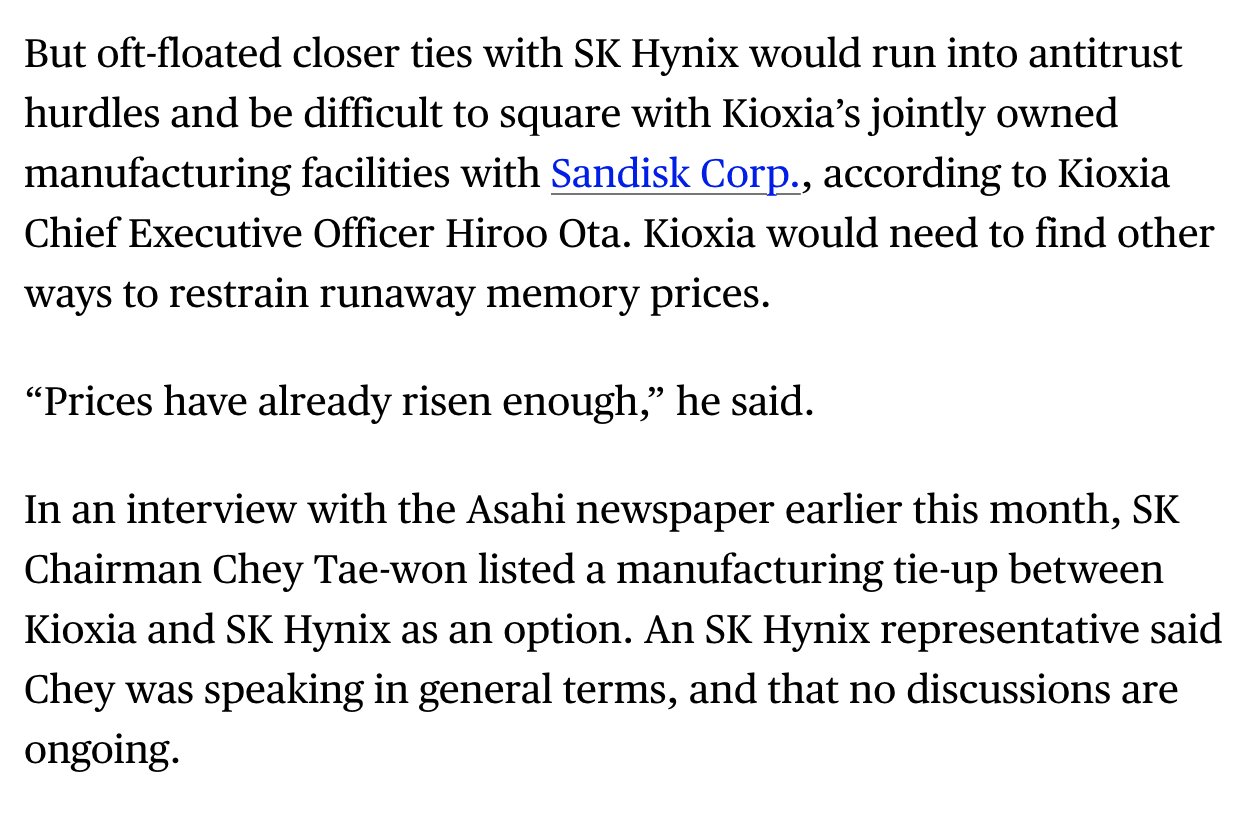
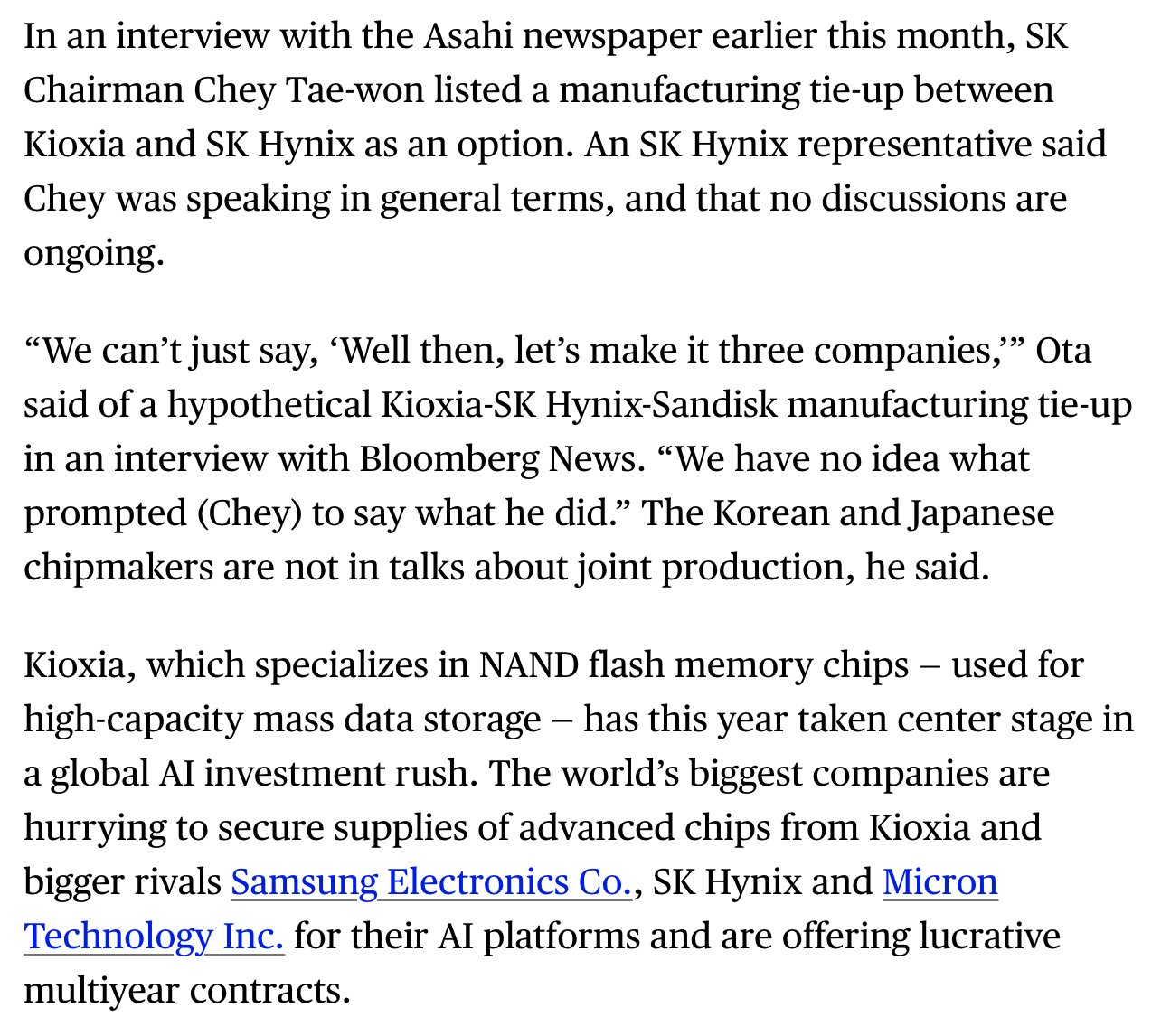
For Apple, this change comes at the right time. In its financial statement for the third quarter of fiscal 2026, Apple said that memory costs in the March quarter were already higher than in the December quarter, the June quarter is expected to rise further than the March quarter, and higher memory costs will be paid in the September quarter. In other words, Apple has publicly admitted that it is under rising memory purchasing pressure.
In this context, Kioxia’s signal of slowing down price increases may bring a certain buffer to Apple and other consumer electronics manufacturers. Although this does not necessarily mean that memory prices will fall immediately, it at least indicates that the most violent rising stage of the market may be coming to an end, and it is more likely to enter a high consolidation rather than continue to rise sharply.
The report also mentioned that Apple is said to be exploring potential cooperation with companies such as Yangtze River and Changxin, which may provide Apple with more bargaining chips in future negotiations with storage suppliers. If this trend continues, Apple's bargaining power in the supply chain is expected to be further enhanced, thereby helping it strive for more stable purchasing conditions amid fluctuations in memory costs.
Comments