
Abstract:
There are new trends in the global memory chip market. According to the latest disclosed information, Micron has marked all of its 2GB capacity GDDR7 video memory products as "end of life" (EOL), which means that these products will no longer continue to be produced. Since related chips have been used in some GeForce RTX 50 series graphics cards, this move has also caused the industry to re-focus on the future supply pattern of the high-performance graphics memory market.
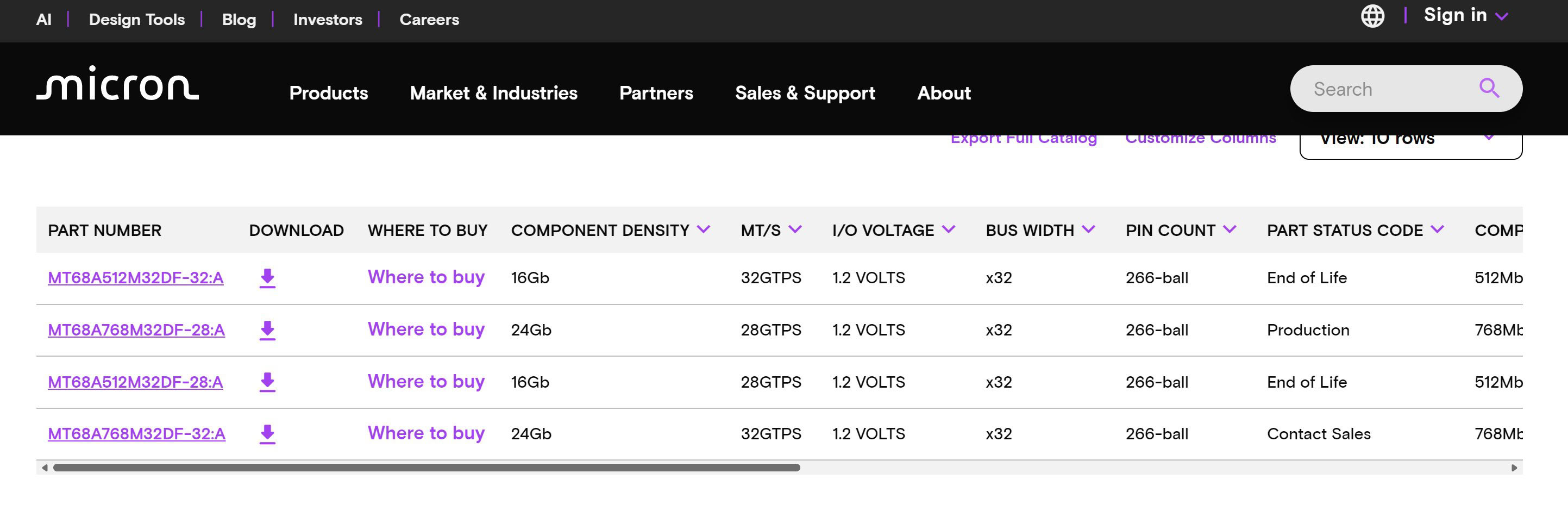
Public information shows that Micron’s 28Gbps GDDR7 chip MT68A512M32DF-28:A used in some RTX 50 series graphics cards has been included in the discontinued list. Not only that, all 2GB capacity GDDR7 models in Micron's product catalog, whether 28Gbps or 32Gbps versions, have simultaneously entered the end-of-life state.
With the withdrawal of the 2GB product line, Micron’s remaining GDDR7 products at this stage will mainly focus on 3GB capacity specifications.
In fact, Micron has not entered the GDDR7 market for a long time. Although the company began supplying GDDR7 video memory to NVIDIA as early as 2025, it was not until the beginning of this year that the industry actually discovered products using Micron's GDDR7 chips on the GeForce RTX 50 series for the first time. But even so, Micron has never been the main source of RTX 50 series video memory, and the market supply is still mainly provided by Samsung Electronics and SK Hynix.
Therefore, in the short term, Micron's withdrawal from the 2GB GDDR7 market is not expected to immediately lead to serious shortages of RTX 50 series graphics cards. Since Samsung and SK Hynix still maintain large-scale supply capabilities, the current graphics memory supply chain can still maintain operation.
However, industry insiders believe that in the already tight storage market environment, even the loss of a relatively small supplier will have a certain impact on the overall supply and demand balance. Especially as the artificial intelligence industry continues to drive up demand for advanced storage, video memory resources are becoming increasingly valuable.
What deserves more attention is that the 3GB GDDR7 product currently promoted by Micron cannot completely replace the existing 2GB solution.
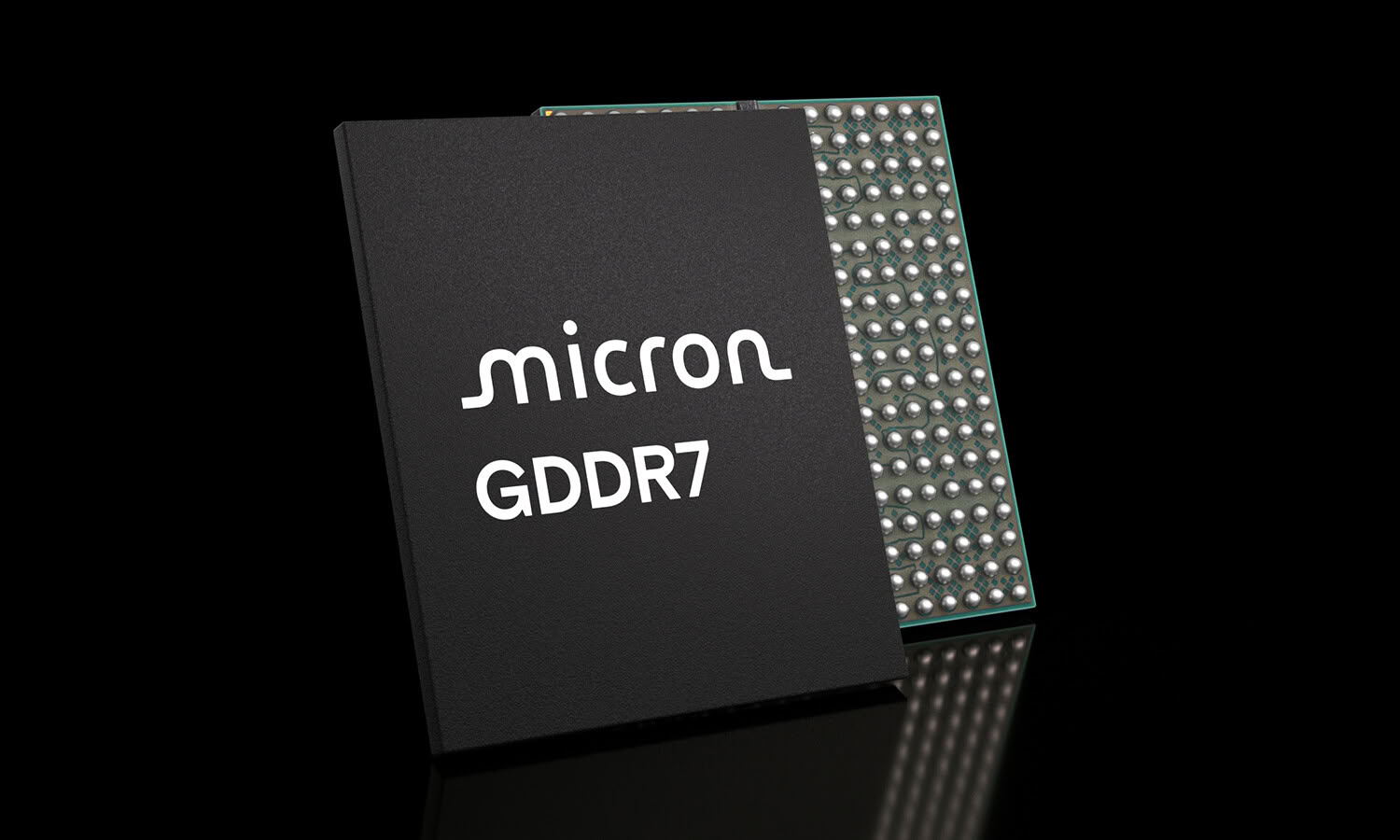
The reason is that the memory bus width and capacity planning of most RTX 50 series graphics cards are designed around 2GB particles. Although 3GB video memory chips can provide higher capacity, they do not completely match the existing product structure, often resulting in irregular video memory capacity configurations and increasing product design complexity.
In addition, the current price of 3GB GDDR7 particles is significantly higher than that of traditional 2GB products. There have been reports in the market many times before that NVIDIA's originally planned RTX 50 SUPER series products have been slow to advance, partly due to the high cost of 3GB video memory particles. Therefore, even if Micron retains its 3GB product line, it will be difficult for it to become a large-scale alternative to existing mainstream consumer graphics cards in the short term.
As Micron withdraws from the 2GB field, Samsung and SK Hynix will assume more standard-capacity GDDR7 video memory supply tasks. This means that the future RTX 50 series graphics cards will further increase their dependence on the two Korean storage manufacturers.
At the same time, the industry chain is also preparing for the next stage of changes. Previous news has shown that many storage manufacturers are planning to launch 4GB and 6GB capacity GDDR7 video memory particles between 2027 and 2028. Compared with current 2GB and 3GB solutions, higher-density products will provide more flexible memory configuration space for next-generation graphics cards.
It is generally believed in the industry that these new specifications are expected to appear simultaneously with NVIDIA's next-generation GPU platform code-named "Rubin". By then, graphics card manufacturers are expected to significantly increase graphics memory capacity while maintaining the existing bus scale to meet the growing demand for artificial intelligence applications, high-end games and professional creative software.
For Micron, this adjustment also reflects the changes in the development direction of the entire storage industry. As the demand for AI computing power continues to explode, storage manufacturers are increasingly inclined to invest resources in product lines with higher profits and larger capacity. The withdrawal of 2GB GDDR7 may be just the first step for the video memory industry to move towards a higher density era.
Comments