
Abstract:
Microsoft plans to launch an Extended Stable channel for Microsoft Edge on macOS in January 2027, allowing enterprise customers using Apple computers to adopt a slower and more predictable browser update rhythm. This change is primarily intended for organizations that need to uniformly manage a large number of devices and have strict requirements for software compatibility and update processes.
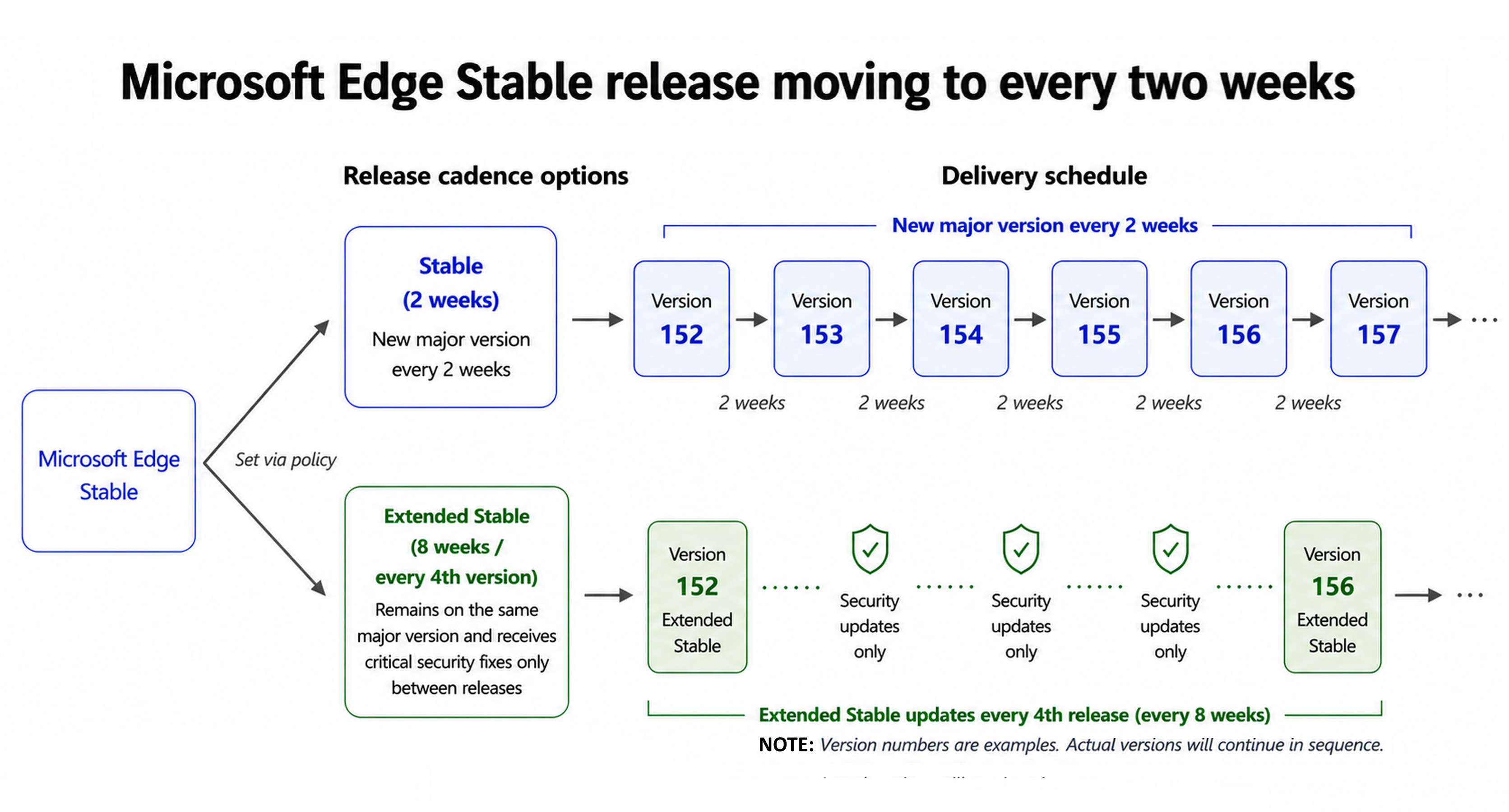
According to information updated on Microsoft’s product roadmap on October 23, 2026, macOS device managers will be able to choose the Edge extended stable channel. The channel's major version update cycle is eight weeks. In contrast, the regular stable version of Edge, starting from version 152, has been adjusted to release a major version every two weeks. The goal of extending the stable version is to give enterprises more time to test new versions, evaluate compatibility, and complete internal validation before official deployment.
For ordinary individual users, browser updates usually mean faster access to new features and performance improvements; but for corporate IT departments, frequent updates may also increase the workload of software testing, technical support, and application compatibility management. Especially in large organizations, there are often complex dependencies between internal business systems, browser extensions, authentication tools, and various office software. If browser versions change too quickly, companies will need to invest more resources to confirm whether existing systems are still functioning properly.
The extended stable version is designed to solve this problem. It does not switch major versions as frequently as ordinary stable versions. Instead, it concentrates new features and larger-scale version changes in a longer cycle, allowing administrators to plan deployment time in advance. Microsoft already offers this channel in other supported environments, and this time it plans to extend the same update management options to the macOS platform.
It should be noted that the eight-week update cycle does not mean that enterprises can completely ignore security updates. Extended stable releases also receive security fixes and maintenance updates, with the core difference being that major releases are released at a slower pace, rather than giving up on security maintenance. Microsoft also clearly recommends that enterprises test new versions in advance through pilot devices and gradually expand the scope of deployment based on actual compatibility.
This adjustment is also related to changes in Edge's overall release strategy. Microsoft announced in 2026 that starting with Edge 152, the normal stable version will change to releasing a major version every two weeks to deliver features and platform improvements faster. For organizations requiring longer testing cycles, extended stable releases will continue to be updated every eight weeks. The two channels therefore serve different needs: the regular stable version focuses on faster access to new features, and the extended stable version focuses on deployment predictability and change management.
According to the currently announced plan, the macOS Edge extended stable version is expected to be officially available in January 2027. However, this date is part of the planned time in Microsoft's roadmap and may still be adjusted later. This feature is primarily aimed at managed enterprise environments and is not designed specifically for the average home user, so average users don't need to take immediate action to get slower update cycles.
From a practical significance, this change complements an important option for enterprises to manage Edge across platforms. For organizations using both Windows and macOS devices, the ability to have a more consistent browser update strategy across platforms can help streamline testing, deployment, and technical support processes. As enterprise software environments become increasingly complex, browser manufacturers not only need to speed up feature delivery, but also provide a sufficiently flexible update mechanism for customers who value stability.
Comments