
Abstract:
MIT engineers have developed a thin swimming robot powered by living skeletal muscle cells. It consists of a flexible hydrogel film about the size of chewing gum and two fin-like structures. Muscle cells cover the fins. The research team uses light to stimulate muscle contraction and make the fins flap to propel the robot forward in the water. By alternately shining light on the left and right fins, the researchers were able to turn the animal and guide it through a simple underwater maze in a petri dish.
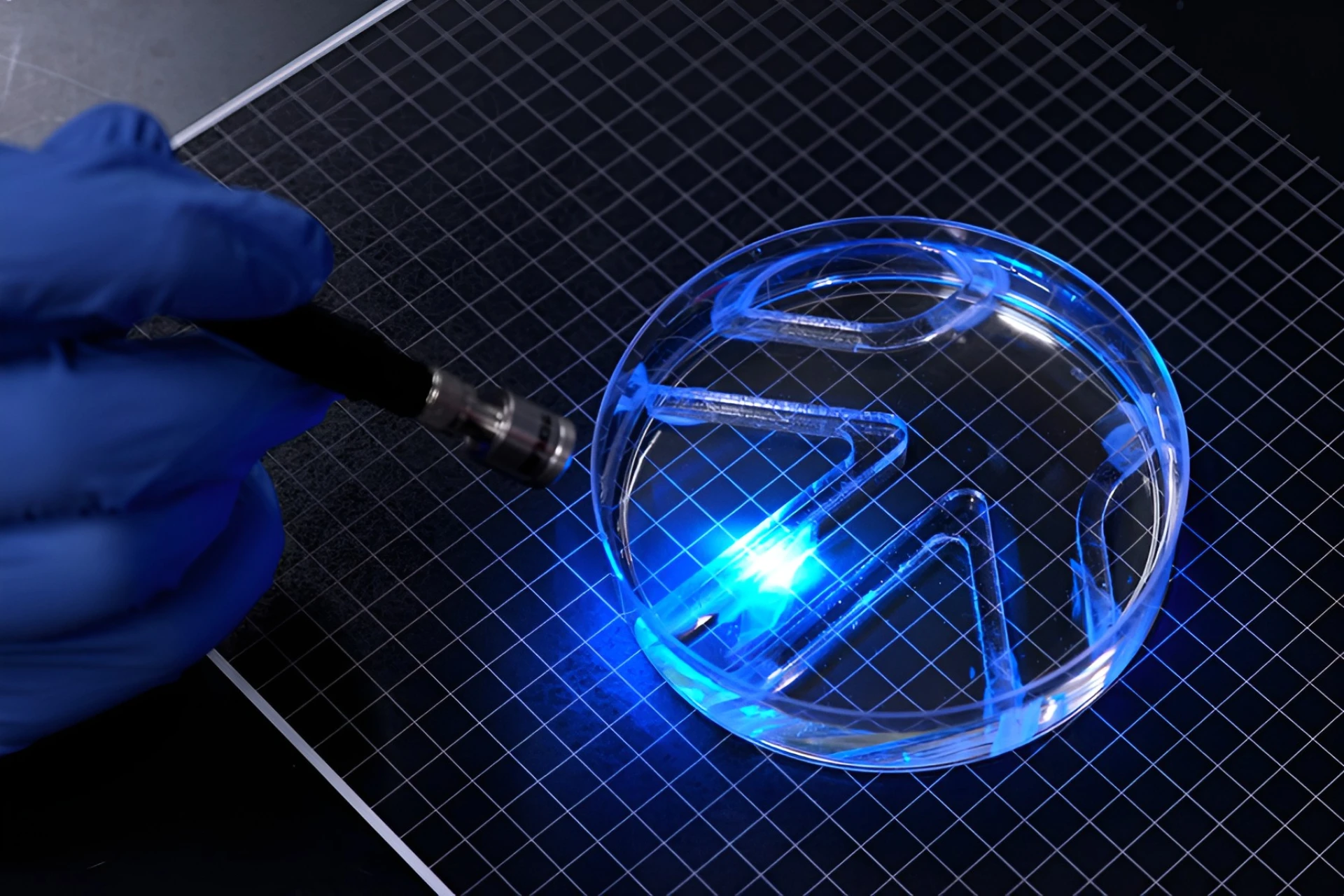
This robot uses a single layer of muscle cell membrane, and the overall structure is about half a millimeter thick. The research team used gelatin methacrylate (GelMA) to make a supporting skeleton, and pressed square-shaped grooves on the surface to allow cells to arrange along the grooves and fuse into muscle fibers with the same direction. Researchers said that the fibrin gel used in the past was too soft and easily wrinkled when muscles contracted; the stronger GelMA and square grooves can better support cells and help muscles work together to exert force. Each fin is approximately 15 mm long, 7 mm wide and 0.5 mm thick.
The robot uses skeletal muscle cells that are genetically modified to respond to light. The research team first stimulated the cells with light pulses twice a day for 15 minutes each time. Compared with the untrained control group, the fin displacement after training increased by about four times. The paper reports that this two-dimensional muscle film can produce millinewton-level force and millimeter-level stroke; its contractile force density per unit tissue volume is about 20 times that of three-dimensional muscles, and its continuous working ability in an unfixed state has also increased from less than 10 minutes to more than 30 days.
Under optimal test conditions, the robot's linear swimming speed is about 4 self-lengths per minute, and its rotation speed can reach up to 1,200 degrees per minute. It still requires researchers to hold a light source outside the petri dish to control it, and it does not yet have onboard electronic equipment or autonomous navigation capabilities; therefore, "unfixed" means that the robot body does not need to be connected to an external bracket, which does not mean that it can operate independently without external light control. Researchers also admit that the current structure is simple and the swimming speed is slow, and there is still a long way to go before it can be used in open water.
The research team was led by Ritu Raman, associate professor of mechanical engineering at MIT, and the first author was graduate student Mahira Bawa. The results were published in Advanced Functional Materials, titled "Two-dimensional skeletal muscle film actuators improve the efficiency of biohybrid robots." The team believes that the thin design may be more cell-friendly and cheaper to manufacture than three-dimensional muscle blocks that require a large number of cells, and is also expected to improve movement efficiency; in the future, it may be used for environmental monitoring, or to perform fine detection tasks in fragile and unpredictable environments. However, the research currently only uses one cell line, unidirectionally arranged muscle fibers and a simple skeleton structure. The team's next step is to optimize the body and fin design, increase swimming speed and explore other modes of movement.
Comments