
Abstract:
MIT researchers have developed a drone trajectory planning system called SANDO. The goal is to continuously plan collision avoidance routes for the aircraft in an environment where there is no pre-map and surrounding obstacles are moving. Instead of trying to accurately guess where each obstacle will be next, SANDO calculates the range to which the obstacle may move within a specified time based on the highest speed it may reach, and accordingly reserves a three-dimensional safe passage for the drone that changes over time.
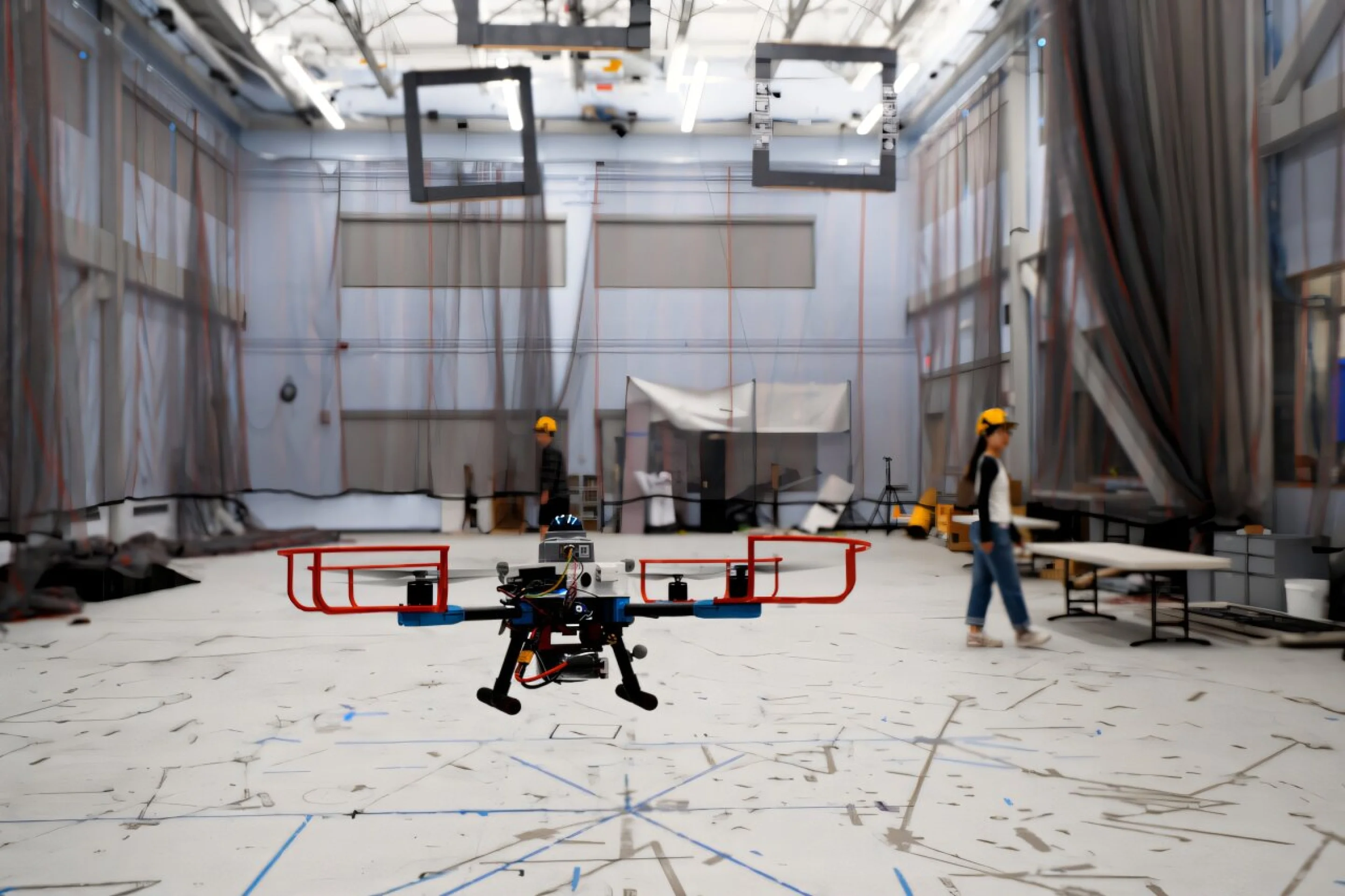
SANDO’s full name is “Safe Autonomous Trajectory Planning in Dynamic Unknown Environments”. The system uses onboard cameras and sensors to discover, group and track dynamic obstacles, and then uses a bounding sphere to describe the areas where these objects are likely to reach in the future. The planner incorporates these areas into route calculations to form a series of barrier-free space segments that adjust over time; it also uses heat maps to mark obstacle-dense areas to guide drones around congested areas. In the safe corridor, the system will calculate a faster target route and re-plan according to environmental changes as the drone advances.
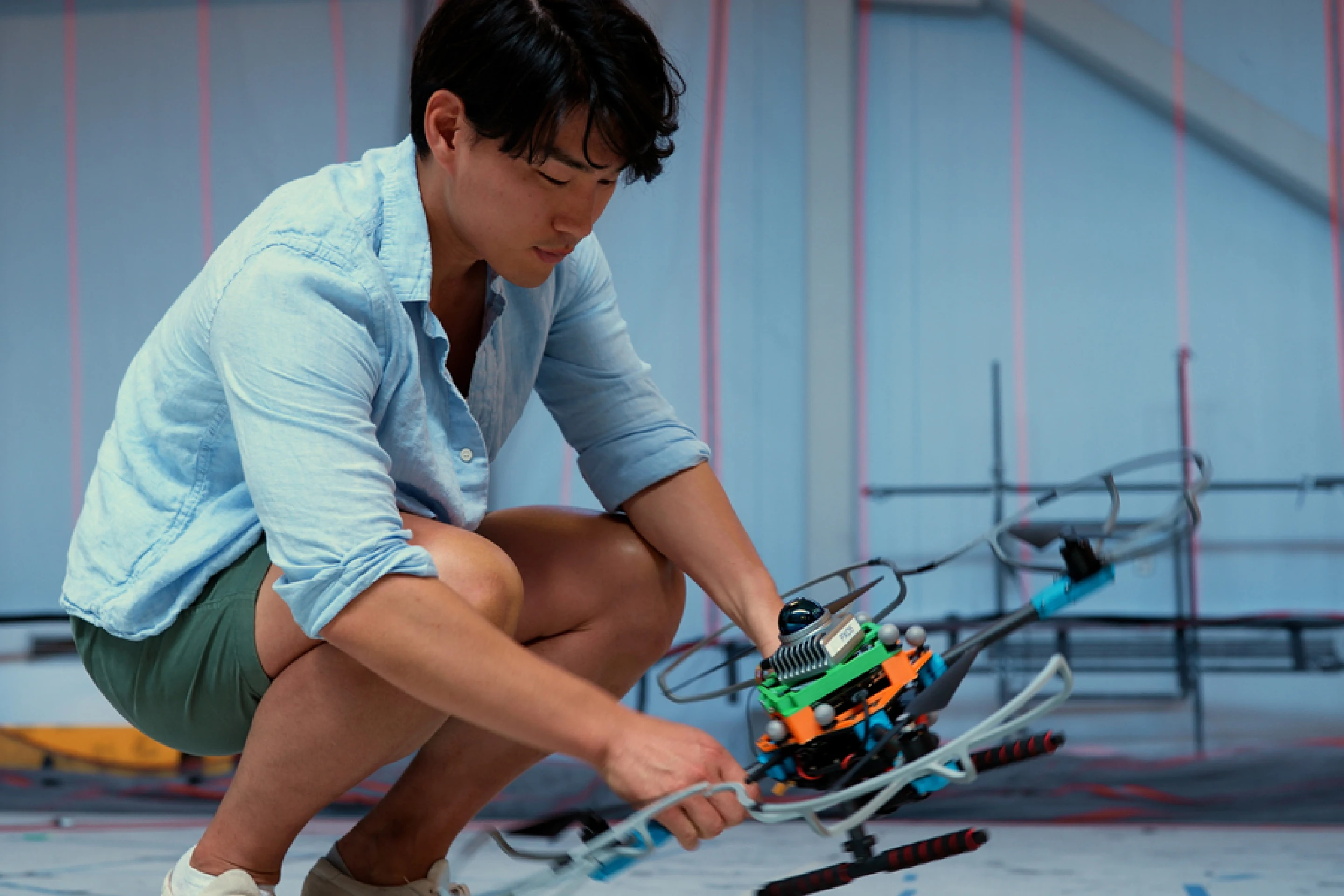
The research team said that the core feature of SANDO is to use collision avoidance as a hard constraint, rather than just letting the algorithm "try to avoid" obstacles. The researchers mathematically proved that the planned trajectory can avoid unknown dynamic obstacles if the system assumptions are met. A key premise is that the system can set a reliable upper limit on how fast an obstacle can move; it does not need to know the obstacle's precise intent or direction of movement, but if an object moves faster than the set limit, the safety guarantees no longer apply.
In the simulation test, SANDO avoided collisions in all test environments and reached the target point faster than several comparative planning systems. The research team also conducted 12 real flight tests using a drone equipped with onboard computers and sensors, during which it successfully avoided all moving obstacles. The research was published in the "IEEE Transactions on Robotics". The team stated that the system can be used in the future for search and rescue of collapsed buildings, mine exploration, fire scene reconnaissance or flight in crowded urban areas. However, it is still a research result and has not been proven to be deployed in real disaster missions.
The research still has practical limitations. Theoretical guarantees that rely on the upper bound of obstacle speed depend on the accuracy of perception and estimation; in scenarios with particularly dense obstacles, the safety range reserved for the worst case may be too conservative, resulting in route detours or reduced planning efficiency. The team's follow-up plan is to reduce the computing burden and explore the combination of machine learning to allow users to issue tasks to the robot in natural language.
Comments