
Abstract:
Omdia’s latest research shows that the global smartphone market is expected to decline by 12% year-on-year in 2026, with shipments falling to 1.097 billion units. This is mainly due to weak demand for entry-level devices and purchasing power challenges in emerging markets, which drag down shipments.
In sharp contrast to the decline in shipments, the industry's overall revenue has increased instead of falling. The total market value for the year is expected to increase by 12% year-on-year to US$651.6 billion.
Driven by the increase in the proportion of high-end models and rising hardware costs, the global average selling price of mobile phones will surge by 27% to US$594. High-end and high premiums have become the main theme of the industry.
This round of cost pressure mainly comes from storage price increases. DRAM contract prices have risen for several consecutive quarters, surpassing SoC to become the most expensive component in flagship phones.
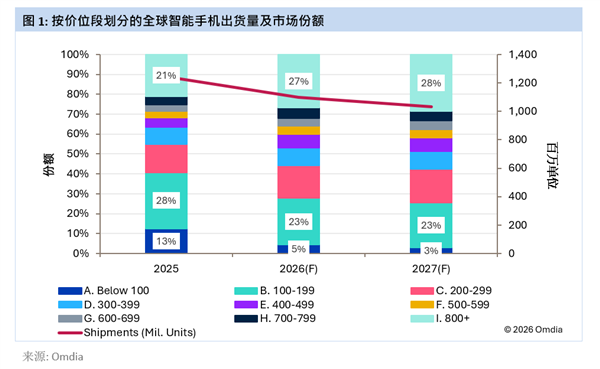
Looking at a longer period, the market price structure will be drastically reshuffled from 2025 to 2027, with the share of low-end models continuing to shrink and the penetration rate of high-end models rising rapidly.
The changes in specific price segments are extremely obvious: the shipment share of low-end models below US$200 will plummet from 40.6% to 25.6%, of which the share of ultra-low-end models below US$100 will plummet from 12.6% to 3.0%, almost withdrawing from the mainstream market.
Looking at high-end flagships priced above US$800, the share will steadily increase from 21.1% to 28.4%. In 2027, the proportion of high-end models will exceed the sum of all low-end models for the first time.
The mid-range market between US$200 and US$699 has remained stable, maintaining a market share of about 40% in the long term, becoming the basic market of the industry.
The report provides an in-depth breakdown of the five core factors driving industry change:
First, the replacement cycle of smartphones continues to lengthen, manufacturers have long-term system updates, and equipment has excess performance, which has greatly reduced users’ rigid need for replacement.
Secondly, the second-hand and refurbished mobile phone market is expanding rapidly, and official replacement and leasing services are popular, diverting a large amount of consumer demand for new phones.
Thirdly, the cost of parts and components continues to rise, suppressing the consumption capacity of emerging markets and compressing the living space of low-priced models.
Fourth, mobile phone manufacturers have strategic transformation, giving up blind impulse and focusing on high-profit high-end product portfolios.
Fifth, industry technology is becoming more mature, mid-range models have comprehensive upgrades in image, screen, and performance, and the experience gap between high-end and low-end continues to narrow.
With the superposition of multiple factors, the global smartphone market has officially bid farewell to the era of low prices and high volume, and has entered a new development stage of high-end quality and value priority.
Comments