
Abstract:
The seemingly peaceful changes in activity on the sun's surface may be far more complex than previously thought. By analyzing decades of solar oscillation data, scientists have found that the lowest troughs between different solar activity cycles are not exactly the same. During the latest deep solar minimum, there were measurable changes in the sun's internal structure. This means that the Sun's 11-year activity cycle not only affects the surface, but also leaves its mark deeper inside.
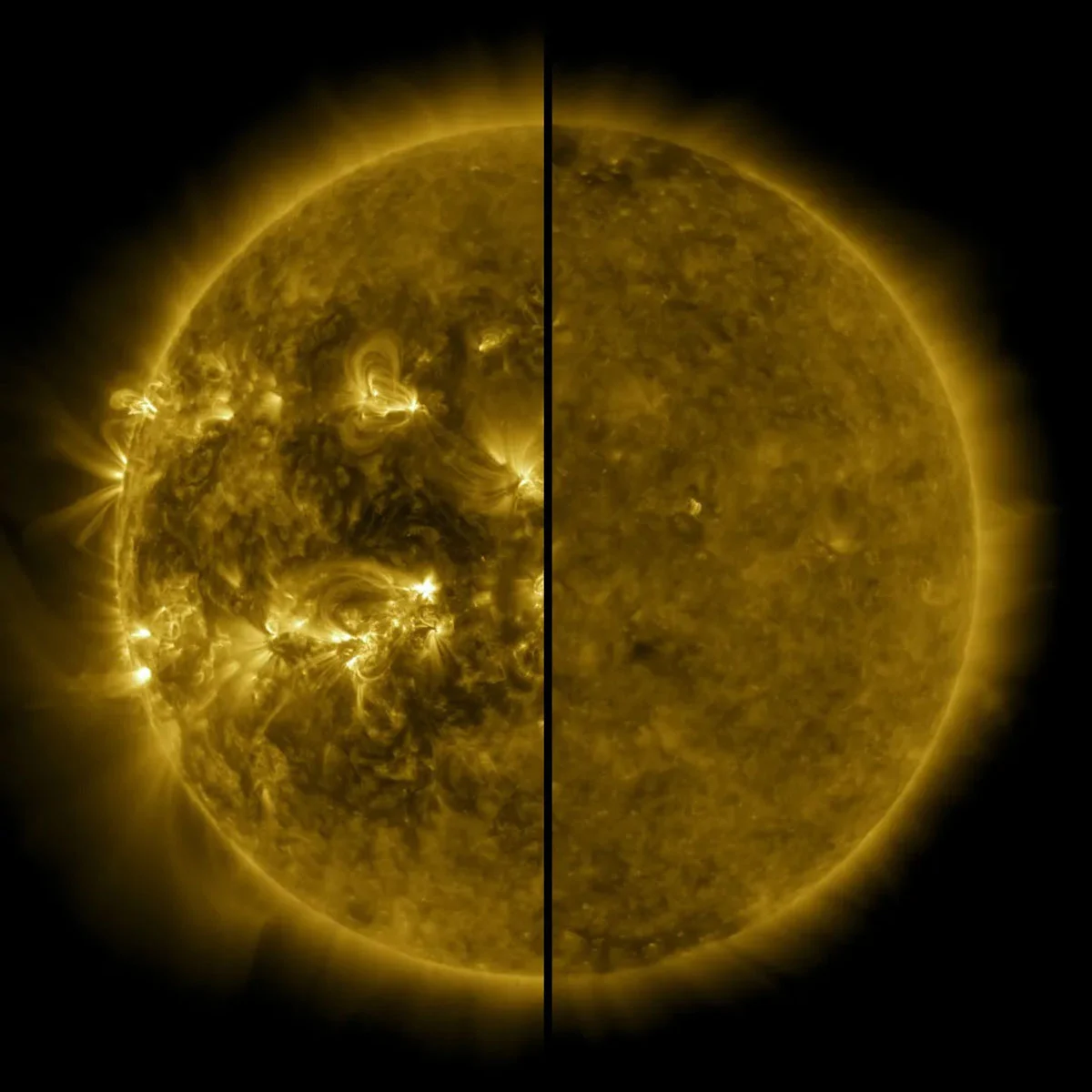
The sun goes through a complete cycle of activity approximately every 11 years. During the maximum activity period, sunspots, flares and coronal mass ejections increased significantly, and then the activity gradually weakened and entered the solar minimum period. As the magnetic field changes periodically, the sun's magnetic poles also reverse. However, past observations have mainly focused on the sun's surface, so scientists have been unable to determine whether the lowest points of different cycles have different effects on the sun's interior.
The research team used long-term observational data from the Birmingham Solar Oscillation Network (BiSON) to compare the minimum periods between consecutive solar activity cycles. BiSON consists of six heliogazing devices located in different locations around the world, which can continuously record the acoustic oscillations generated inside the sun and propagated to the surface.
This approach is similar to seismology. Seismologists can infer the structure of the Earth's interior from changes in seismic waves as they pass through it, and the sun also produces large amounts of sound waves. When the temperature, density, pressure, and material motion inside the sun change, the frequency and propagation characteristics of these oscillations will also change. So by tracking solar oscillations over time, scientists can indirectly "listen" to what's going on inside the sun.
Research shows that the latest solar minimum, that is, the minimum period between the 24th and 25th activity cycles, is significantly different from the lowest points in previous cycles. Quantifiable changes have occurred in the structure and oscillation characteristics of the sun's outer layer, and this change is not a simple difference in the intensity of surface activity, but extends to the interior of the sun.
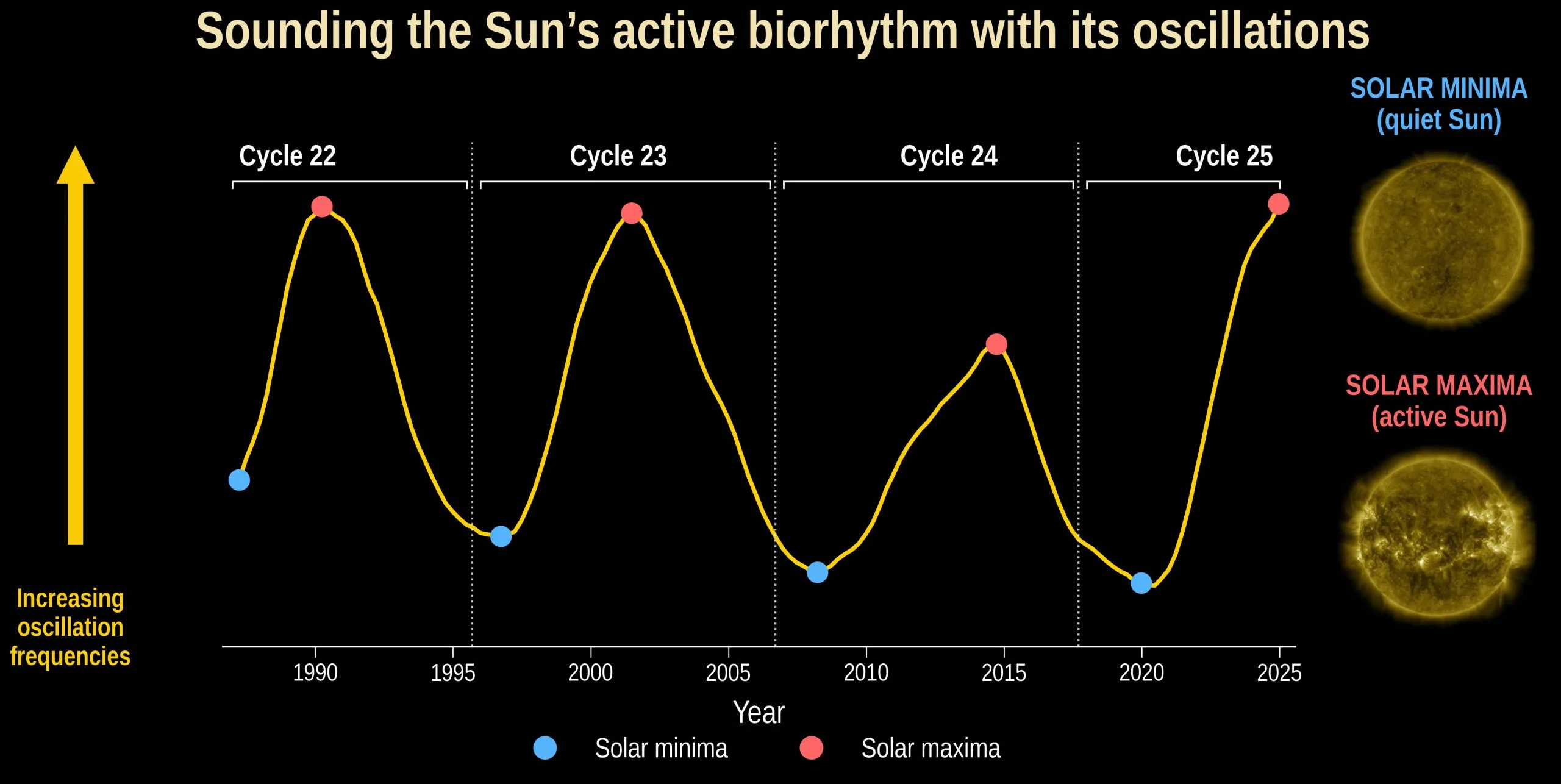
Scientists are particularly concerned about the oscillation changes at different depths inside the sun. Research results show that the solar activity cycle is not only manifested by the periodic increase and decrease in the number of sunspots, but also changes the physical state of the sun's outer layer and interior. In other words, the Sun's "quiet periods" are not all identical, and each cycle of activity may affect the Sun's interior in slightly different ways.
The importance of this discovery is that it may help scientists further understand how the solar magnetic field is generated and evolves. The source of the sun's 11-year activity cycle is closely related to the magneto generator mechanism inside the sun, and changes in the magnetic field will eventually manifest as sunspots, flares, coronal mass ejections and other phenomena.
Scientists have previously known that there are complex rotations and plasma flows inside the sun. Among them, the rotation speed of the sun is different at different latitudes, and there are important shear layers in the deep regions. These regions are thought to be closely related to the generation and storage of the solar magnetic field. The latest research shows that the internal changes left behind by the solar activity cycle can be detected through solar oscillations, providing a new observation window for studying these deep processes.
Researchers said that although the sun's surface activity can intuitively reflect the solar cycle, it cannot fully describe everything happening inside the sun. Only by combining solar surface observations with helioseismological data can a more complete understanding of the solar cycle be achieved.
The results may also help explain why the intensity of different solar cycles varies. Solar activity is not a process that repeats mechanically every 11 years. The length of the cycle, the intensity of the activity, and the structure of the solar magnetic field may all change. Studying how the Sun's interior changes between these cycles can help determine what future solar activity may look like.
For the earth, this kind of research is not only of basic scientific significance. Strong flares and coronal mass ejections produced when solar activity increases can disturb the Earth's magnetic field, trigger geomagnetic storms, and affect infrastructure such as satellites, radio communications, navigation systems, and power grids. Therefore, further understanding of the formation mechanism of the solar magnetic field will also help improve space weather forecasting capabilities in the future.
Scientists are still unable to predict the specific intensity of the sun's next activity cycle based on this research alone, but the results prove that the sun's 11-year cycle can indeed leave measurable changes in its interior. As longer time series of solar oscillation data continue to accumulate, researchers are expected to further determine whether these internal changes are universal features of the solar cycle or whether they are related to some special activity cycles.
Comments