
Abstract:
A photo of the night sky taken by a New Zealand photographer has recently sparked heated discussions on the Internet. The dense satellite trajectories in the photo have led many people to mistakenly believe that it is a work generated by artificial intelligence, but the author said that this picture was completely completed by real shooting and artificial post-production synthesis.
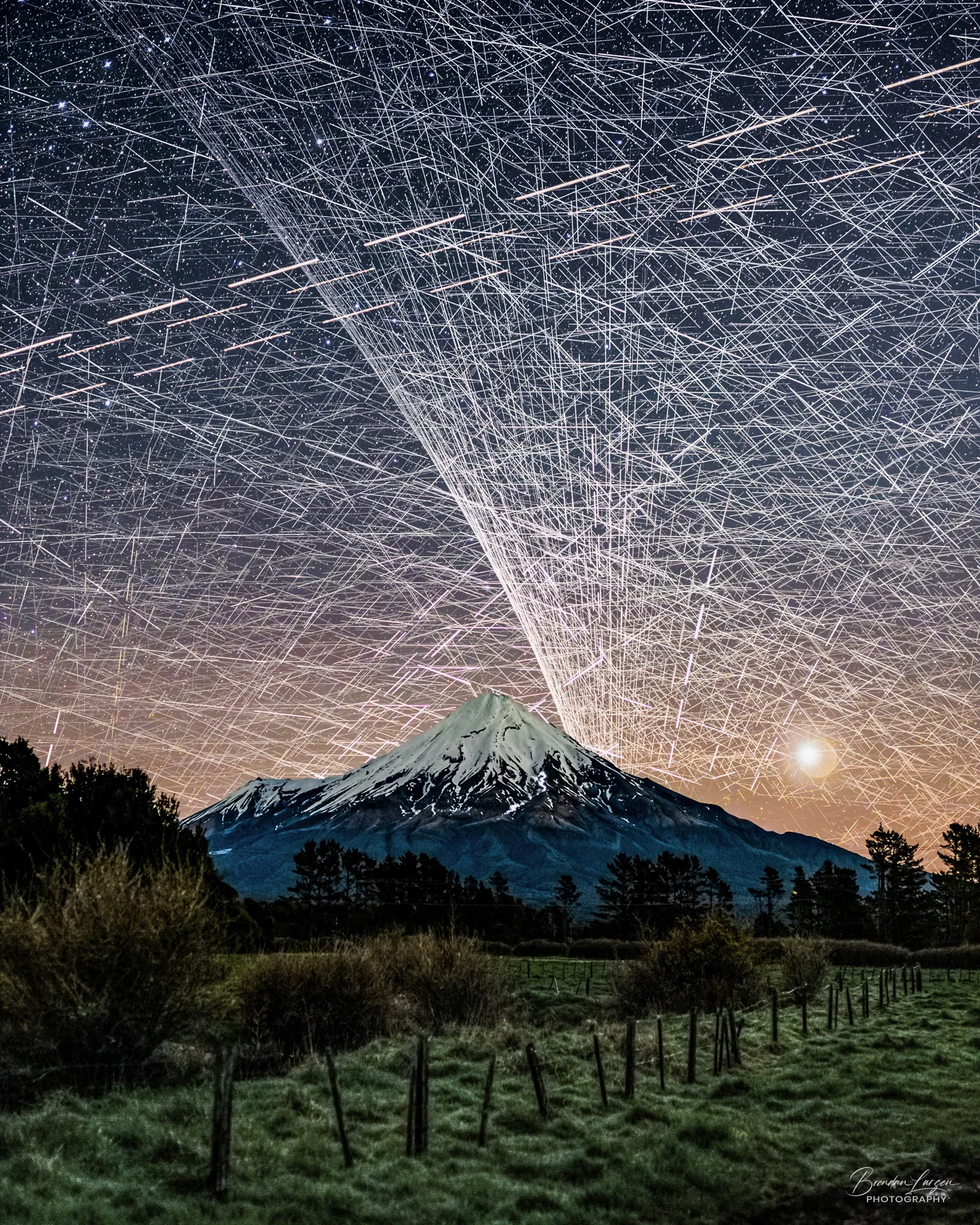
New Zealand astrophotographer Brendan Larson photographed the night sky in front of Mount Taranaki on the evening of September 9. He used a Canon EOS R camera and a Sigma Art 50mm f/1.4 lens to shoot with an 8-second exposure, collecting a total of 578 individual photos in more than two hours. He then spent about 45 hours stacking the photos layer by layer in Photoshop and carefully removing the stars, leaving only the light trails left by satellites as they streaked across the night sky.
The final composite photo shows a total of about 14,000 satellite trajectories, corresponding to about 1,400 different satellites. The satellites, which include equipment for weather observations, internet communications and navigation services, passed through the same patch of sky one after another in just two hours. Larson said that as the photos continued to stack up, he began to see a pattern gradually emerging, and realized that continuing to take pictures would make the picture more stunning and better demonstrate the huge number of satellites.
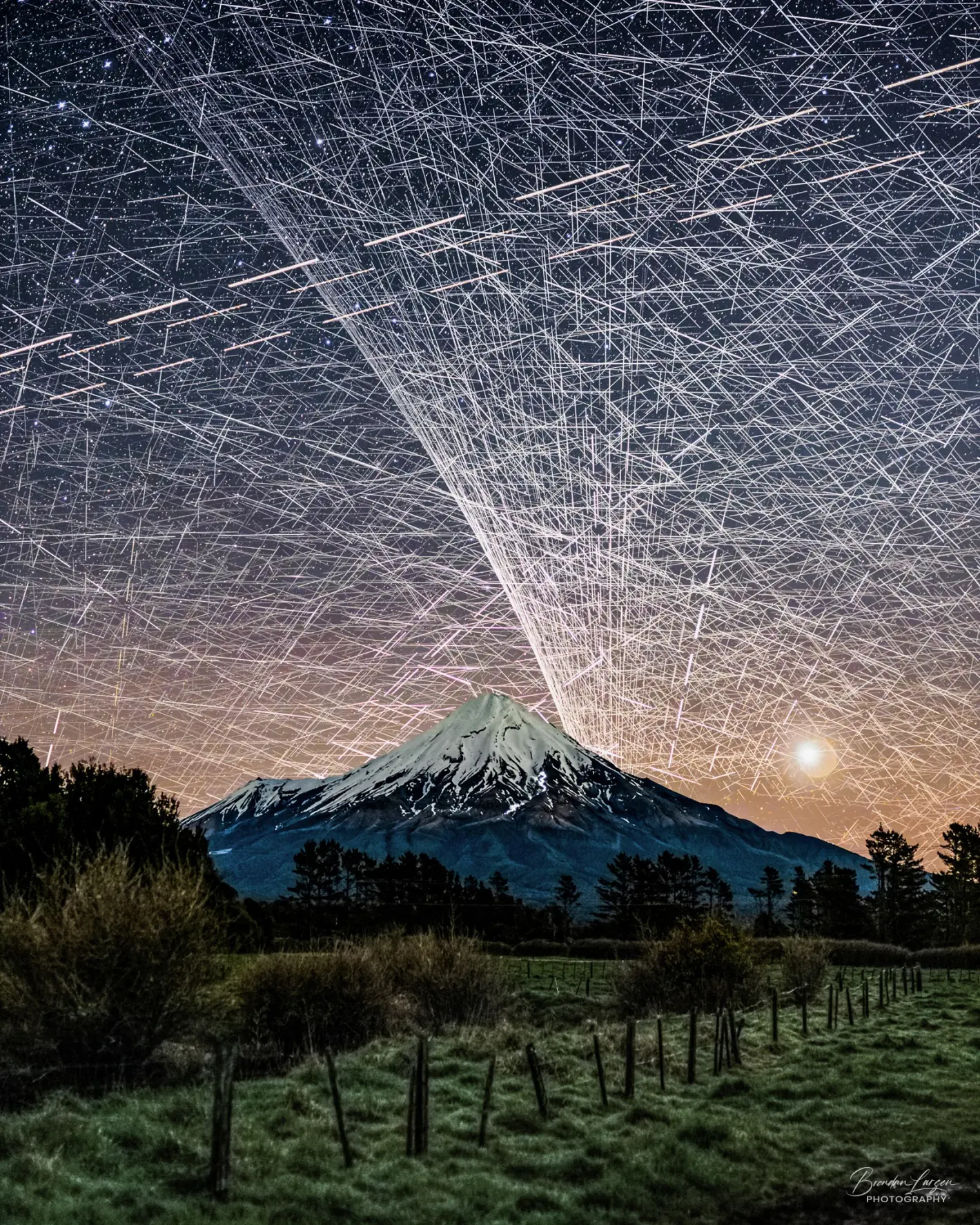
After the photo was released, it quickly spread, reaching millions of people around the world and attracting international media attention. Because the pictures are too dense and the visual impact is extremely strong, many netizens questioned that it was produced by artificial intelligence. Larson later uploaded a video showing the production process of the photo in response to related doubts. He emphasized that the photos record the real sky, the real place and the real moment.
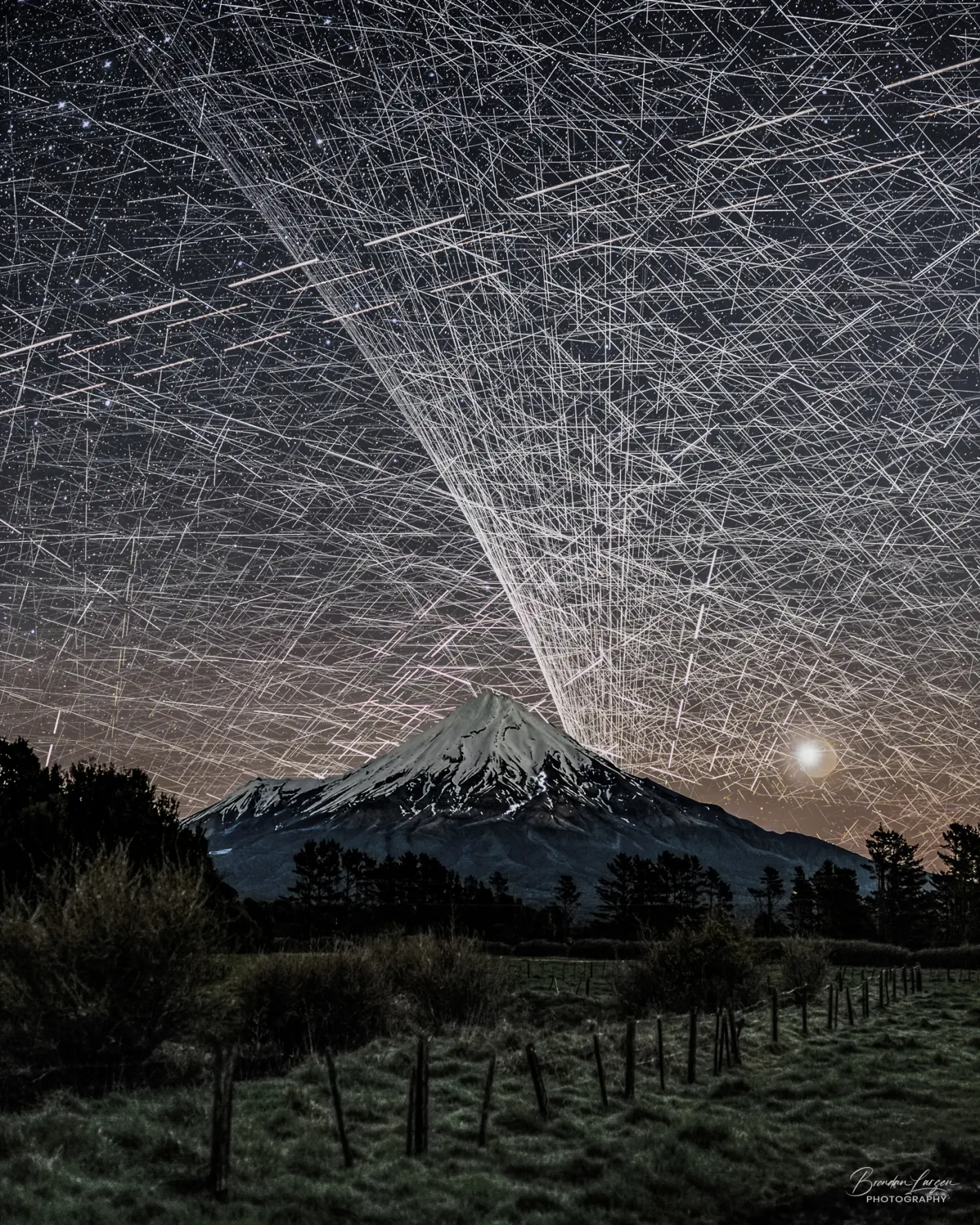
Larson said part of the purpose of creating this work was to draw public attention to the increasing crowding of near-Earth space. As the number of satellites continues to increase, the night sky is being changed by more and more light trails. Light pollution and space debris have also become environmental issues that require urgent attention. He hopes that through this photo, more people will be aware of the need to protect the night sky and low-Earth orbit environment.
There is also a detail in the photo that can easily be mistaken for a satellite trajectory: a winding light trail near the center of Mount Taranaki is actually the movement track left by two climbers as they descended from the summit. Their silhouettes, like those of the satellites overhead, were recorded through long exposures and photo overlays. This work not only shows the impact of modern space activities on the night sky, but also shows how human activities are changing the sky above us in a striking way.
Comments