
Abstract:
According to Korean industry insiders, SK Hynix, the global high-bandwidth memory (HBM) market leader, is encountering challenges in the research and development of hybrid bonding technology, and its progress may have lagged behind its main competitor Samsung Electronics. According to sources, SK Hynix has not yet started the production of HBM samples based on hybrid bonding technology, while Samsung is said to have sent HBM samples manufactured using this technology to customers.
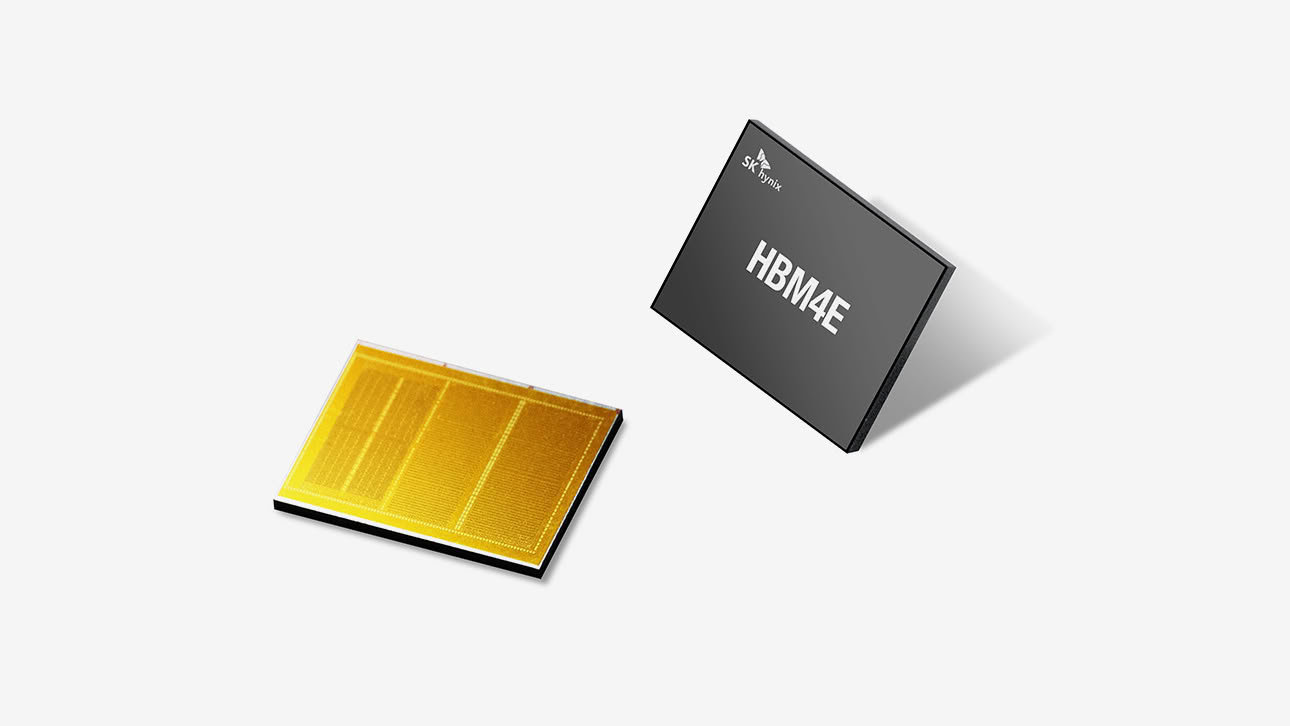
If the relevant news is true, this will be a big setback for SK Hynix, which has long dominated the HBM market. In recent years, as the demand for artificial intelligence training and inference has grown rapidly, high-bandwidth memory has become an important part of AI accelerators and high-performance computing platforms, and competition among suppliers around next-generation HBM technology has become increasingly fierce.
Hybrid bonding is regarded by the industry as one of the key packaging technologies for future HBM development. Unlike traditional stacking methods, this technology achieves a permanent connection by directly combining the metal interconnect structures on the two chips. Multiple chips or even entire wafers can be stacked in three dimensions. By eliminating the traditional micro-bump structure, shorter signal transmission paths can be achieved between chips, thereby reducing latency, reducing signal distortion, and improving overall performance and energy efficiency.
For HBM products that continue to increase capacity and bandwidth, hybrid bonding also has the advantages of increasing interconnect density, improving heat dissipation capabilities, and reducing packaging thickness. Therefore, it is considered an important technical route to support future 16-layer or even higher stacked HBM products.
However, despite the promising technology, hybrid bonding is also extremely difficult to manufacture. It is generally believed in the industry that this process has extremely strict requirements on wafer flatness, surface cleanliness and alignment accuracy, so mass production yield and cost control have always been major challenges.
Currently, SK Hynix still occupies the leading position in the HBM market. Data shows that among the shipments of mainstream products such as HBM3E and HBM4, SK Hynix accounts for approximately 50% of the global market share, while Samsung accounts for approximately 33%. However, compared with its previous market share of about 64%, SK Hynix has declined to a certain extent, while Samsung continues to expand its influence.
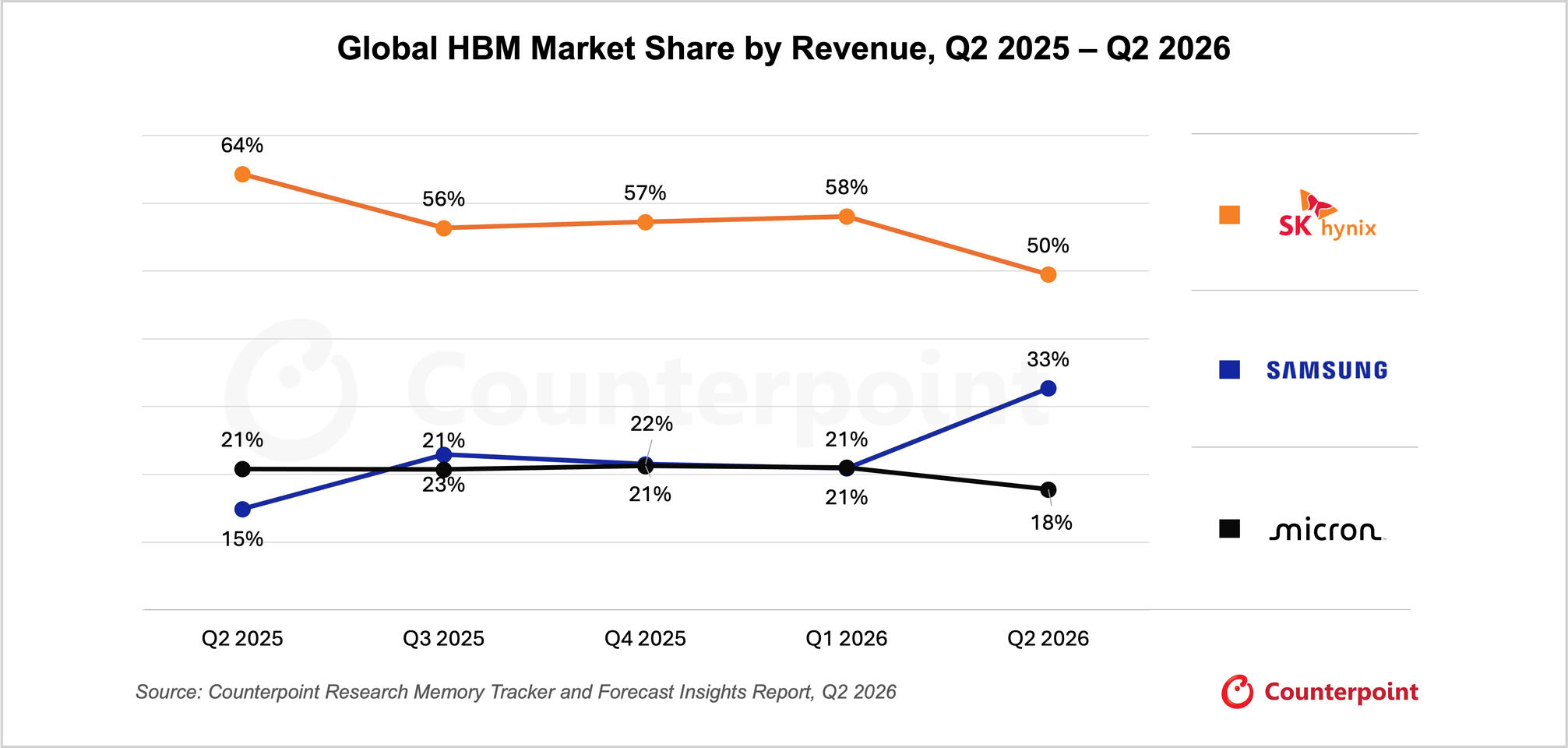
Analysts believe that whether the market structure will change in the future will still largely depend on customer demand. If major AI chip manufacturers begin to pay more attention to HBM products with higher capacity, more advanced packaging technology, and higher performance, then the companies that are the first to master hybrid bonding technology and enter the mass production stage may gain additional competitive advantages.
Meanwhile, the industry remains divided on the actual lead-in time for hybrid bonding. It was reported earlier this year that both Samsung and SK Hynix are re-evaluating the commercialization timetable of this technology. Some industry predictions believe that large-scale applications may not appear in the first batch of HBM4 products, but are more likely to become truly popular in the subsequent HBM4E or even HBM5 era.
Nevertheless, as AI computing continues to drive market demand for higher bandwidth and higher stacking density memory, hybrid bonding is still widely regarded as one of the core technologies for HBM's long-term development. For SK Hynix and Samsung, which are fiercely competing for the next-generation AI infrastructure market, this competition around advanced packaging processes is likely to determine the status of both parties in the high-end storage market in the next few years.
Comments