
Abstract:
The process of fertilization has long been commonly described as a rat race. Millions of sperm swim toward the egg, and the fastest, strongest, or luckiest individual fertilizes it. However, a new study shows that in many species in nature, this "race" is actually more of a team sport, and cooperation between sperm may be as important as competition.
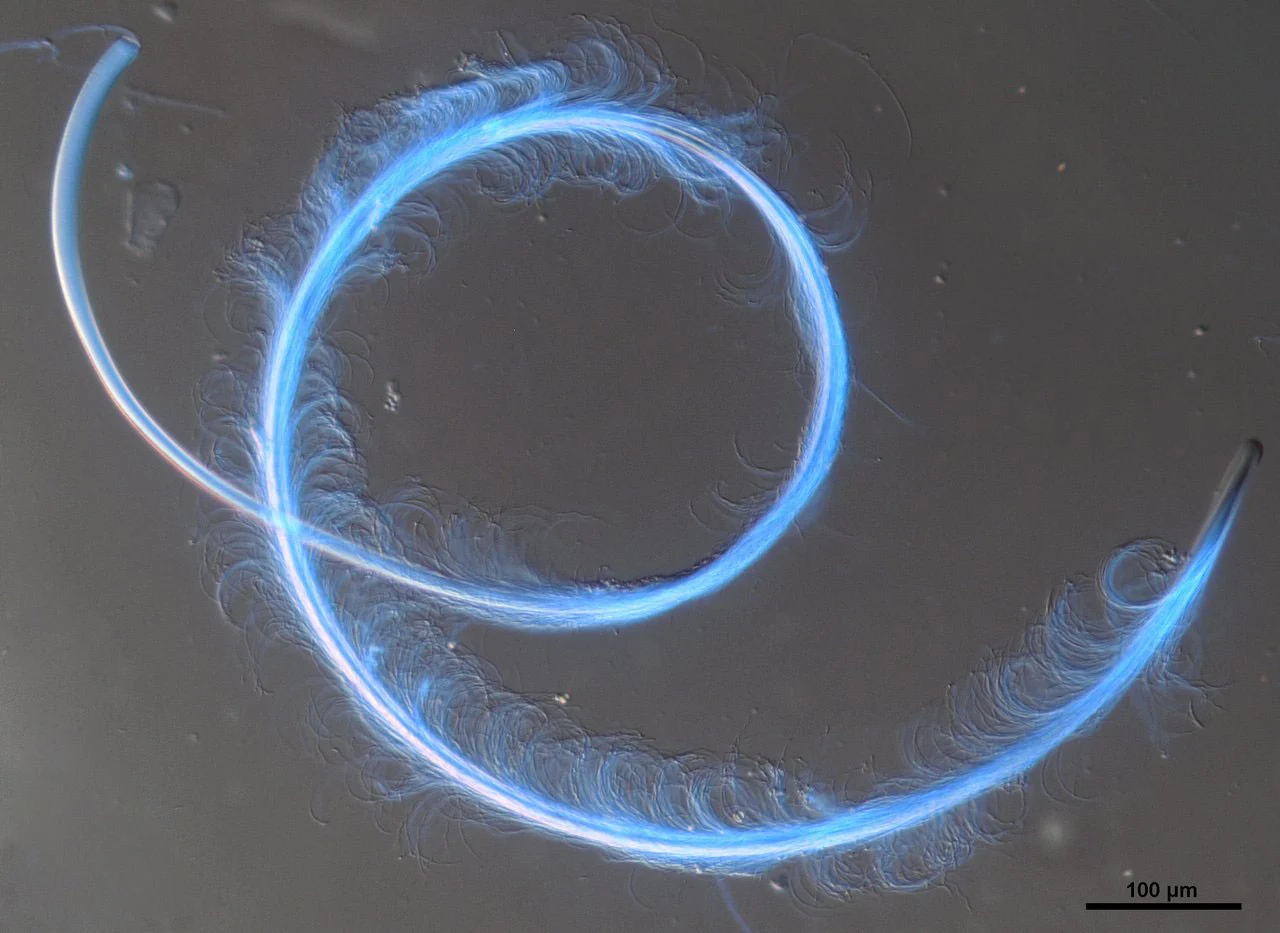
Evolutionary biologists from Syracuse University in the United States, the University of Siena in Italy, and the University of Szeged in Hungary have discovered through research that sperm cooperative behavior is far more common among arthropods than previously thought. This phenomenon is called "sperm binding," in which multiple sperm form a group in a coordinated manner to complete the process of moving to the egg.
Researchers describe this behavior as a rowing team moving in unison. Individual sperm no longer act alone but form organized teams with structures to increase their chances of reaching and successfully completing fertilization.
In fact, scientists have observed this phenomenon more than a century ago, but it has long been thought to exist only in a few special species. The latest research has changed this understanding. The study results show that sperm cooperation is not only widespread among arthropod groups such as insects, spiders, crabs and centipedes, but its history can be traced back hundreds of millions of years.
To reconstruct this evolutionary process, the research team compiled and analyzed decades of research data on the morphology and structure of sperm of hundreds of arthropod species, and mapped these characteristics onto evolutionary lineage trees to infer the time points when different forms of cooperation appeared, disappeared, and reappeared.
The resulting timeline spans more than 600 million years. Research shows that in different arthropod branches, the phenomenon of sperm cooperation appeared independently many times, disappeared at certain stages, and then evolved again. This recurring pattern suggests that cooperative mechanisms confer important adaptive advantages in different contexts.
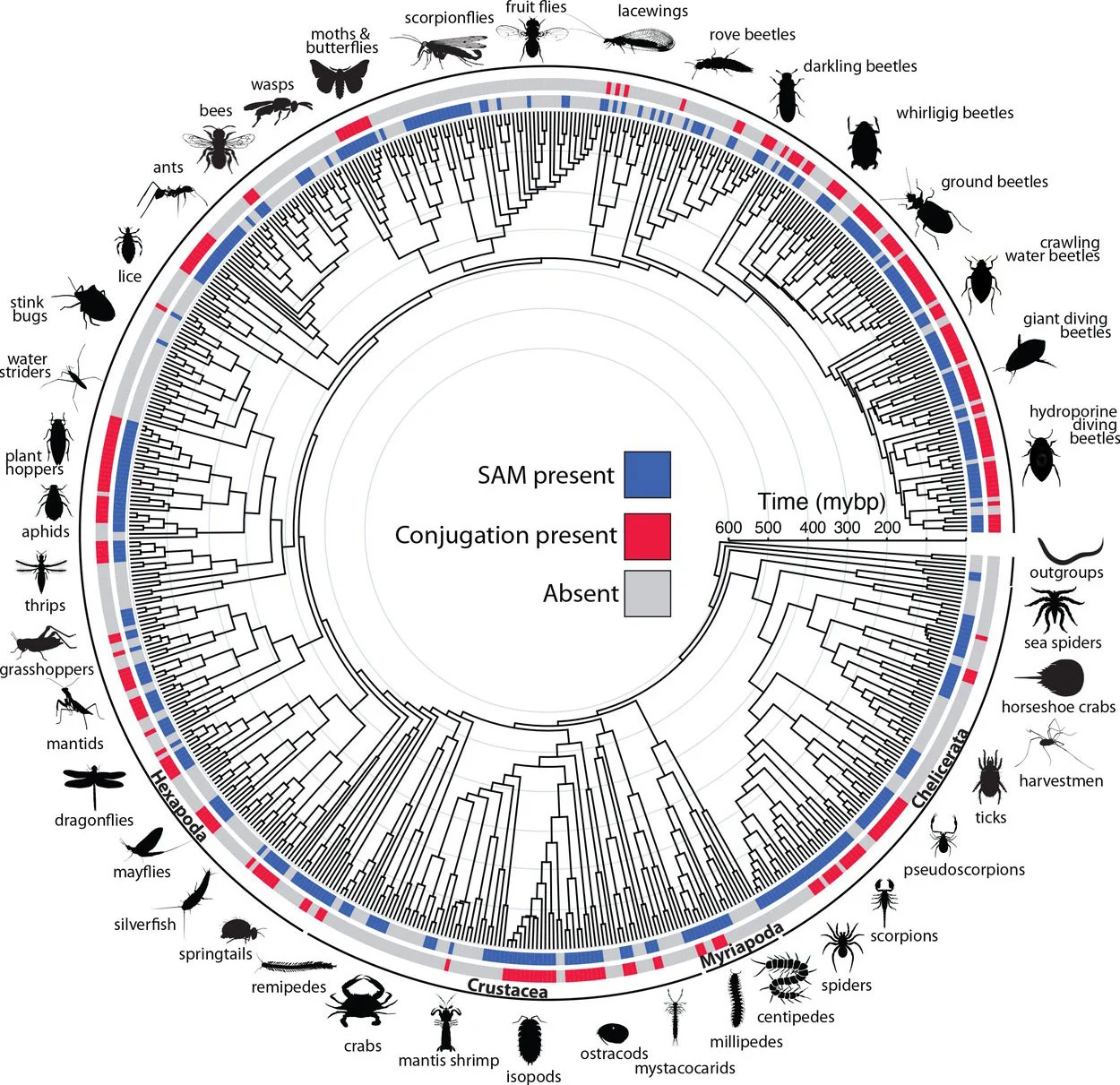
From all available evidence, the researchers note, even the common ancestor of all insects possessed sperm capable of forming cooperative colonies. This means that sperm cooperation is not an accidental phenomenon, but an extremely ancient and widespread biological feature.
During the research process, the team also focused on analyzing a special structure called "sperm-related substances". This is a membrane-wrapped substance that holds multiple sperm together or forms an external scaffolding structure that helps them line up into organized groups.
In many species, it is this substance that maintains the stability of the sperm team. Researchers speculate that it may have originally existed to package or protect sperm, but later evolved to promote cooperation, thus promoting the formation of sperm binding.
The research team believes that an individual sperm faces a complex and difficult environment in the female reproductive tract, and group cooperation can help sperm move and navigate more efficiently, so it has been repeatedly retained by natural selection in some species.
The most fascinating aspect of this work, the researchers say, is that evolution continues to produce similar solutions throughout history. Despite the vast distances between different species and their completely different living environments, they all eventually evolved similar cooperative mechanisms for reproduction.
This discovery also challenges traditional reproductive theories. While many past studies have focused on competition between sperm, new evidence suggests that, in some cases, cooperation can also determine reproductive success.
In addition to helping scientists understand the evolution of life, related research may also bring practical application value in the future. The researchers believe that an in-depth understanding of sperm cooperation mechanisms is expected to advance the development of fertility research and help explore new pest control methods. For example, by interfering with the binding process between sperm or its related substances, more precise control technologies may be developed for certain agricultural pests in the future.
While research has revealed that sperm cooperation is far more common than previously thought, many key questions remain unanswered. Scientists are still trying to understand what drives the evolution of this cooperative behavior and how different ways of cooperating can bring reproductive advantages.
Future research will focus on observing the behavioral patterns of sperm in real reproductive environments, hoping to further uncover the biological secrets behind this microscopic "team movement". This discovery also reminds people once again that competition is not the only driving force in the evolution of life, and cooperation can also become an important factor in shaping success.
Comments