
Abstract:
Dylan Patel, founder of SemiAnalysis, a semiconductor analysis organization, posted on social media, accusing AMD of selling U.S. military-grade chips to China at extremely low prices, and called on the government to investigate AMD for "treason."
The cause of the incident is that Chinese companies are crowdfunding to develop a system based on AMD Zynq UltraScale+ XCZU47DR RFSoC chip.
It integrates four general-purpose Arm cores, two Cortex-R5F real-time cores, 930,000-gate FPGA, 4272 DSP slices, as well as 8-channel 14-bit ADC (5 GSPS) and 8-channel 14-bit DAC (9.85 GSPS). It can receive, process and generate RF signals in real time without relying on independent data converters.
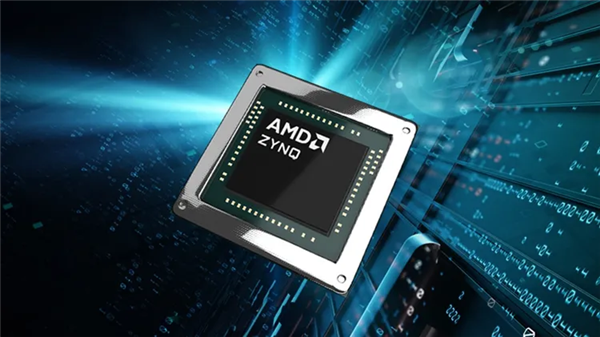
Systems based on this chip are widely used in software-defined radio, radar and phased array systems, wireless and satellite communications, electronic test equipment and other fields.
The chip is a dual-purpose component on the U.S. export control list, with ECCN classification number 3A001.a.14. Exports to non-ally destinations such as China require a BIS export license, and such licenses are almost certainly rejected in actual operations.
Patel also revealed in the post that the official price of the chip in the United States is US$36,000, and the price of bulk supply to US companies is about US$4,000 to US$5,000, while the quotation received by the Chinese crowdfunding project is only about US$1,000.
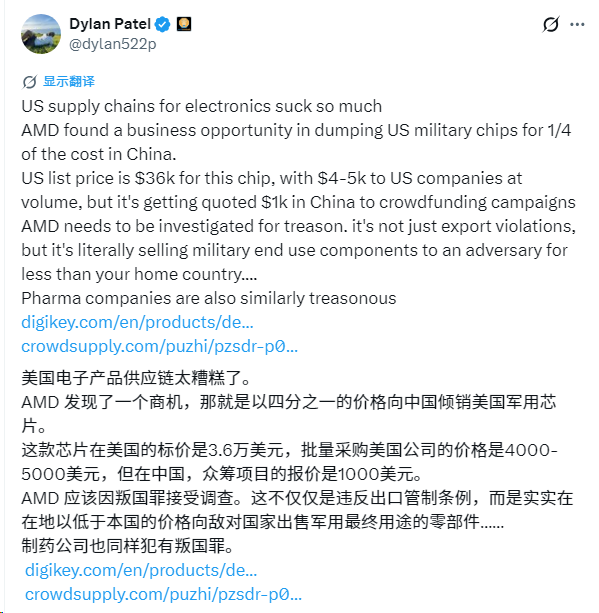
He wrote: "AMD is dumping U.S. military chips in China at a quarter of the cost. This is not only an export violation, but also selling military terminal components to opponents at a lower price than the domestic price. AMD should be investigated for treason."
In response to Tom's Hardware's report, AMD denied selling or shipping the chip directly to restricted areas. The company's statement said: "AMD is committed to fully complying with U.S. and global export regulations and has clear policy requirements for distributors, dealers and customers. Any shipments to restricted areas violate our policies. This incident is not related to any AMD direct sales or shipments. We investigate all suspected diversion cases, and if violations are found, we will report it to relevant authorities and terminate all business with the company."
The Zynq UltraScale+ RFSoC series to which this chip belongs was released by Xilinx in February 2019 and mass-produced in 2020. AMD continued to sell it after acquiring Xilinx. In the past six years, this chip has been sold to dozens or even hundreds of companies around the world. It is extremely difficult to track the specific source.
And there is a license exception clause in the export control framework that allows the export of such components to commercial companies in Group B countries, which means that chips may also be legally flown out through a third country and then transferred to China.

What is more intriguing is the delivery cycle. Authorized dealers such as Avnet and DigiKey show that the delivery time of XCZU47DR in the United States and Europe is 40 to 52 weeks, indicating that the component is in short supply in the Western market.
The project sponsor of the Chinese crowdfunding platform claims that its system based on this RFSoC can be shipped on November 6, 2026. While the United States is queuing up for chips, the Chinese crowdfunding products are ready for delivery.
Patel said in a follow-up post that AMD had conveyed the same message to him.
He emphasized that regardless of whether AMD sells it directly, the fact that a $36,000 chip appears on a Chinese crowdfunding platform for $1,000 is enough to indicate that there are serious loopholes in the export control system.
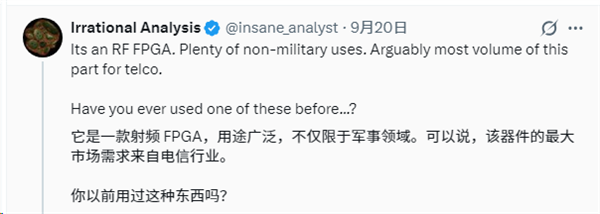
However, most netizens in the comment area did not buy what Patel said. Irrational Analysis countered that this is an RF FPGA, which has a large number of non-military uses. Most of the shipments of this chip are actually for the telecommunications industry, and asked bluntly, "Have you used this thing before?"

User Hand Banana pointed out that the XCZU47DR is not a military chip. It may meet "military specifications", but such parts are usually identical to non-military specifications versions, and the price premium comes from the certification cost rather than the chip itself.
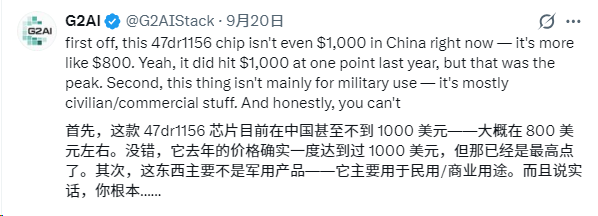
Some users pointed out that the current price of the chip in China is about US$800 instead of US$1,000, which was the peak last year. He also pointed out that unlike AI chip manufacturers selling directly to customers, FPGAs circulate through a large number of distributors and middlemen, and the price difference cannot simply be attributed to AMD.
Comments