
Abstract:
Indoor cleaning and disinfecting products may be an important source of nanoparticle formation, according to a study presented at the American Chemical Society (ACS) Fall Symposium. Researchers found that when fragrance components in detergents react with indoor ozone, they produce large amounts of nanoparticles, making the dose of particulate matter inhaled indoors reach or exceed the level of standing next to a busy road.
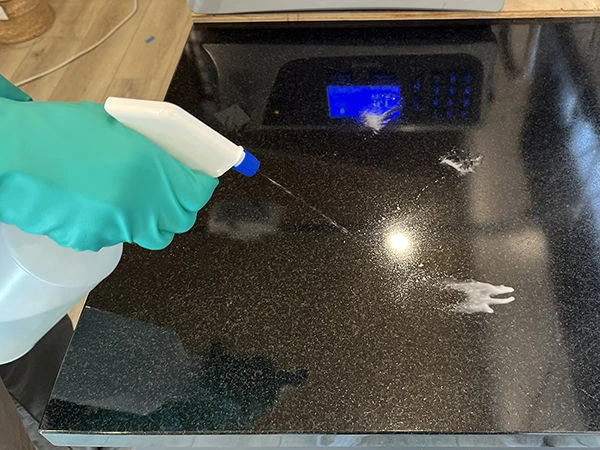
The research was conducted by a team led by Purdue University engineer Brendan Bull. The researchers performed high-resolution measurements of volatile organic compounds, including terpenes, in a small, purpose-built home at Purdue University and compared the results to different environments, including outdoors. Studies have found that simply spraying and wiping cleaner on countertops can increase indoor terpene concentrations above levels typically found in forested environments.
Terpenes are responsible for the fragrance of many cleaning products and are commonly found in the scents of plants such as lemon, pine, thyme and lavender. Modern cleaners often add essential oils such as citrus and pine to give users a clean and hygienic feeling. But these compounds weren’t originally designed to make nature smell cleaner. They often have biological roles, such as acting as defense signals for plants or helping plants ward off pests and predators. Terpenes are generally considered relatively safe when ingested in small amounts and may even have some health benefits, but researchers raised another question: What if these substances were suspended in kitchen air in large amounts as aerosols?

The researchers explained that forest environments typically do not have large amounts of ozone, but ozone may be present indoors and in offices. Ozone is a molecule composed of three oxygen atoms that is produced through an ionization reaction. It is commonly found in equipment such as copy machines and may also be produced by ultraviolet lamps and some high-efficiency air purifiers. Terpenes in cleaning products condense to form nanoparticles after an oxidation reaction with ozone. These particles are small enough to penetrate deep into the lungs and possibly further into the bloodstream.
Bull said that by the time people finish indoor cleaning, a large number of nanoparticles have often been formed in the air, and some of them have been inhaled during the cleaning process. Nanoparticle concentrations can rise to levels comparable to traffic emissions, the team said. However, the researchers do not believe that "terpene smoke" in the kitchen is equivalent to the health risks of air pollution near urban intersections. The particle composition of the two is different, but the total inhaled dose of particulate matter in indoor air is likely to be higher.
Researchers note that these nanoparticles may irritate the respiratory tract and promote inflammation, necessitating a reconsideration of whether fragrance ingredients in some cleaning products are truly essential. The problem, Bull said, is that people often don't see these particles, nor do they see smoke, dust or haze, but instead assume that because the air smells good, it must be clean.
The research team suggests that opening windows for ventilation after cleaning, choosing low-scent cleaning products, and gradually getting used to the original natural smell in the room may help reduce this type of pollution. The research was presented at the American Chemical Society's "Healthy Indoor Spaces: Connecting Microbiome and Chemistry" symposium.

Comments