
Abstract:
A new study finds that New Zealand's endemic straight-crested penguins are showing distinct trends in their only two breeding grounds: the Buenti Islands population has been roughly stable for at least 25 years, while the Antipodes Islands population has declined by more than 40% since 1995. The researchers call this "one penguin, two destinies" situation "Schrödinger's penguin," using the metaphor of Schrödinger's cat to illustrate that looking only at the overall rating of the entire species may conceal serious crises in local populations.
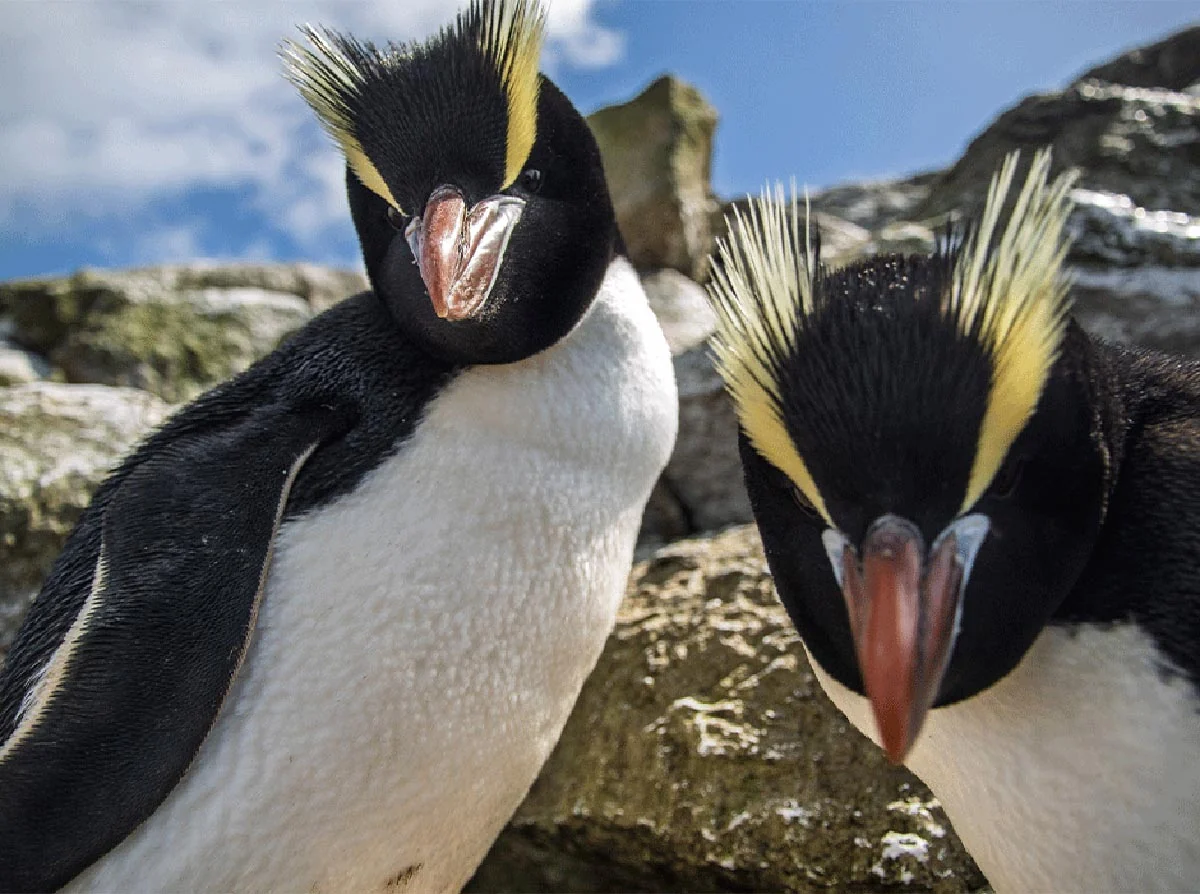
The research team used drones to photograph and count all breeding grounds in the two island groups from 2022 to 2024. This is the first comprehensive survey of the global population of this species, supplemented by ground counts to estimate the number of breeding pairs. The results showed that the Buendi Islands, which covers an area of only about 50 hectares, has about 27,800 pairs of breeding penguins, which is almost the same as the Antipodes Islands, which is about 40 times larger in area, and has about 29,800 pairs. The Antipodes Islands have historically been considered a prime breeding ground for this species.
The crested penguin only breeds in these two subantarctic island groups, about 800 kilometers southeast of New Zealand's South Island. It is one of the least studied penguins in New Zealand and one of only four penguins in the world classified as "endangered." The study points out that the current global endangered rating is largely based on limited and inconsistent population estimates from the 1970s; estimates of its abundance at that time may have been too high.
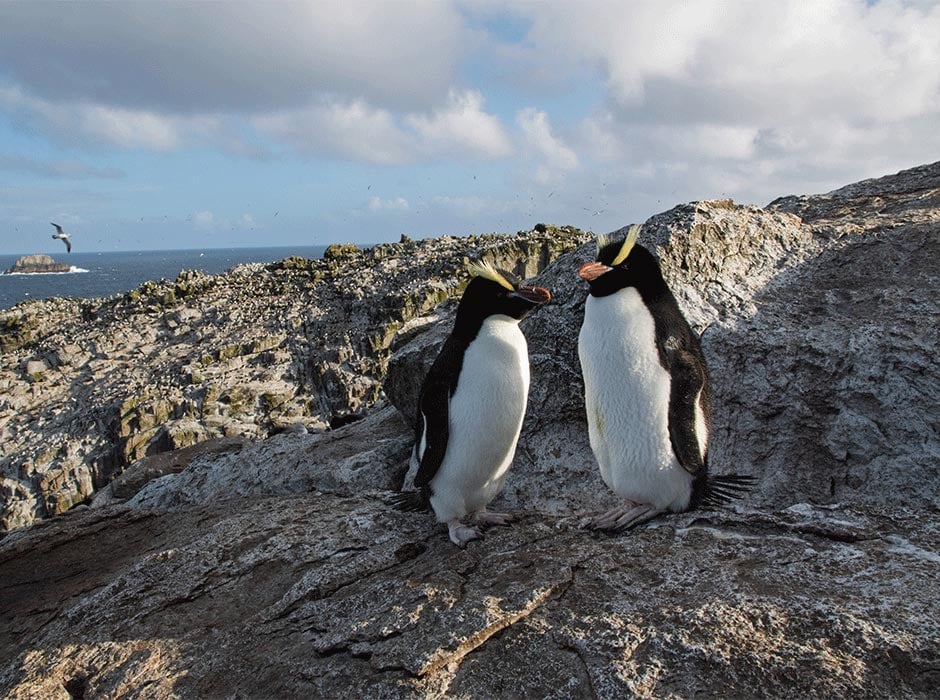
Researchers believe that the population decline in the Antipodes Islands may be related to a combination of factors. As penguin breeding colonies shrink and fragment, their collective ability to withstand Antarctic skua predation on penguin eggs and chicks decreases, and predation losses may increase as a result. The rockhopper penguins on the eastern part of the island declined sharply in the second half of the 20th century, and the number of breeding pairs is now less than 1,000. Research collaborators speculate that after the number of rockhopper penguins decreased, the skuas may have turned to prey on more straight-crested penguins, but this explanation is still speculative. Landslides triggered by more intense storms can also further fragment breeding colonies.
The activity ranges of penguins in the two places outside the breeding season are also different. The penguins of the Antipodes Islands will go to the Antarctic front to forage; the penguins of the Buendi Islands will stay in the more sheltered and possibly more fertile waters near their breeding grounds. The research team believes that differences in marine environment and migration routes may be one of the reasons why the populations in the two places have different trends.
The biggest concern of the study is that if the two populations are assessed together, the stable status of the Buendi Islands may lower the overall risk level, making the species' global rating appear to improve from "endangered" to "vulnerable." This is not because the International Union for Conservation of Nature has adjusted its rating, but rather the assessment made by researchers based on new survey data: Such an overall figure would downplay the decline of more than 40% of the Antipodes Islands, and may also underestimate the threat of industrial fishing to the Buendi Islands population, thus weakening the protection of what may be the last stable stronghold of the species. The research was published in PLoS ONE.
Comments