
Abstract:
A tiny jumping spider known for its keen vision is causing scientists to rethink whether "dreaming" is not an exclusive ability of vertebrates. New research has found that sleeping jumping spiders display behavioral characteristics that are highly similar to those of mammals during the rapid eye movement (REM) sleep stage, suggesting that these small arthropods may also have some form of dream experience.
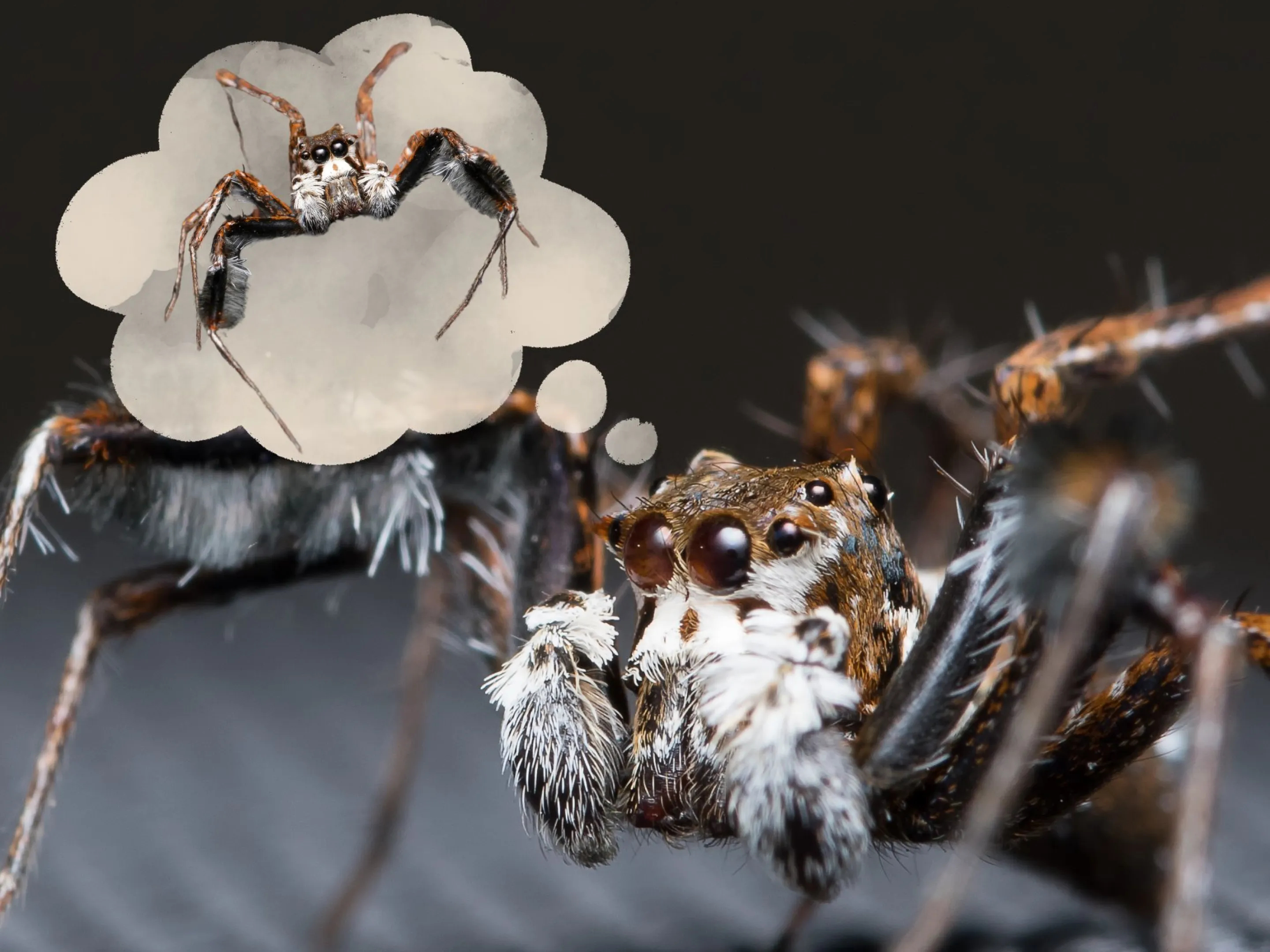
The research object is a common jumping spider. Known for their excellent vision and complex behavior, these spiders have unusually large brains for their body size. Scientists have long suspected that jumping spiders may have nervous systems far more complex than those of ordinary invertebrates.
The research team used juvenile jumping spiders with transparent exoskeletons as observation objects. Because the spiderlings' bodies are not yet fully pigmented, the researchers were able to directly observe the movement of the retinas inside their heads. During the experiment, scientists recorded that these spiders would periodically enter special sleep stages when they were stationary at night.
During these stages, the spider exhibits rapid retinal movements, accompanied by twitching of the limbs, curling of the feet, and subtle swings of the appendages. These activities do not occur randomly but occur repeatedly in regular cycles, usually of short duration, followed by longer periods of quiet rest.
The researchers noted that this pattern bears striking similarity to the rapid eye movement sleep stages of birds and mammals. In humans and many other vertebrates, REM sleep is often closely associated with dreaming. During this stage, brain activity increases, the eyeballs move rapidly, and the body experiences slight muscle twitches.
In the case of jumping spiders, although scientists cannot directly prove that they are dreaming, the observed phenomena suggest that these animals may be experiencing complex neural activity during sleep.
What’s more interesting is that during the research, it was recorded that some jumping spiders will suddenly contract their limbs during sleep, showing a posture similar to preparatory movements for hunting. The research team believes that this behavior may be related to visual and motor experiences while awake, similar to the phenomenon in which higher animals reproduce fragments of daytime activities during sleep.
Scientists say that it is still unclear what function this sleep state plays, but in many animals, REM sleep is usually related to memory consolidation, improvement of learning ability, and brain information processing. If jumping spiders do have sleep-like mechanisms, it means complex neural processing capabilities may be more widespread across the animal kingdom than previously thought.
The researchers pointed out that this discovery further challenges the traditional concept that "only large animals and advanced vertebrates have complex sleep states." Even small arthropods, with brains of only a few hundred thousand neurons, may have cognitive abilities far beyond expectations.
Although there is no final answer to the question of whether spiders actually dream, research suggests that neural activity and behavioral manifestations during sleep may not be unique to mammals. As future research into invertebrate nervous systems continues, scientists may be able to better understand the origins of dreams, consciousness, and complex behaviors in the evolutionary history of animals.
Comments