
Abstract:
A research team at the Singapore University of Technology and Design (SUTD) has developed a new bionic robot platform called ALBATROSS. Its design concept can be summarized as "falling like maple seeds and sailing like a sailboat." The system is designed to solve the problem of long-term monitoring in remote waters far away from the coast. It is expected to continue working at sea for several weeks in the future, providing a low-cost, high-efficiency solution for environmental monitoring.
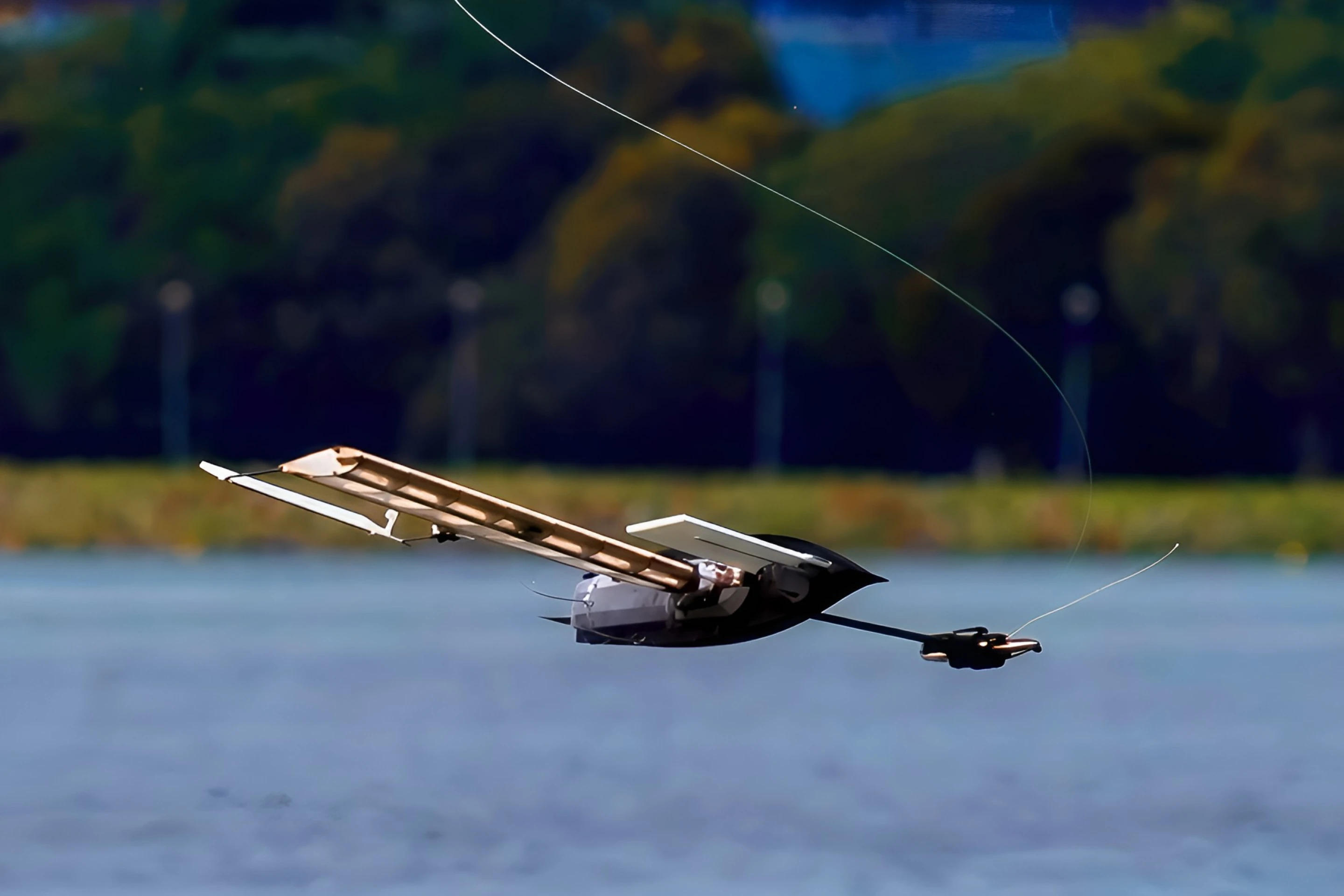
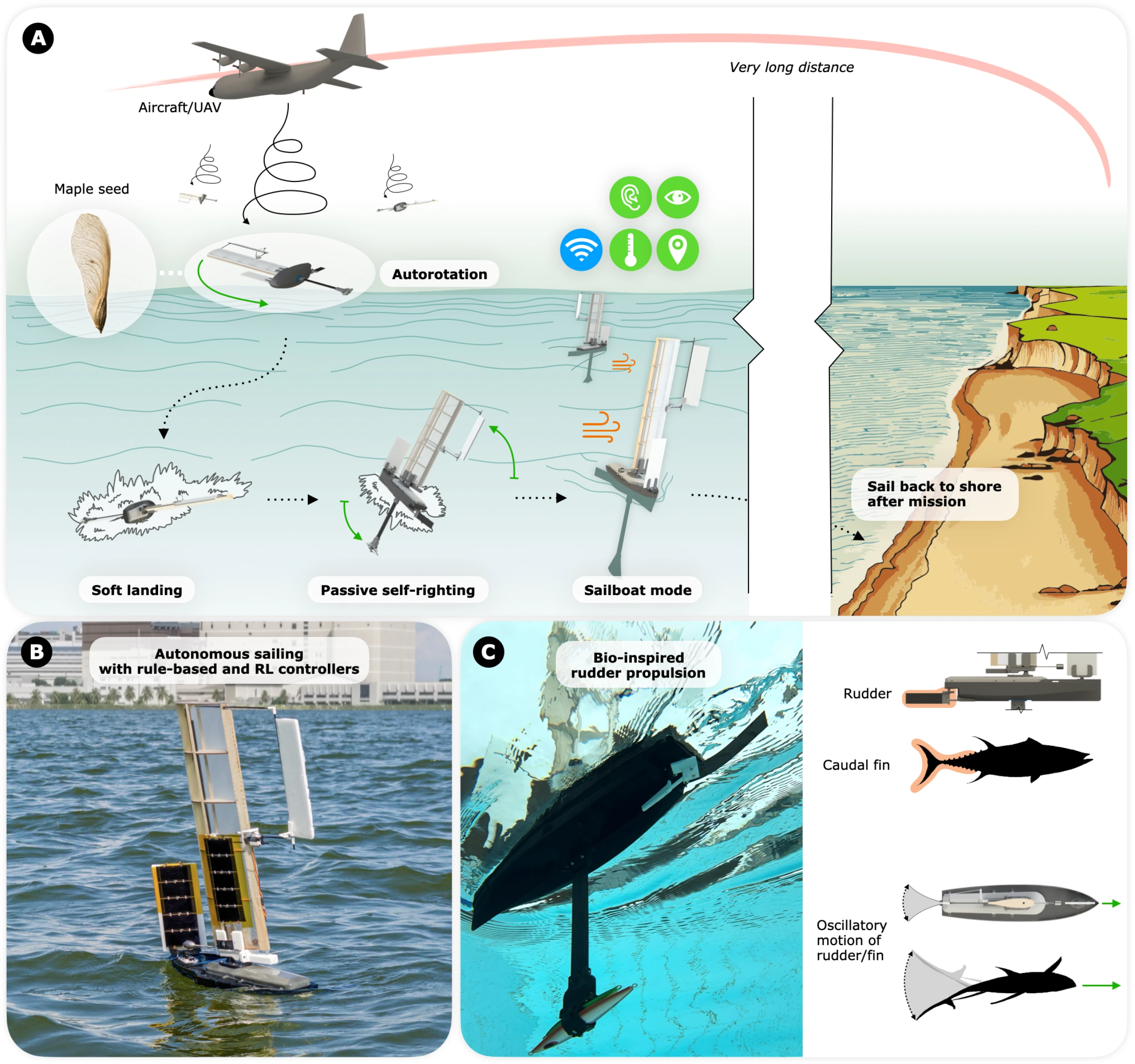
ALBATROSS stands for "Airborne Lander with Buoyant AuToROtating Sailing Sensor". Researchers hope to combine the advantages of rapid deployment of aviation platforms with the long-lasting endurance of maritime navigation equipment, so that the robot can be dropped directly from the aircraft to the target sea area, automatically adjust its attitude after falling into the water, and use wind power to sail autonomously.
For a long time, ocean environmental monitoring has faced a dilemma. Although traditional ships can stay in the mission area for a long time and collect data, it often takes a long time to reach the target location; while aircraft can quickly reach the designated area, but they cannot stay continuously to perform monitoring tasks. The research team believes that ALBATROSS combines the advantages of both, and can be deployed quickly and stay on site for a long time.
In actual usage scenarios, aircraft will transport ALBATROSS to the target sea area and implement airdrops. The robot is equipped with two rigid wing sails. These wing sails not only slow down the descent speed, but also act as a source of power for the sailboat after falling into the water, so there is no need for additional parachutes or special landing gear.
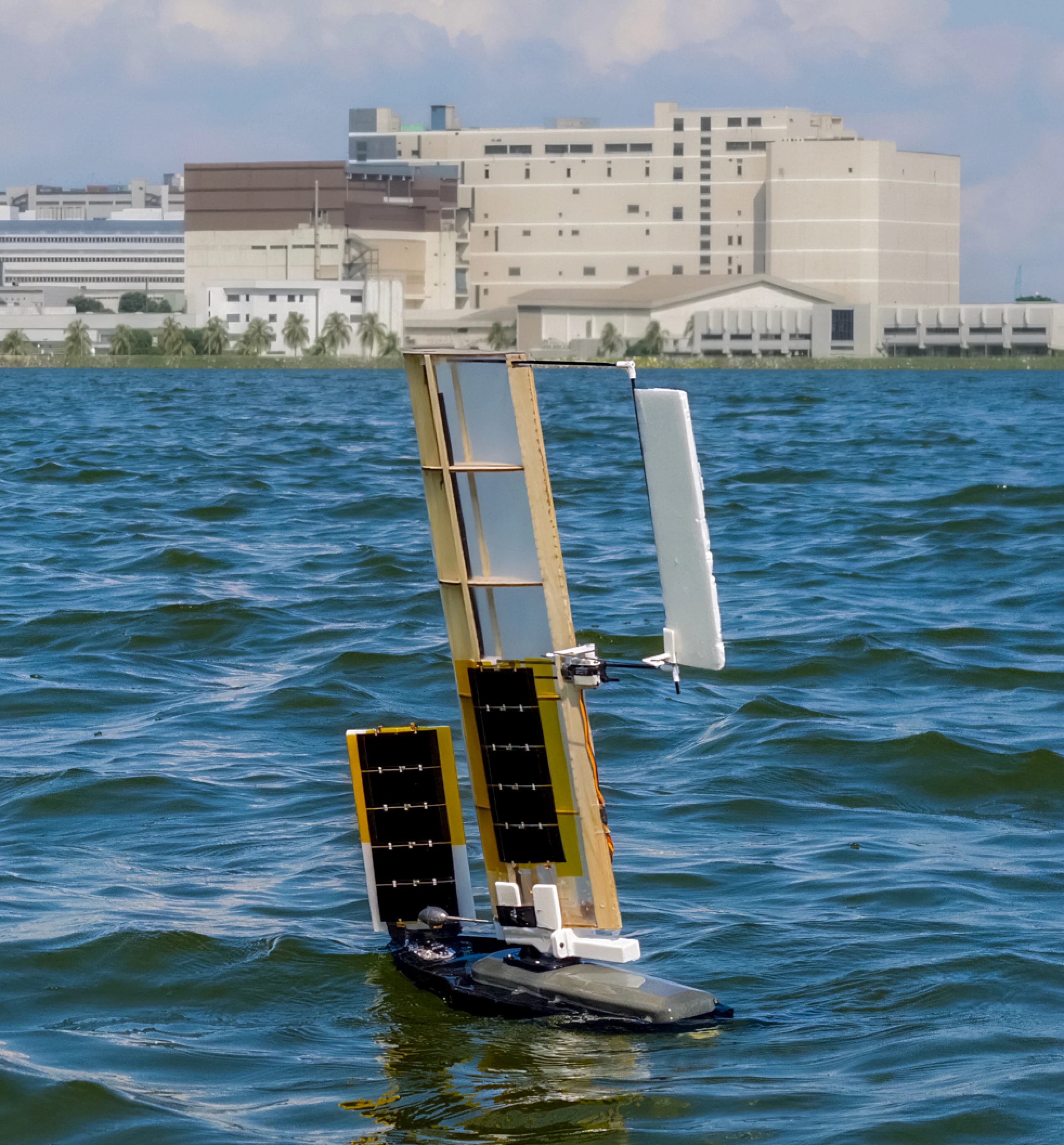
During the descent process, the wing sails will passively rotate like maple seeds, producing a stabilizing effect through rotation, slowing down the falling speed and maintaining a stable attitude. When the platform touches the water, its special weight distribution design will help the robot automatically restore its correct posture. Then, the two wing sails began to use wind energy to push the platform forward, while the rudder surface designed after a fish tail structure was responsible for controlling the course.
The research team stated that the design concept of ALBATROSS is not to fight against the natural environment, but to make full use of natural forces to complete tasks. The robot relies on passive rotation to complete safe landing, realizes automatic righting through center of gravity design, and then uses wind power to achieve continuous motion. The researchers believe that this relatively simple mechanical structure is expected to significantly reduce costs and promote large-scale deployment in areas that are difficult to reach with traditional methods.
After entering the cruising state, ALBATROSS can move autonomously between multiple preset waypoints relying only on three actuators and three navigation sensors. In order to verify the design effect, the research team once released the prototype from an altitude of 150 meters. The test results showed that the robot remained stable during its descent, entered the water with low impact force, and successfully completed autonomous righting and navigation tasks. Researchers estimate that without the rotation deceleration system, the impact energy experienced by a similar platform when it falls into the water will increase by approximately 18.5 times.
In field tests at the Singapore Reservoir, the larger ALBATROSS prototype achieved a top speed of approximately 1 km per hour and operated continuously for approximately 3 hours. During the period, airborne sensors successfully collected environmental data such as humidity, temperature and wind direction.
The research team believes that this platform can be widely used in fields such as environmental monitoring, climate change research, search and rescue operations, and maritime security in the future. Because it mainly relies on wind energy for propulsion, its mission execution time is expected to be significantly extended while reducing energy consumption.
However, at present, ALBATROSS is still mainly being tested in a controlled environment and has not yet experienced the rigorous test of the real open sea. Researchers said that the next phase of work will focus on promoting the transition of the platform to actual marine environment applications, including improving structural strength, durability and reliability in harsh sea conditions.
Future versions of ALBATROSS are also planned to be equipped with richer sensing equipment, including underwater sensors, sonar systems and larger-capacity energy storage devices, so as to undertake more complex and long-term ocean observation tasks.
Comments