
Abstract:
A study published in Science suggests that Earth's next ice age may have begun about 2,000 years ago, but human-caused climate warming later reversed ice expansion in the Arctic. Researchers analyzed the Barnes Ice Cap on Canada's Baffin Island and found that it, as the last remaining part of the Laurentide Ice Sheet, expanded again after a long period of shrinkage until temperatures rose in the summer of about 1960 and the ice cap began to shrink.
The Laurentide Ice Sheet covered most of Canada and the northern United States about 95,000 to 20,000 years ago. At its peak, it extended from near the Arctic Circle to Illinois, and the local ice layer was about 3.2 kilometers thick. The remaining Barnes Ice Cap is located in the middle of Baffin Island, Nunavut, Canada, and is roughly the size of the U.S. state of Delaware.
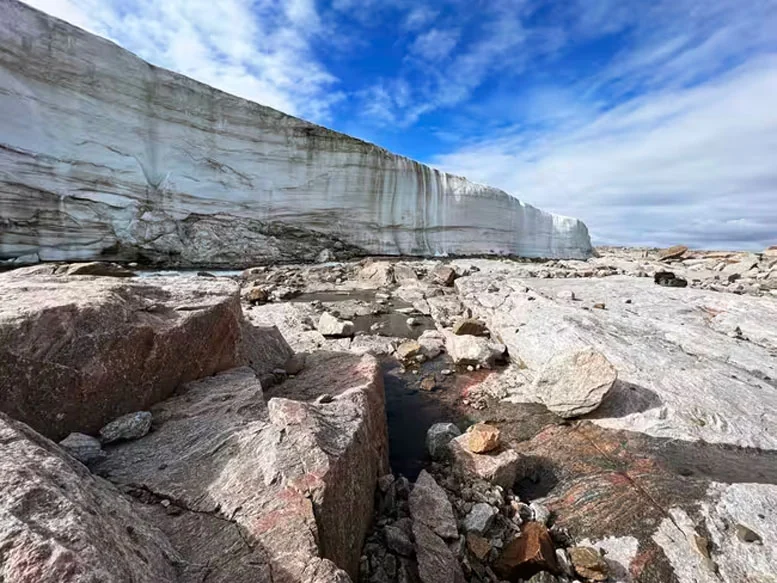
The research team reconstructed the timeline of ice advancement and retreat by measuring the carbon-14 ages of frozen plants under the edge of the ice cap and combining it with vegetation samples exposed from nearby smaller ice caps. The Barnes Ice Cap is frozen on bedrock and does not slide along the ground like many glaciers, so it can preserve buried plants as it expands; as the ice retreats in recent years, these plants have been re-exposed, providing researchers with clues to trace changes in the ice edge. Data show that the remnants of the Laurentide Ice Sheet reached its minimum size about 3,000 years ago, began to expand again about 2,000 years ago, and reached a new maximum extent in about 1960.
Researchers believe that if the re-expansion of the ice sheet from its minimum state is regarded as the beginning of the ice age, then the next ice age does not have to wait for thousands or even tens of thousands of years to begin, but has already started and was interrupted by human-induced summer warming. Ice sheet expansion and continental-scale ice formation are still extremely slow processes; the research team estimates that it will take thousands of years for significant cooling, and about 30,000 years for the Laurentide Ice Sheet to return to a size that covers large areas of North America.
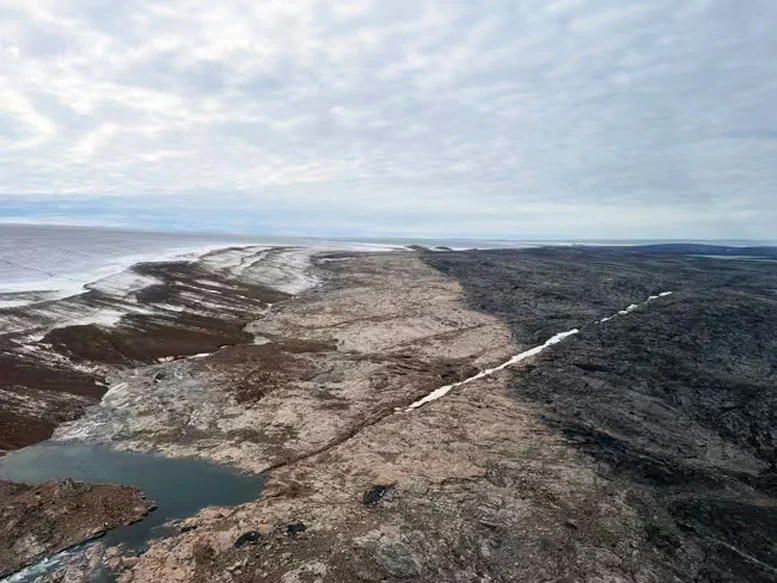
The word "glacial age" is also different from its daily usage: strictly speaking, the earth is still in the late Cenozoic glacial period that began about 34 million years ago, during which colder glacial periods and warmer interglacial periods alternated; the "next glacial period" in people's mouth usually refers to the next round of glacial periods. This study regards the re-expansion of local ice sheets as the beginning of the glacial period. This definition is different from the traditional judgment of waiting for the formation of continental ice sheets.
Currently, greenhouse gas concentrations are still high, and scientists are unable to determine when the next ice age may start again. Models also show that the Barnes Ice Cap may completely melt within the next few hundred years; if it disappears, the ice will lose an important starting point for expansion when the climate turns cold in the future.
Comments