
Abstract:
On October 15, the International Bureau of Weights and Measures held a meeting in Versailles, France, and the majority of member states voted in favor of a resolution on "Technical Measures Required to Ensure the Continuity of Coordinated Universal Time" (UTC), which means that the leap second that has been used for more than half a century will be cancelled.
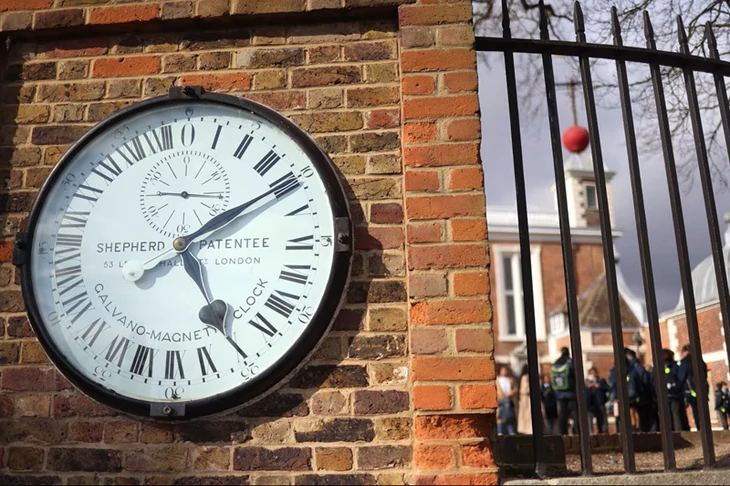
According to the resolution, the move to cancel leap seconds will take effect on May 20, 2027 (World Metrology Day). Previously, at a meeting of the International Bureau of Weights and Measures in 2022, member states voted to adopt a resolution calling for a plan to phase out leap seconds no later than 2035.
The resolution also recommends replacing leap seconds with leap time, that is, waiting until the difference between "atomic time" (TAI) and "universal time" (UT) is 3,600 seconds (i.e. 1 hour) before making adjustments. Relevant experts said that it may take more than 3,000 years for such a difference to appear.
What is a leap second?
There are two time measurement systems in the world: "universal time" based on the rotation of the earth and "atomic time" based on the atomic oscillation period.
However, due to the gravity of the moon, changes in the earth's interior, and the movement of surface water and ice, the earth cannot rotate at a uniform speed, resulting in differences in the results of the two timing systems. In order to make "atomic time" as close as possible to "universal time", the concept of "coordinated universal time" came into being.
"Coordinated Universal Time", as the current global time system, adopts the second length of "atomic time". When the difference between "atomic time" and "universal time" reaches 0.9 seconds, "coordinated universal time" adds or subtracts 1 second, which is a leap second.
Since the official use of Coordinated Universal Time in 1972, a total of 27 positive leap second adjustments have been made around the world.
Comments