
Abstract:
A new satellite engine that can directly use the Earth's upper atmosphere as propellant is attracting attention from the aerospace industry.
Researchers believe that if the relevant technology is finally proven in space, future satellites are expected to operate in ultra-low Earth orbit for a long time or even indefinitely without carrying traditional propulsion fuel.
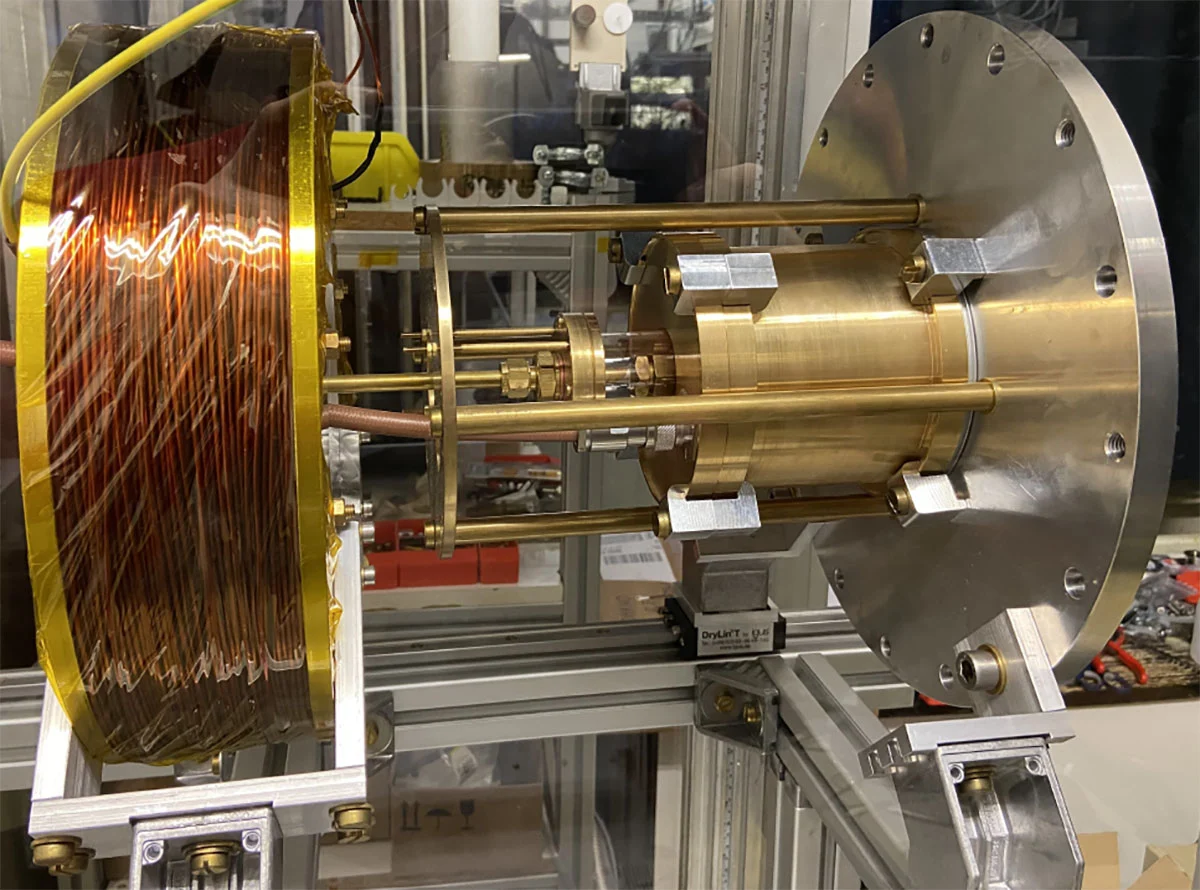
The concept comes from the doctoral work of Francesco Romano, a researcher at the University of Stuttgart in Germany. The core idea is to convert the atmospheric molecules that originally slowed down the satellite into fuel for the propulsion system, thereby turning factors that hinder the satellite's operation into the source of power needed to maintain the orbit.
In the ultra-low Earth orbit region, which is about 100 kilometers to 450 kilometers away from the earth, satellites can gain many unique advantages. Being closer to the ground, remote sensing equipment can capture clearer images, and communication and radar systems require significantly less power. At the same time, the atmospheric resistance in this area can also naturally drag the satellite back into the atmosphere and burn it after it is scrapped, thereby reducing the problem of long-term accumulation of space debris.
However, these advantages come with a serious drawback.
Even at an altitude of hundreds of kilometers, the residual atmosphere will continue to slow down satellites. If the thrust is not continuously replenished, the satellite's orbital altitude will gradually decrease and eventually fall into the atmosphere. Therefore, satellites currently operating in lower orbits usually rely on onboard propulsion systems to make regular orbit corrections, and these propulsion systems must carry limited fuel reserves.
Traditional electric propulsion systems mostly use expensive propellants such as xenon. After the fuel is exhausted, the mission life of the satellite is usually forced to end, regardless of whether the satellite itself is still intact.
The solution proposed by Romano belongs to the "atmospheric breathing electric propulsion system". Unlike traditional methods, this system directly collects the oncoming thin atmosphere during flight, introduces the gas molecules into the engine, and then uses an electric field to convert these molecules into plasma, which is then ejected backward to generate propulsion.
Theoretically, as long as the satellite is still at an orbital altitude with residual gas, it can continue to obtain a source of propellant without having to carry a large amount of additional fuel.
However, turning this seemingly simple idea into reality is not easy.
Researchers point out that one of the biggest challenges in ultra-low orbit environments comes from atomic oxygen. In the upper atmosphere, ultraviolet light breaks ordinary oxygen into monatomic oxygen. This substance has extremely strong oxidizing ability and will quickly corrode key components such as metal electrodes, accelerating grids, and cathodes in traditional ion engines.
In particular, the cathode system, which is responsible for neutralizing the charge, is most susceptible to damage. Once the cathode fails, the satellite will not be able to release charged particles normally, and the propulsion system will also lose its function.
In addition, the upper atmosphere is not a stable environment. Gas density fluctuates with day and night changes, solar activity, and orbital position, which further increases the difficulty of propulsion system design.
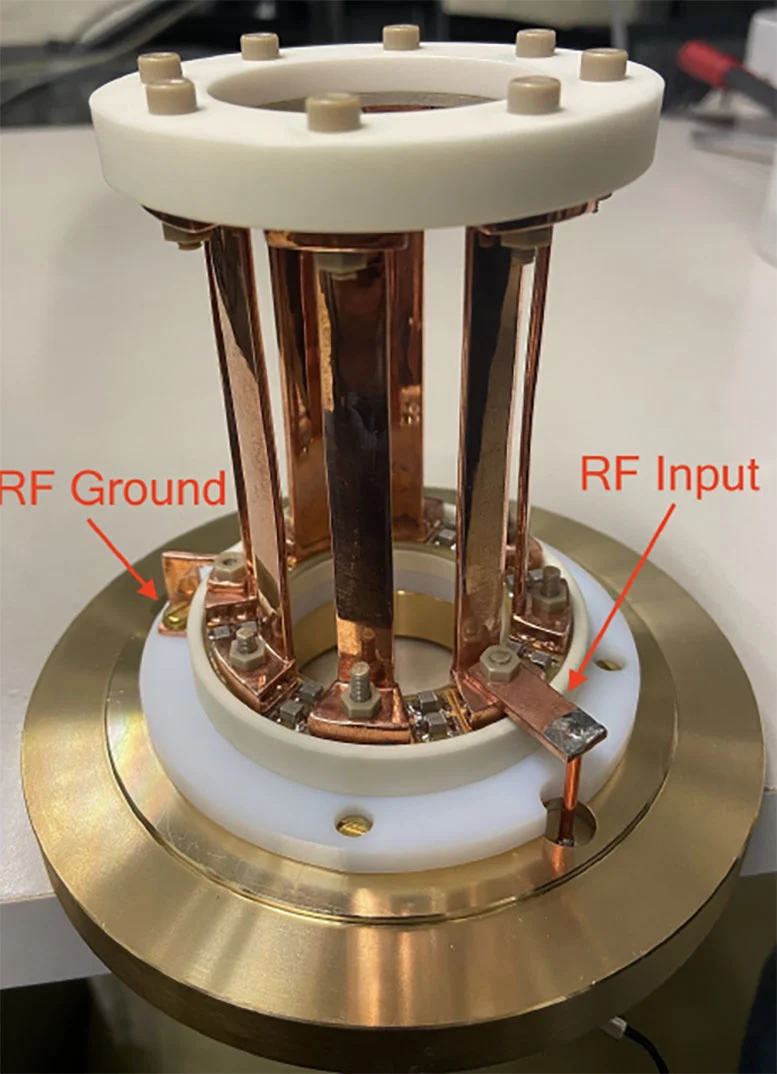
In order to deal with these problems, Romano designed a new type of radio frequency spiral wave plasma thruster. Compared with traditional ion engines, this design does not rely on neutralizers and cathode systems that are susceptible to corrosion, and achieves propulsion tasks by generating a quasi-neutral plasma jet that contains both positive and negative ions.
The research team also developed specialized atmospheric collection structures. The most effective one is an air intake device with a parabolic mirror structure. In experiments, this design was able to capture about 94.3% of oncoming gas molecules. Even if the satellite attitude deviates to a certain extent, the drop in collection efficiency is relatively limited.
The core part of the thruster adopts a structural design similar to the "birdcage antenna" in magnetic resonance imaging equipment. Test results show that this solution can transmit about 99% of the radio frequency energy into the thruster, significantly reducing the energy loss caused by the traditional coil structure.
Laboratory simulation results show that the propulsion system only requires 50 to 60 watts of power to form a stable plasma flow, and in an actual orbital environment, the power required to maintain continuous operation is expected to be less than 1.6 kilowatts. Researchers believe that this demand can be fully met by ordinary solar panels.
According to model calculations, if the system performance meets expectations, the satellite can maintain an orbit at an altitude of about 190 to 250 kilometers for a long time without the need to replenish traditional propellants. This not only means that the mission life may be significantly extended, but also the launch quality and mission cost can be reduced.
The researchers emphasized that this technology is still in the experimental verification and theoretical modeling stage and has not yet been tested by real space missions. Its long-term reliability, orbital environment adaptability and actual propulsion efficiency still need to be further verified.
Despite this, the industry generally believes that atmospheric breathing propulsion systems represent an important direction for the development of ultra-low orbit satellites. If successfully deployed in the future, the next generation of Earth observation satellites, communication satellites and even other planetary probes are expected to rely on natural gas in the surrounding environment to maintain operation, thus getting rid of dependence on traditional propellants.
Comments