
Abstract:
A study recently released by researchers at the University of Washington pointed out that if the United States implements daylight saving time permanently, the sunrise time in winter mornings will be delayed by an hour as a whole, which may cause millions of children to have to go to school before it is dark. Research estimates that compared with the current system of switching between daylight saving time and standard time twice a year, permanent daylight saving time may increase the cumulative number of U.S. children's commutes to school in the dark by at least 2 billion times, adversely affecting road safety, sleep and circadian rhythms.
This research was published in the academic journal "Current Biology" on October 29, 2026, and was completed by a research team from the University of Washington. The researchers combined the actual opening times of schools across the United States, the number of students enrolled, and the longitude and latitude data of the school's location to calculate the number of times children travel to and from school before sunrise under different time systems, and further analyzed the possible impact of insufficient early morning light.
The debate over permanent daylight saving time in the United States has been going on for years. This summer, the U.S. House of Representatives passed a bill aimed at making daylight saving time permanent, hoping to eliminate the annual return to standard time in the fall. 19 states have previously passed relevant pre-authorization measures, including Washington State. If the bill at the federal level eventually becomes law, these states will be able to implement permanent daylight saving time. However, the bill is still stuck in the Senate, with school hours and lack of early morning light in winter becoming one of the core issues in the debate.
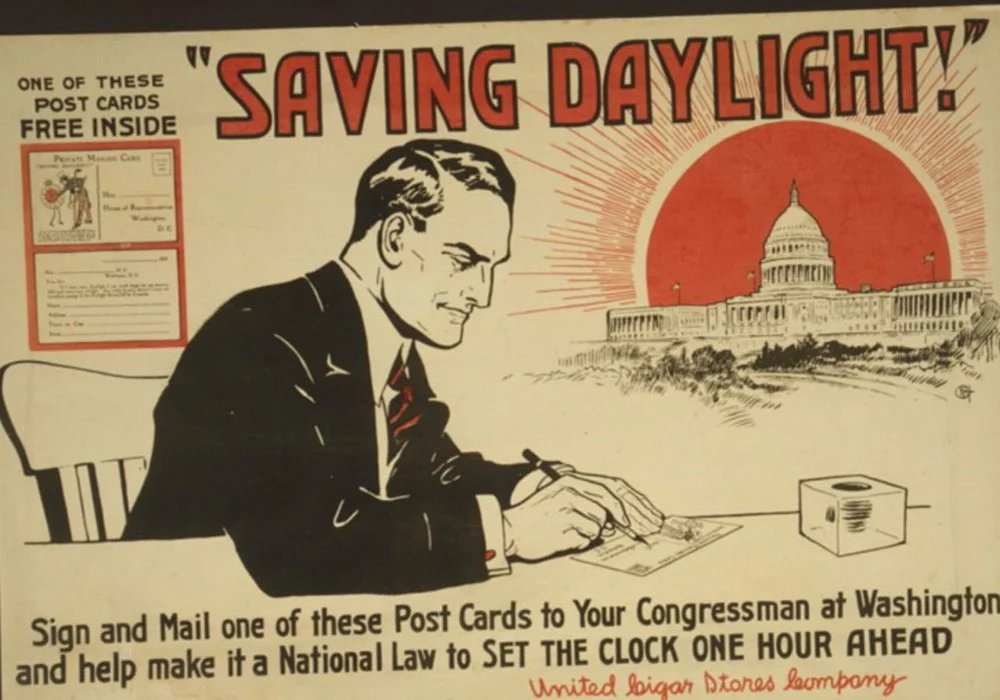
The so-called permanent daylight saving time means that daylight saving time is maintained throughout the year, instead of setting clocks forward one hour in the fall and forward one hour in the spring. The direct result of this is that there is more natural light in the winter evening, but at the same time, the sunrise in the early morning will be delayed by one hour on the clock.
For adults, this change may be mainly reflected in commuting time and daily activity arrangements, but for children who must go to school at a fixed time, the impact is more direct. Especially in areas where the daylight hours are short in winter, permanent daylight saving time may cause many students to start commuting to school before dawn.
The research team first analyzed 14 of the 19 states that have pre-approved permanent daylight saving time, and used the specific start times of local schools, student numbers, and geographic locations for calculations. The results showed that under permanent daylight saving time, children would attend school more often in the dark in all states analyzed.
Among them, Washington state is expected to add nearly 35 million dark commutes, while Georgia has the largest increase among the states involved in the study, with an expected increase of 71 million. This is especially true for Mississippi and Alabama. With local schools starting on average before 8 a.m., there are currently about 2 million dark commutes in the two states each year; if daylight saving time is permanently implemented, this number will exceed 20 million, an increase of about ten times.
Geographical location also plays a big role. Communities located on the western edge of the same time zone will have sunrise later than those in the eastern part of the time zone. The town of Forks, Washington, for example, may be more significantly affected. Researchers pointed out that some communities that currently have almost no early-morning school trips in the dark may suddenly face the reality of large numbers of students traveling in the dark.
The study also found that dark commuting is not only a matter of life convenience, but also involves traffic safety. By analyzing U.S. traffic crash data, researchers found that fatal crashes involving school-age pedestrians were about twice as likely to occur in the dark early morning hours as after sunrise.
The research team believes that this result shows that insufficient light in the early morning may increase the traffic risks faced by children when walking to school. Especially in winter, students may need to walk on roads with lower visibility, and it may be harder for drivers to spot pedestrians in time.
In addition to traffic safety, natural light in the morning also plays an important role in the body's biological clock. Exposure to natural light in the morning helps the body calibrate its circadian rhythm, which affects sleep, mood and appetite. If children are chronically deprived of early morning light, it may be more difficult for the body's internal circadian rhythms to synchronize with external circadian changes.
Guadalupe Rodríguez Ferrante, the lead author of the study and a postdoctoral fellow in biology at the University of Washington, said that the research team hopes to use actual data to find out how many children will be affected by permanent daylight saving time, rather than staying in the abstract time system debate.
It is worth noting that the estimate of at least 2 billion new dark commutes nationwide in the United States was further extrapolated by researchers based on data from 14 states. The study's calculations assume students leave home at approximately 8 a.m., which may be later than the actual departure time for some students. Because some schools also provide early arrival services such as breakfast, some children may need to go out earlier, so researchers believe that the actual increase in the number of dark commutes across the country may even be higher than estimated.
Those who support permanent daylight saving time usually emphasize that adding one hour of sunshine in the winter evening will allow people to have more time for outdoor activities after get off work, and is also beneficial to business activities and leisure consumption. But the researchers pointed out that the so-called increase in sunlight in the evening is actually a shift from early morning sunlight, and is not an actual increase of one hour of sunlight in the day.
Horacio de la Iglesia, senior author of the study and professor of biology at the University of Washington, believes that the benefits and costs of permanent daylight saving time will not be borne equally by everyone. Adults can adjust activity times according to work schedules, but children must arrive at school at the time specified by the school and are therefore more susceptible to the dark environment of winter mornings.
Some people have suggested that this problem can be solved by delaying school start times. But researchers believe this adjustment could have a knock-on effect. If schools as a whole postpone the start of classes, parents' working hours, corporate work arrangements, and the daily rhythm of the entire society may be delayed. Ultimately, people may lose the evening light benefits that permanent daylight saving time was hoped to preserve.
Researchers also pointed out that in recent years, some areas in the United States have postponed high school start times to adapt to the characteristics of adolescents' circadian rhythms. Permanent daylight saving time may offset some of the benefits of such adjustments.
This study does not mean that permanent daylight saving time will necessarily cause all children to go to school in the dark, but it quantifies the possible impact of the time system change using data on actual school start times and geographical location. The findings also remind policymakers that when discussing what time clocks should be kept throughout the year, they cannot just focus on whether there is more sunlight in the evening. They must also consider factors such as early morning light, children's traffic safety, and the body's biological clock.
Related articles:
Daylight saving time had high hopes, but it actually brought many negative effects
Trump calls out again: The permanent daylight saving time bill must be promoted
Comments