
Abstract:
In a laboratory at the University of Queensland in Australia, a scientific experiment that began in the 1920s is still being carried out today. Although it has lasted for nearly a century, this experiment is still not over, and the object it studied is actually a piece of black asphalt that looks like a solid. The experiment, widely considered one of the longest-running in the world, is known as the "Asphalt Drop Experiment."
The experiment was first launched in 1927, when Thomas Parnell, a professor of physics at the University of Queensland, wanted to prove to his students that some seemingly solid substances were actually still liquids, just flowing extremely slowly.
To test this idea, the researchers poured heated asphalt into a funnel, let it cool and solidify, and then let it sit for several years. Over time, the asphalt begins to flow slowly and almost imperceptibly to the naked eye, eventually forming droplets from the bottom of the funnel.
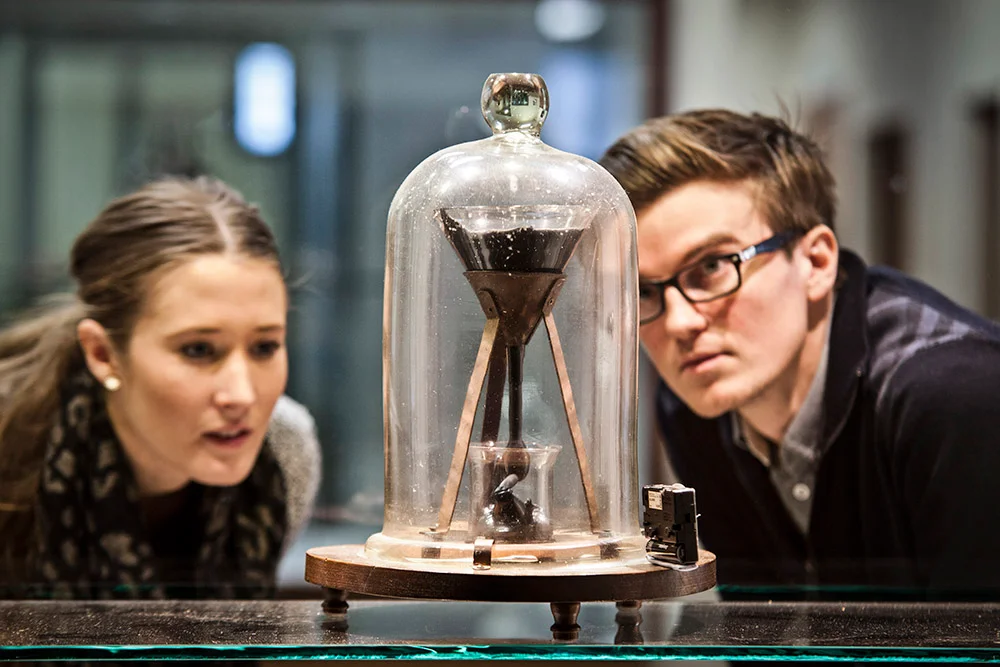
The experiment's most famous feature is its astonishing time scale.
Since its inception, the asphalt has only been dropped a dozen times, often with many years between drops. Compared with water, its viscosity is hundreds of billions of times higher, so even after decades, it can only form a slowly falling drop of liquid.
Historical records show that since the start of the experiment, many drops have been officially recorded. However, due to the extremely long intervals between drops, many researchers have spent their entire careers never witnessing a single drop.
Even more legendary is the fact that the last few drops have almost missed real-time observations.
In 2000, the laboratory installed a camera monitoring system, hoping to record the moment when the asphalt droplets fell off. However, the droplets fell during equipment maintenance, causing scientists to miss key images again.
Since then, similar situations have occurred many times. Although researchers continue to improve monitoring equipment, it has always been a challenge to truly completely record the entire process of a drop of asphalt from its formation to its shedding.
Today, the experiment continues.
According to current observations, a new drop of asphalt is slowly growing at the bottom of the funnel. Although scientists can roughly estimate its development trend, they still cannot accurately predict when it will fall off. Because the flow rate is extremely slow, even with high-precision monitoring equipment, it is difficult to give an accurate timetable.
Researchers say this experiment continues to attract attention because it is a good example of how humans' intuitive understanding of the state of matter is not always accurate.
Most people think of asphalt as a solid because it holds its shape and doesn't flow like a liquid in everyday life. But from a physics perspective, asphalt is actually an extremely viscous fluid that flows so slowly that it is barely noticeable on everyday human timescales.
Therefore, this experiment is often used to explain to students that there is no absolute boundary between solids and liquids, and the important impact of different time scales on the observation of physical phenomena.
In the past hundred years, the experimental device itself has also become an important witness to the history of science. It has been maintained by multiple generations of researchers, and has spanned world wars, technological revolutions, and changes in multiple eras.
Although the experimental principle is very simple, a funnel, a piece of asphalt and a long wait may seem inconspicuous, but it has become one of the most famous long-term scientific experiments in the world and reminds people that some natural phenomena develop at a speed far beyond the scale of an individual's life.
For the University of Queensland research team, they are still waiting for the next drop of asphalt to arrive. No one can say exactly whether that moment will happen tomorrow, next year, or beyond, but what is certain is that, nearly a century later, this experiment in time, matter, and patience is still not over.
Comments