
Abstract:
U.S. President Donald Trump announced on October 15, local time, that the execution of former U.S. Army Major Nidal Malik Hasan will not be broadcast live online. Previously, U.S. Secretary of Defense Pete Hegseth had announced that the government planned to publicly broadcast Hassan's execution by firing squad, claiming that this would allow the public to see the consequences of serious violent crimes. After the plan was announced, it aroused cross-party criticism in the United States and attracted attention from the international community. Trump finally decided to cancel the live broadcast arrangement.
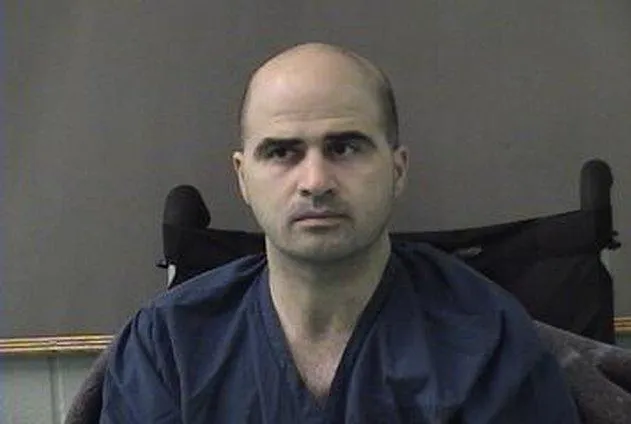
Trump stated on the social platform Truth Social that he believed that public live broadcasts of executions could have a deterrent effect on the world and allow people to see how the United States handles terrorist criminals. But he also acknowledged that many well-intentioned people do not want to watch a person be executed via live broadcast or other video formats. Therefore, Hassan will still be executed by firing squad as originally planned, but the entire process will not be broadcast live to the public.
Trump also said that if the immediate family members of the victims are willing, they can go to the scene to watch the execution process in person. He believed that the families of the victims should have the opportunity to witness the execution of judicial sentences. According to previously announced arrangements, Hassan's execution is scheduled to be held at Fort Hood, Texas, on December 3, 2026, and will be executed by firing squad.
Hassan is a former U.S. Army major and a psychiatrist. On November 5, 2009, he opened fire at the Soldier Readiness Center at the Fort Hood military base in Texas, killing 13 people and injuring 32 others. The attack, which occurred at a site where a large number of troops were preparing to undergo predeployment inspections, was one of the deadliest military base shootings in U.S. history.
Hassan was subsequently convicted by a military court and sentenced to death in 2013. The U.S. Army has previously completed relevant military justice procedures, and the Trump administration has advanced execution arrangements for the death penalty this year. The manner and publicity of Hassan's execution has created additional controversy as Hassan was paralyzed from the chest down after the attack and has since used a wheelchair.
The live broadcast plan was originally proposed by Hegseth. He previously said the government would ensure the public could watch the executions because people needed to understand the serious consequences of committing such a crime. The Pentagon originally planned to broadcast the execution live on an online platform, hoping to use the execution as a public deterrent.
After the proposal was announced, many politicians from both Republicans and Democrats raised objections. Some lawmakers who support Hassan's execution believe that supporting a death sentence and supporting a public broadcast of the execution are two different things. Some critics also pointed out that public display of the country's execution process could undermine the United States' long-standing criticism of public executions in other countries.
U.S. Vice President J.D. Vance also expressed reservations about the live broadcast plan. He previously stated that he was not sure whether this arrangement would actually be implemented, and said that even if the live broadcast was carried out, he would not watch it. Vance also said that Hassan should be punished with the death penalty. This statement shows that even among politicians who support executions, there are clear differences on whether executions should be broadcast live to the public.
There are also objections in the religious circles. Paul Coakley, president of the U.S. Conference of Catholic Bishops, has criticized the public execution plan, saying that turning executions into public viewing activities conflicts with the concept of respecting life. Some religious figures in the United States also pointed out that judicial punishment and creating social shock through public display of death are different issues.
In addition to domestic criticism in the United States, the live broadcast plan has also attracted attention from the international community. The Office of the United Nations High Commissioner for Human Rights has previously warned that publicly broadcasting firing squad executions could raise issues with the ban on torture and cruel, inhuman or degrading treatment. Relevant controversies caused this plan, which was originally regarded as a deterrent measure by the US Department of Defense, to quickly evolve into an international public issue involving human rights, judicial transparency, and the boundaries of national power.
Whether the network platform can host this type of live broadcast has also become a practical problem faced during the implementation of the plan. Previously, "The Verge" asked platforms such as YouTube, Twitch, TikTok, Meta, Rumble and Kick whether they would allow the live broadcast of the shooting process, but had not received a clear answer at the time of the report. Even if the government decides to move forward with live streaming, it still needs to address issues such as platform content rules, protection of minors, and the spread of bloody and violent content.
Supporters of public live broadcasts argue that showing the public the consequences of serious crimes could have a deterrent effect. But opponents question whether this approach can really reduce crime, and worry that public executions will shape the perpetrators into the focus of certain extremist groups and even provide them with a last chance to spread their views and generate attention. Relevant debates involve crime deterrence effects, public ethics and media communication responsibilities. There is currently no general conclusion that can prove that live broadcast executions will inevitably produce stronger deterrent effects.
Trump’s cancellation of the live broadcast plan does not mean that the government has changed its decision to carry out the death penalty. According to its latest statement, Hassan will still be executed as scheduled, but the execution process will not be broadcast live to the public, and the immediate family of the victim can choose to watch it live. Whether the execution date and method will change due to other legal procedures will still be subject to subsequent information released by the US Army.
This controversy has once again highlighted the complex divisions surrounding the death penalty system in American society. The death penalty itself involves punishment, justice and the rights of victims, and whether the execution process should be disseminated publicly further involves the display of state power, the responsibilities of media platforms, and whether society should transform real deaths into public image events for the public.
Judging from the current situation, the Trump administration has withdrawn its most controversial live broadcast arrangement, but it has not withdrawn its decision to execute the death penalty. The next focus of the Hassan case will be whether the scheduled execution can go ahead as scheduled, and the possible subsequent impact this incident will have on the U.S. military justice system, the publicity of the death penalty, and government communication policies.
Comments