
Abstract:
On a farm in California, a group of teenage children are standing quietly next to donkeys and miniature horses. They didn't ride or feed them, they just stroked the animals' backs gently or scratched each other's necks like equines grooming each other. After just three minutes, these teenagers generally felt calmer, and some even felt significantly less lonely.
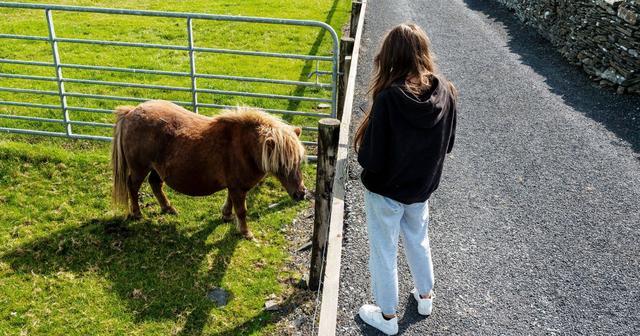
This seemingly simple interaction has now been written into a peer-reviewed scientific paper, which may provide a low-cost, easy-to-promote new idea for the youth mental health crisis.
In recent years, depression and loneliness among adolescents in the United States have continued to rise, while school psychological counseling resources have been stretched for a long time. Many families cannot afford long-term professional intervention.
Because of this, an "animal interaction" experiment that only takes three minutes and costs almost nothing is particularly interesting.
It does not require expensive venues, professional horse farms, nor does it require children to learn the technical skills of riding horses.
The donkey suddenly transformed into a "psychological counselor"
This study was completed by the Department of Neurobiology, Physiology and Behavior at the University of California, Davis, and the research team was led by Associate Professor Rebecca Calisi-Rodríguez.
The paper was published in Scientific Reports, a journal of Nature Publishing Group, and is a formal peer-reviewed research result.
The study recruited a total of 61 adolescent participants, mainly in middle school to high school age. This group is a group with a high incidence of depression and loneliness.
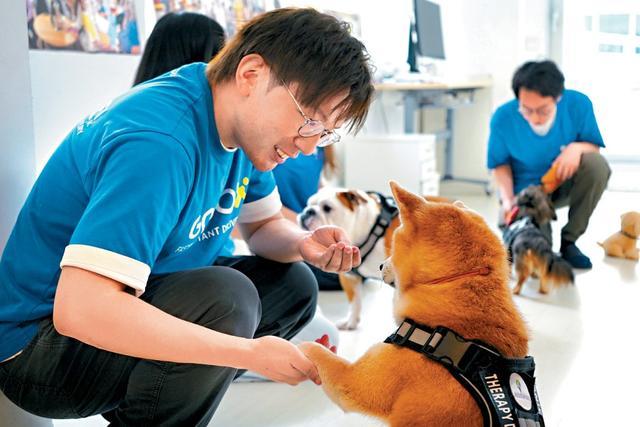
In the past, animal-assisted therapy mostly focused on therapy dogs, but this time the research team turned its attention to donkeys and miniature horses, which have received less attention.
In their view, these animals of the genus Equus have a gentle temperament and a moderate size. They are neither as intimidating as large horses, but also have more "tamed wildness" than common therapy dogs.
Donkeys and miniature horses usually live in pastures or rescue institutions, and are rarely used as the protagonists of psychological intervention. This is a rather bold attempt.
Three-minute experiment: a battle between stroking and scratching
The researchers randomly divided the participants into two groups to experience two completely different ways of interacting.
One group just gently stroked the backs of donkeys and miniature horses; the other group imitated the grooming movements of equine companions, scratching the animals' necks.
Each interaction only lasts about three minutes. Although the time is short, the process is unique.
Participants were taught in advance to recognize two kinds of "statement" signals from animals: moving their lips means pleasure, and turning away means they need some alone time.
This design allows teenagers to no longer exert unilateral actions on animals, but to learn to observe and "read" the other person's reaction.
The researchers then used questionnaires to assess changes in the participants' emotional states before and after the interaction, including multiple dimensions such as feelings of calmness, loneliness and sadness.
The key to reducing loneliness is "reciprocity"
The results showed that regardless of which group they belonged to, almost all participants said they felt calmer and significantly more relaxed after the interaction.
What’s more noteworthy is that those teenagers who witnessed animals making lip movements and showing expressions of enjoyment experienced a significant decrease in loneliness.
Even if the animals chose to turn away, the participants' sadness also decreased, which surprised many researchers.
Calisi-Rodriguez believes that the key lies not in the specific method of petting, but in the "choice" displayed by the animal.
Seeing animals react on their own initiative, or even actively distance themselves, makes the interaction feel more real and equal, she explains.
In other words, the core that really works is actually "reciprocity", not humans' unilateral touching and requesting of animals.
Can animal therapy be a new prescription for adolescent mental health

Depression and loneliness among adolescents in the United States have continued to rise in recent years. Traditional psychological intervention is often costly and slow to produce results, and not everyone is willing to accept it.
This study suggests that even three minutes of animal interaction may lead to measurable and perceptible improvements in mood.
However, the research team also admitted that the sample size was only 61 people, and whether the interactive effect can be maintained for a long time still needs to be verified by more data.
In the future, larger-scale studies with longer follow-up periods are needed to determine whether this type of "donkey-touching therapy" can truly be introduced into schools and community clinics.
If follow-up research can confirm the durability of its effects, this low-threshold intervention may provide a new option for schools with limited resources.
Compared with queuing for weeks to see a psychological counselor, a three-minute donkey interaction is obviously more acceptable to teenagers and easier to arrange repeatedly.
But for many teenagers who are anxious and tired at the moment, a donkey or miniature horse that is willing to look at you and rub you may be a rare and real comfort.
Comments