
Abstract:
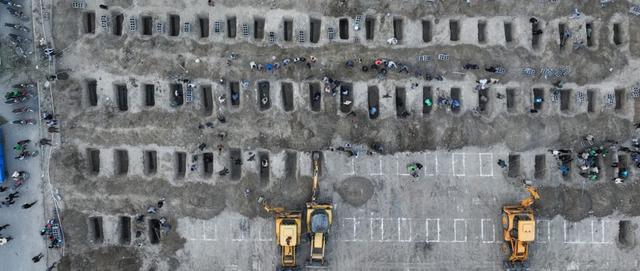
In February 2026, a primary school in Minab, a small town in southern Iran, was attacked by two Tomahawk missiles on the first day of the war. The airstrike killed more than 150 people, at least 123 of them children. An internal Pentagon review document shows that an artificial intelligence targeting system developed by Palantir played a key role in the tragedy.
Investigators found that analysts at the U.S. Central Command placed near-blind trust in a system called the Maven Smart System.
At the same time, a key intelligence note that could have corrected a fatal miscalculation was locked in an isolated system that no one cared about and was never communicated to the people who formulated the air strike plan.
An avoidable tragedy has become a reality step by step.
Now, this exposed investigation document is putting the boundary issue of AI-assisted military decision-making back into the spotlight.
Triple fall: AI, old intelligence and broken chains
According to the internal document obtained by Bloomberg, investigators concluded that there were three overlapping failures.
The first is over-reliance on the AI system: some users expect Maven to automatically mark outdated records or contradictory information, but cannot explain why the system does this.
Secondly, the intelligence data itself is seriously outdated. The Minab facility has been cataloged as an Iranian Islamic Revolutionary Guard Corps facility for a long time using old information.
In the end, the manpower responsible for verifying targets and avoiding accidental injury to civilians was significantly reduced. The three omissions were superimposed, leading to the final tragedy.
None of the three may be fatal alone, but when they occur simultaneously in the decision-making chain of the same missile, the result becomes irreversible.
Maven System: The hidden worries behind minute-level decisions
Maven Smart System is called an "artificial intelligence-driven data integration and targeting platform" that is used to accelerate intelligence analysis and decision-making.
It can compress the task of checking off a goal list that originally took hours to complete into just a few minutes.
The cost of improving efficiency is that the review process is systematically compressed, leaving less and less time and space for manual review.
Commercial satellite images have actually shown the problem for a long time: in 2017, the school fence was physically separated from the adjacent military base; in 2018, the images clearly captured the colorful fence, football field and playground signs.
Palantir later responded that the company is not responsible for the underlying data and is not responsible for identifying intelligence flaws.
After the air strikes, the company added new functions to the system to re-examine basic intelligence and flag contradictions and inaccuracies that may have been missed by manual review. It is said that similar anomalies have been discovered.
It's just that all this came too late.
For analysts stationed on the front lines at the time, the judgments given by the system were often regarded as ready-made answers rather than reference information that needed cross-verification.
Forgotten note: an alert that never arrived
As early as 2019, an analyst had noticed changes to Minab's facilities and documented them.
However, this record is stored in a system that is not connected to the main military intelligence database, acting as an information island.
It was never passed on to the people who ultimately formulated the plan for the air raid, like a letter that was never sent.
What is even more alarming is that the number of dedicated teams responsible for verifying targets and avoiding accidental injuries to civilians has dropped by about 90% in recent years.
The relevant team of the Central Command was once reduced from 10 people to only 1 person, resulting in no one to conduct a final review of this facility before the missile was launched.
Technical errors are only superficial. The real loopholes are buried in human deployment and process design.
A record that should have been checked first has been quietly sleeping in the cracks of the system for several years.
Accountability Conundrum: Characterization of War Crimes and the Delayed Answer
The United Nations independent international investigation team recently concluded that the United States has reasonable grounds to be found to have committed the war crime of "indiscriminate attack".
The report pointed out that the United States "failed to take all feasible measures to verify whether the school was a military target." This failure of duty went beyond simple negligence.
In response, a Pentagon spokesman said that "the United States does not target civilians" but declined to comment on the United Nations report.
In March this year, more than 120 Democrats in the U.S. House of Representatives wrote to the Secretary of Defense, asking about the specific role of Maven and other AI tools in this misjudgment.
The Pentagon has not yet made a public reply, citing the ongoing investigation.
This incident reflects a broader trend: the military and law enforcement agencies are increasingly relying on AI tools, but lack matching verification and accountability mechanisms.
The real danger may never be the algorithm itself, but the human habit of accepting machine conclusions without verification.
Related articles:
The U.S. military prepared to intercept and inspect Chinese ships due to erroneous intelligence brought by AI misjudgment, almost creating an international conflict
Comments