
Abstract:
Vas Narasimhan, CEO of Novartis and an Anthropic board member, dismissed the idea that artificial intelligence will conquer cancer in the next five to 10 years. He believes that even after ten years of development, artificial intelligence can only shorten the drug development cycle by four years.
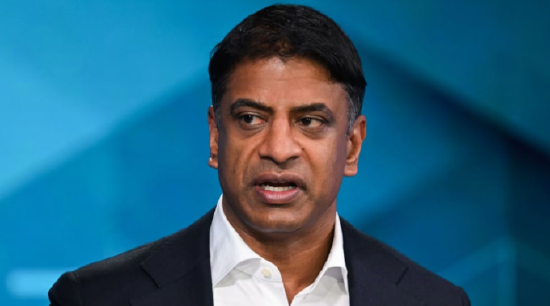
Vas Narasimhan
Narasimhan said that the technology industry tends to look at this problem with an "engineering mindset", but clinicians and pharmaceutical companies know that human beings' understanding of their own bodies is still very limited.
He said: "The real fundamental problem we face is that we think we understand only about 5% of the inner workings of the human body. In the field of programming and language, we understand a much higher proportion, so the ability of AI models to learn and predict is much stronger."
Anthropic CEO Dario Amodei has said that artificial intelligence will conquer cancer and Alzheimer's disease within ten years. Meanwhile, Sir Demis Hassabis, Nobel Prize winner and founder of DeepMind and its drug development spin-off Isomorphic, also said last year that he believed artificial intelligence might find a way to conquer all diseases in just ten years.
The Swiss pharmaceutical group is applying artificial intelligence throughout its drug development process. The company found that AI had the most significant results in accelerating early-stage drug discovery, the stage before a drug enters human trials. AI promises to shorten this development phase, which typically takes an average of four years, by up to two years.
Narasimhan predicts that within the next ten years, AI is expected to shorten the complete process of drug development from an average of 12 years to 8 years. He also hopes that AI can increase the probability of a drug candidate from entering human trials for the first time to being successful from the current 8% to 12%.
However, he said the actual impact of artificial intelligence is likely to fall somewhere between the ambitious forecasts of AI companies and the more cautious expectations of the pharmaceutical industry.
Currently, many artificial intelligence companies are trying to speed up the tedious and lengthy drug discovery and development process.
Anthropic is investing in its own drug development program, including acquiring small biotech companies and building its own laboratories. Isomorphic announced last week that it had raised $5 billion in its latest funding round and is currently working on research projects with several pharmaceutical companies, including Novartis.
On Thursday, when Anthropic officially launched on the stock market, Amodei said that human progress in conquering many diseases is "too slow."
He said: "It can take decades to develop from a brilliant idea to an actual treatment plan. I believe that sufficiently powerful artificial intelligence working in conjunction with humans can compress a century of scientific and medical progress into ten years."
Narasimhan said that the core of his debate with the AI industry is how long it will take to fill the huge gaps in human understanding of how the body works.
If regulators can be convinced that humans can predict with a high degree of certainty how a drug will work in the body, thereby reducing the need for clinical trials, AI could significantly speed up the drug development process.
However, Narasimhan believes that lengthy clinical trials will still be indispensable.
I don’t think at this stage we can get around the fact that these drugs still need to be tested first in animals and then in humans to verify the biological effects of the compounds," he said.
Comments