
Abstract:
On one hand, car companies are worried about the supply of rare earth magnets. On the other hand, Musk said that Tesla’s motors can no longer use rare earths. In September 2026, according to media quotes, Tesla CEO Musk said that the motor of its autonomous taxi Cybercab does not use rare earths while maintaining endurance performance. Along with this statement, there is also information that the size of the electric drive unit has been reduced by 18% and the weight has been reduced by 25%.
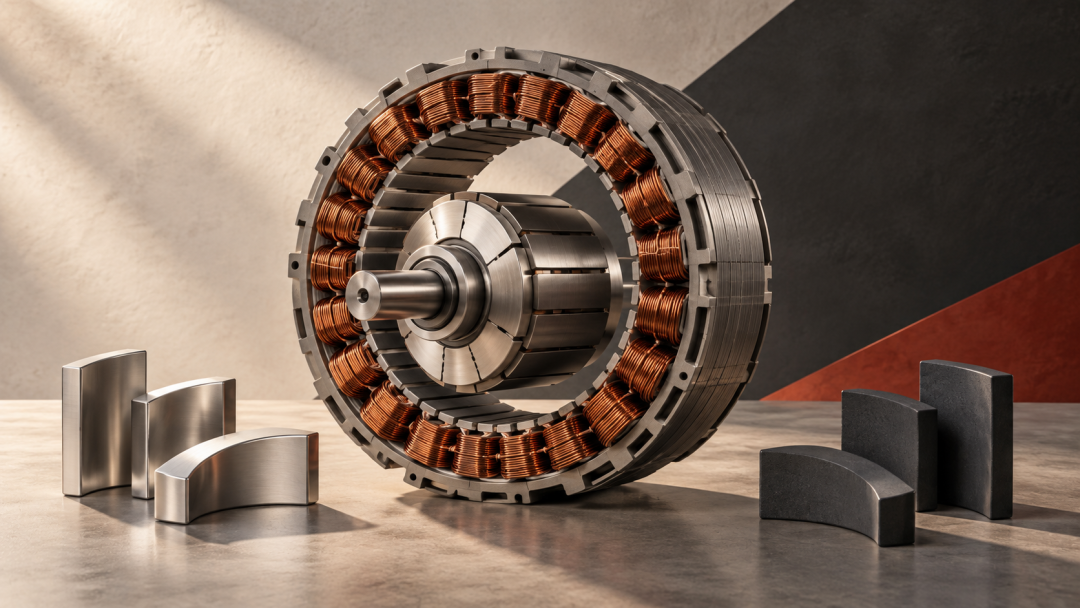
These numbers can easily form an intuitive impression: removing rare earths, the motor not only does not become worse, but becomes smaller and lighter.
But for electrical engineers, judgment needs to start with other questions: Who is the target of comparison? What speed does the output power correspond to? How much torque can it maintain? What about temperature rise, efficiency and noise during continuous operation?
"Automotive Business Review" believes that Musk's statement is a performance claim on the part of the company and cannot yet be regarded as a conclusion that has been independently tested. What is really worth discussing is the dependence of automobile electric drives on rare earths and how much room there is for substitution.
Rare earth-free motors have already entered mass-produced cars. Today's controversy has gone beyond "can we not use it?" Will the savings in magnet procurement translate into additional investments in bearings, reducers and cooling systems? Can similar peak power correspond to similar continuous output and vehicle experience? These issues determine the scope of application of alternatives.

Motors need magnetic fields
Rare earths are not necessarily required
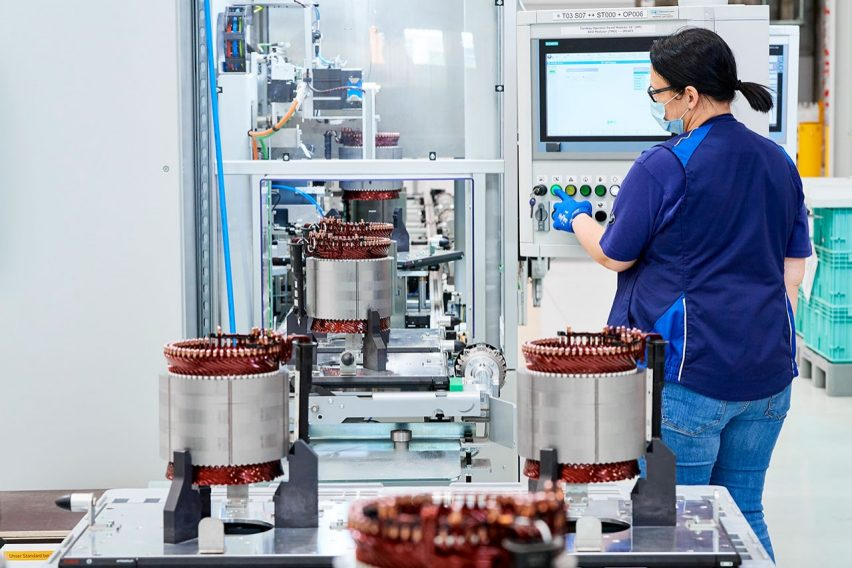
Motors convert electrical energy into mechanical energy, in which magnetic fields play a key role. Permanent magnets can provide a magnetic field, and energized coils can also produce a magnetic field. In addition, the difference in reluctance in different directions of the rotor can also be used to generate torque without having to configure permanent magnets or field windings on the rotor.
Therefore, there is not only one technical path for rare earth-free automotive motors.
The electric excitation synchronous motor establishes a magnetic field through the rotor coil; the induction motor uses electromagnetic induction to generate the rotor current; the synchronous reluctance motor generates torque through the difference in reluctance of the rotor. Permanent magnet motors can also use rare earth-free magnets.
The advantage of rare earth permanent magnets is that they can provide a strong magnetic field in a small volume, creating conditions for compactness and high efficiency of motors. However, magnet performance and overall machine performance cannot be directly equated.
For example, magnetic energy product is an important indicator for evaluating permanent magnet materials, but the power, torque or volume of the entire motor cannot be directly calculated based on its proportion. Magnetic circuit design, current load, reluctance torque and cooling capacity all play a role in determining the final result.
To understand alternative technologies, we need to distinguish three levels: no heavy rare earths, no rare earths, and no permanent magnets.
Heavy rare earth-free usually refers to the elimination of heavy rare earth elements such as dysprosium and terbium. Magnets may still use light rare earth elements such as neodymium and praseodymium. The heavy rare earth neodymium magnets announced by Proterial (formerly Hitachi Metals) in 2025 fall into this category.
Rare earth-free does not mean permanent magnets must be eliminated. Ferrite magnets, without added rare earths, are one option. However, "ferrite" itself is not guaranteed to be a zero-rare earth formula. Some high-performance ferrites are modified with elements such as lanthanum, and the specific material composition still needs to be checked.
The absence of permanent magnets further changes the rotor design. Electric excitation, induction and pure synchronous reluctance solutions can work without relying on permanent magnets.
Reducing certain elements, replacing magnet materials, and changing motor structures have varying impacts on manufacturing, control, and the supply chain.

Already have mass production plans
Tesla’s path yet to be confirmed
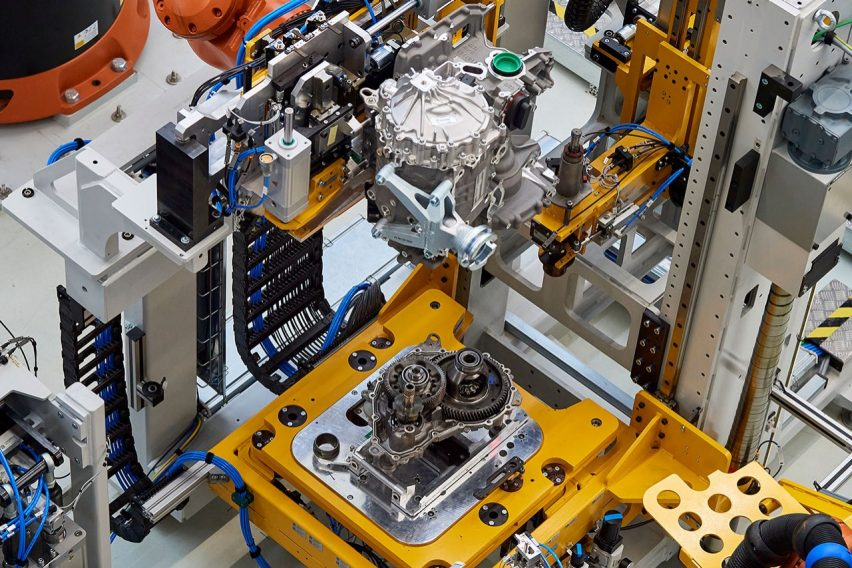
BMW’s fifth-generation electric drive system uses an electric excitation scheme to establish a magnetic field by energizing the rotor, avoiding the use of rare earth permanent magnets. BMW's 2021 announcement revealed that this generation of motors has been in production for the iX3 since 2020 and will be used in the iX and i4.
This type of solution needs to solve problems such as power supply to the rotating rotor and heat dissipation of the rotor. The in-rotor shaft induction power supply solution developed by ZF focuses on improvements in power supply method, structure and space utilization.
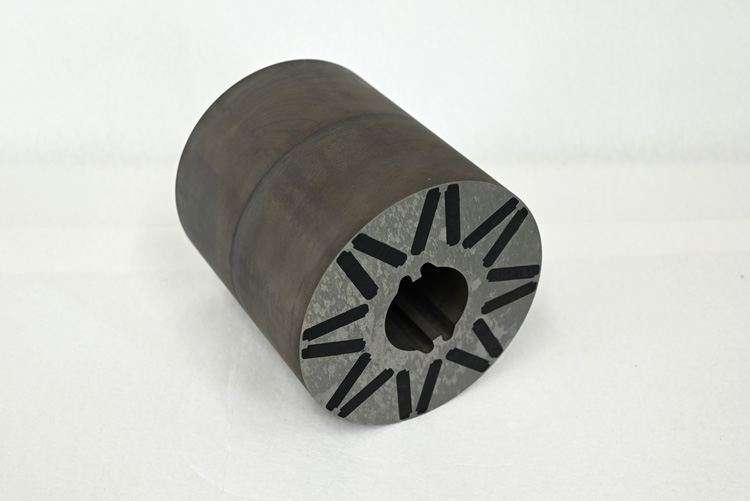
Another direction is to combine permanent magnet torque and reluctance torque. The use of ferrite-assisted synchronous reluctance motors does not simply replace a magnet in the original motor. Instead, the rotor structure and magnetic circuit design allow the two torques to share the output.
These routes can all be discussed, but it cannot be concluded that Cybercab has adopted any one of them.
Tesla proposed a next-generation rare earth-free permanent magnet motor plan in 2023, which provided a background for outside speculation, but it cannot replace the disclosure of Cybercab’s actual configuration and materials. Information about volume, weight and battery life are not enough to rule out other design possibilities.
In particular, it is important to note that the 18% volume reduction and 25% weight reduction in public reports are for the electric drive unit. The electric drive unit may contain components other than the motor, and its comparison range and output conditions also need to be clarified. Housing, cooling, transmission and system integration may all affect the results. Just because the weight reduction is greater than the volume reduction, it cannot be inferred which magnet is used.
Similarly, "maintaining continuous driving" is an expression at the vehicle level. Battery capacity, vehicle weight, wind resistance, tires and electric drive efficiency all participate in determining battery life, and changes in motor efficiency cannot be calculated separately based on this.

Increased power density
Does not equal an increase in torque density
The relationship between motor power, torque and speed is not complicated:
Power P (kilowatt) = torque T (N·m) × rotation speed n (rev/min) ÷9549.3.
This means that at a certain operating point, to obtain the same power, you can use a lower speed and larger torque, or you can use a higher speed and smaller torque.
For a typical radial flux motor, when conditions such as electromagnetic load are similar, there is an approximate proportional relationship between the torque and the effective volume of the rotor. But when spanning different materials, cooling and structural solutions, torque cannot be judged based on the overall volume of the machine alone.
Increasing the rotational speed is an important means to improve power density, but it does not mean that torque density increases simultaneously.
To give an example just to illustrate the principle: Assume that the torque of a certain solution under the same volume is 70% of the benchmark. If it can maintain this torque ratio at twice the speed, the output power can reach 140% of the benchmark.
Actual motors may not be able to do this. After entering the high-speed zone, voltage, current, field weakening control, mechanical strength and heat dissipation will all form constraints. The maximum torque and the maximum speed are usually not at the same operating point and cannot be directly multiplied as the maximum power.
Increasing the speed is not a unique ability of ferrite motors. The NdFeB solution can also be designed for high speed. A fair comparison requires clarifying the speed range, output requirements and thermal constraints, rather than using one high-speed motor and another motor with different design goals to directly compare the advantages and disadvantages of material routes.
The data in Bomailicheng’s technical announcement on July 24, 2023 provides a specific reference. The research uses the automotive NdFeB permanent magnet drive motor as a simulation comparison benchmark and produces a ferrite prototype. The announcement stated that the design fixed the rotor and stator diameters and took into account the operating temperature and high-speed strength, but did not disclose the benchmark motor brand, model and complete test conditions.
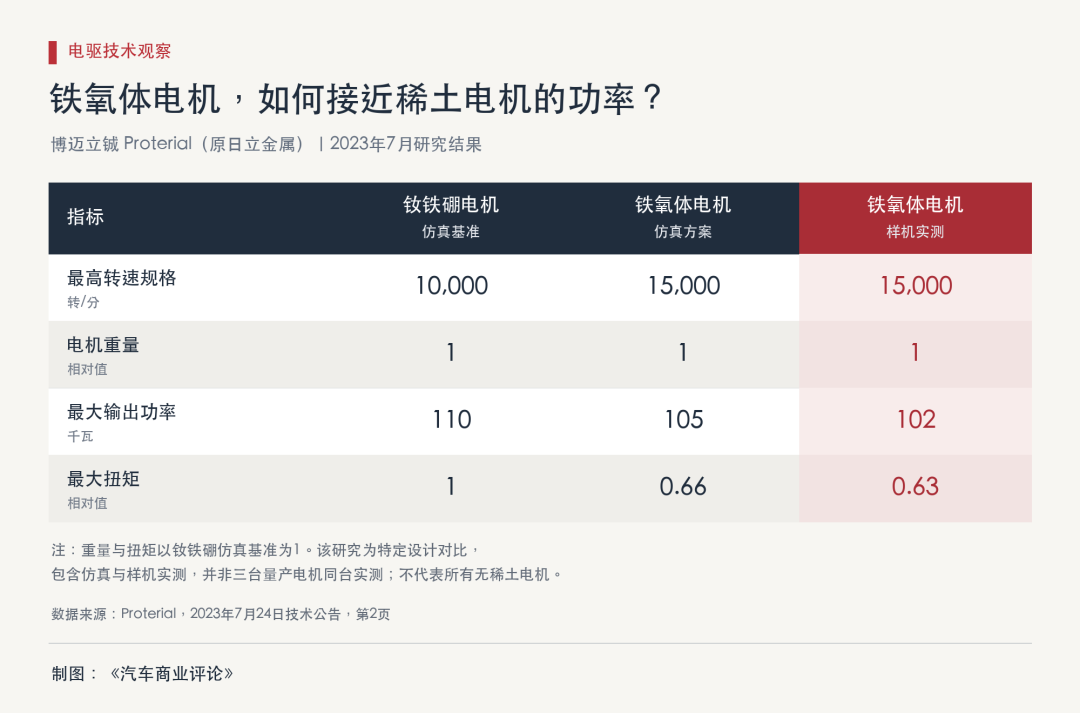
Based on the announced data, the power of the prototype is about 7.3% lower than the benchmark, the maximum torque is 37% lower, and the maximum speed specification is increased by 50%. This is a design-specific comparison and cannot be generalized to a fixed performance gap for all ferrite motors.
Under conditions such as starting with a full load, rapid acceleration at low speeds in cities, etc., the driving force at the wheel end directly affects the power experience. However, the 37% decrease in the maximum torque of the motor does not mean that the vehicle's starting ability has decreased year-on-year. Actual results also depend on low-speed torque curve, reduction ratio, power supply capabilities and tire adhesion conditions.
Increasing the reduction ratio can increase the wheel-end torque, but it requires synchronous matching of the motor speed range, maximum vehicle speed, gear load and transmission loss. The peak power is close, which is only the starting point for matching the entire vehicle.

Beyond the highway
There are also heat dissipation, noise and low temperature
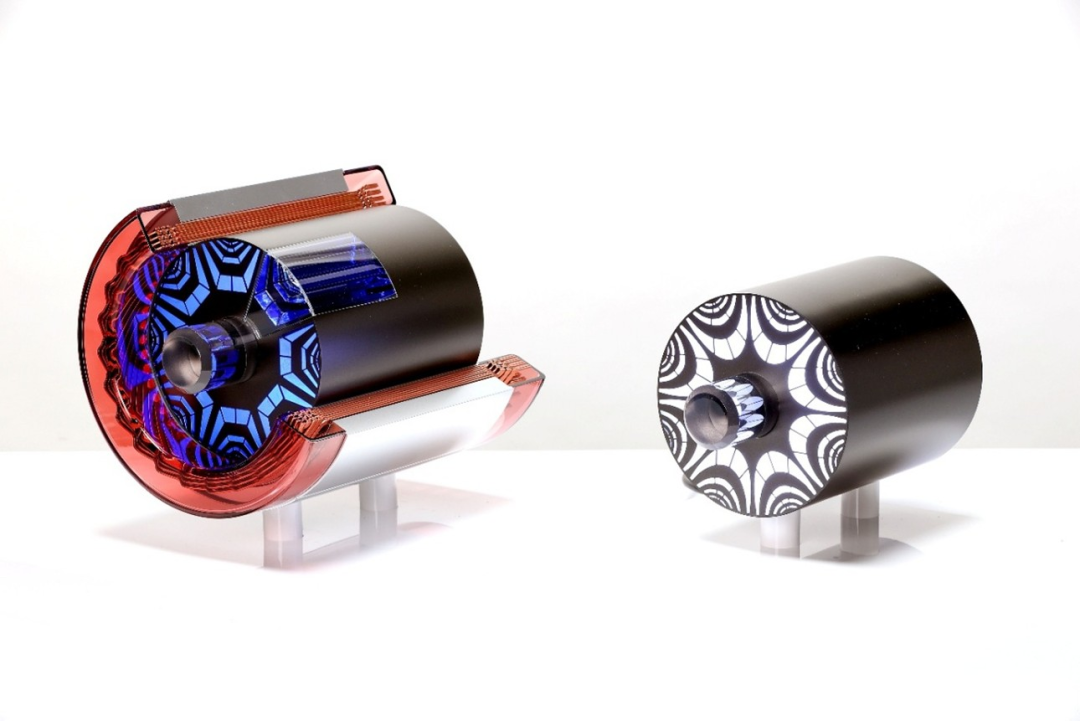
Increasing the speed will put forward new requirements for rotor strength, dynamic balance, bearings and lubrication. The cost may also be reflected in NVH and thermal management.
NVH refers to noise, vibration and harshness. Changes in rotational speed will change the frequency of electromagnetic and mechanical excitation; if it is close to the resonance range of the structure, it may amplify vibration or howling. The motor, reducer, housing and suspension need to be evaluated as a complete system.
The weight, volume and battery life information in the existing Cybercab reports are not enough to judge these acoustic problems, nor can it explain whether investment in vibration isolation and noise reduction has been increased.
The same goes for thermal management. When other conditions are similar, increasing the speed may increase some iron losses, AC winding losses and mechanical losses, but the final temperature rise depends on all losses and heat dissipation conditions. It cannot be simply concluded that high-speed motors must be hotter, nor can it be assumed that the rotor no longer produces losses just because the rotor excitation winding is eliminated.
The Astemo case mentioned in the video provides a more specific explanation of this system trade-off. According to Astemo's announcement in October 2025, its ferrite magnet-assisted synchronous reluctance main drive motor achieves an output of 180 kilowatts. Compared with its traditional rare earth permanent magnet motor, the size is increased by about 30%; in order to control heat generation, the design uses an oil-immersed cooling structure for the winding slots and ends.
The 30% here corresponds to the size comparison of specific products and cannot be written as all ferrite motors are 30%-40% heavier. What it illustrates is that material substitution may be accompanied by adjustments in structure and cooling schemes.
If Cybercab is finally confirmed to use ferrite magnets, the low-temperature demagnetization margin will also be an item that needs to be verified. Ferrite's resistance to demagnetization may decrease at low temperatures. Whether irreversible demagnetization occurs depends on the material grade, magnetic circuit operating point, reverse magnetic field and other conditions.
This cannot be reduced to "it will break after one night in a cold area." Improvements in materials, magnetic circuits and current control may increase margins, and adding rare earths is not the only solution for all designs.
As a ceramic magnet, ferrite also needs to consider its brittleness, fixation method and high-speed mechanical load. However, the material is brittle, and it cannot be directly deduced that debris will fly out of the electric drive assembly when the entire vehicle collides; the rotor constraints, shell protection, and vehicle installation structure also need to be evaluated.
For Cybercab, the above contents are all projects that need to obtain test data, which is currently insufficient to confirm its applicable areas, let alone the operational deployment in Austin can be directly interpreted as avoiding low-temperature defects.

Taxi does not pursue extreme acceleration
This does not mean that electric drive requirements are low

As a dedicated operating vehicle, Cybercab may have different performance weights than models for individual consumers.
Not focusing on extreme acceleration as a selling point means that the design can reduce the pursuit of certain peak indicators and use more resources to reduce manufacturing costs and operating energy consumption. However, the high frequency of use of taxis will increase the requirements for continuous operation, frequent starts and stops, noise and lifespan.
The same efficiency difference may correspond to a more obvious difference in electricity bills under high annual mileage. Maintenance intervals, downtime and ease of repairs also impact operating profitability. Therefore, "taxi does not need high performance" is not enough to conclude that "using NdFeB is a waste".
The more accurate question is: What features are actually needed in the vehicle, and which features are worth the cost?
The economics on the material side are also changing. According to Mysteel's public spot market summary, on September 14, 2026, the domestic praseodymium and neodymium oxide market reference quotation was approximately 730,000 yuan/ton. This is the market quotation, not the long-term purchase price of the car company, nor the price of finished magnets.
Metal processing, magnet grade, heavy rare earth addition, manufacturing yield and purchasing contracts will all affect price transmission. The upstream quotation can only provide background and cannot be directly converted into the cost change of a motor.
What car companies need to compare is whether the cost savings on the magnet end can cover the new expenditures in other links. Material savings may be partially offset by the need to increase copper and electrical steel usage, adjust the reducer, enhance cooling, or add acoustic treatments.
Supply stability should also be taken into account. The value of reducing dependence increases when prices for critical materials rise or delivery uncertainty increases; after prices fall and supply recovers, alternatives still need to demonstrate cost competitiveness.
The progress of industrialization of new materials cannot be ignored. Niron's iron nitride magnets have research and commercialization value, but its Sartell plant with a full annual production capacity of 1,500 tons, as announced in September 2026, is scheduled to be put into operation in 2027. This plan cannot be used as proof that it has the same scale of supply capability, nor can it be used to infer the source of Cybercab’s materials.
For vehicle companies, from the availability of materials to the mass production of models, there are also verification, supplier appointment, production line construction and yield improvement. Whether a solution is worth adopting needs to be calculated over the entire product cycle.

How much can it replace
It depends on the actual loading and purchasing

The choices of car companies will change the average number of rare earths required for each vehicle, but a decline in bicycle usage does not automatically mean a decline in total industry demand.
The demand for rare earths in automobile drive motors can be roughly understood as:
Demand ≈ automobile production × average number of drive motors per vehicle × proportion of motors using rare earth × average amount of rare earth used per motor.
The popularization of no rare earth solutions mainly affects the usage ratio; the design of reducing rare earths mainly affects the consumption of a single machine. At the same time, vehicle production volumes and motor configurations are also changing. Therefore, the impact of alternative technologies may first be reflected in a slowdown in demand growth.
On the supply side, there are existing industrial scales. The 2024 data from the "Rare Earth Elements: Path to a Secure and Diversified Supply Chain" report released by the International Energy Agency in 2026 shows that China accounts for about 91% of the world's rare earth refining for magnetic materials and about 94% of the world's sintered rare earth permanent magnet production discussed in the report. These shares correspond to specific products and years and cannot be generalized to all rare earths or all magnetic materials.
At the same time, the elimination of rare earth elements in drive motors cannot directly equate to the elimination of rare earth elements in the entire vehicle, nor does it mean that the entire vehicle supply chain has moved away from a certain country or region. For other motors, electronic components and batteries, the materials and supply sources need to be checked separately.
If Tesla can reduce electric drive costs and reduce dependence on key materials while meeting Cybercab's operational requirements, it will still be an engineering progress with commercial value. Achieving these goals does not require it to invent a completely new motor principle; but to call it a universally applicable technological breakthrough requires more complete evidence of configuration, performance and cost.
Do automobile motors really no longer need rare earths? "Automotive Business Review" believes that what can be confirmed is that some automotive motors can already meet mass production requirements without the use of rare earths; what cannot yet be confirmed is whether rare earth-free solutions can continue to achieve comprehensive advantages in a wider range of models and working conditions.
For Cybercab, the next step should be to look at the motor's torque-speed curve, efficiency distribution, temperature boundary and actual operating performance. For industries, we should look at the changes in new car models’ fixed points, mass production scale and magnetic material procurement. Only this information can explain how far the substitution has advanced.
Comments