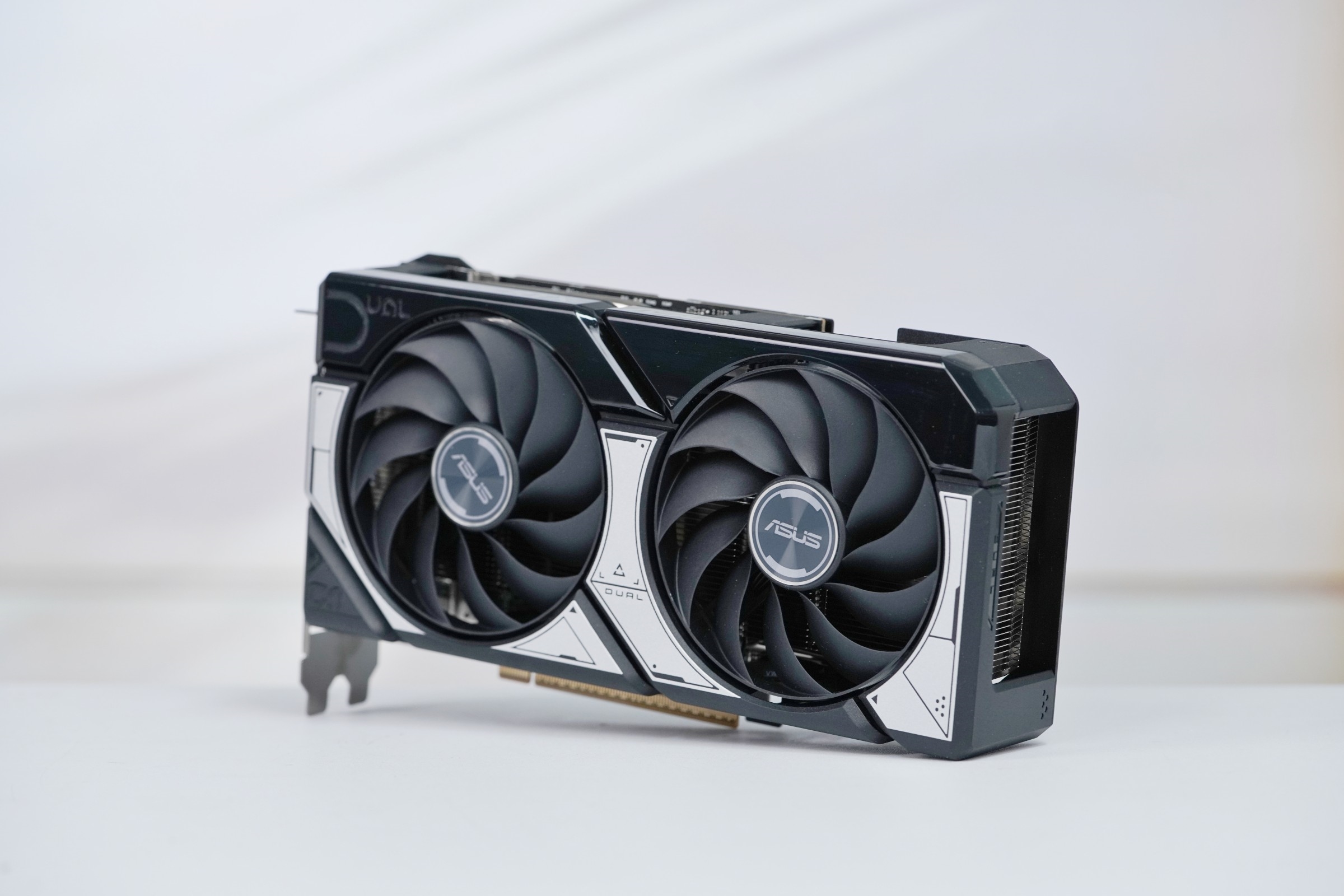
As NVIDIA officially releases the RTX 5060 Ti series of graphics cards, users who want to get it will definitely be curious about the performance difference between the 8GB and 16GB versions.According to the test by the "Carbon-based Technology Research Institute", the running scores of the two are close, but in some games and after turning on DLSS 4, the disadvantage of the 8GB version gradually becomes apparent.
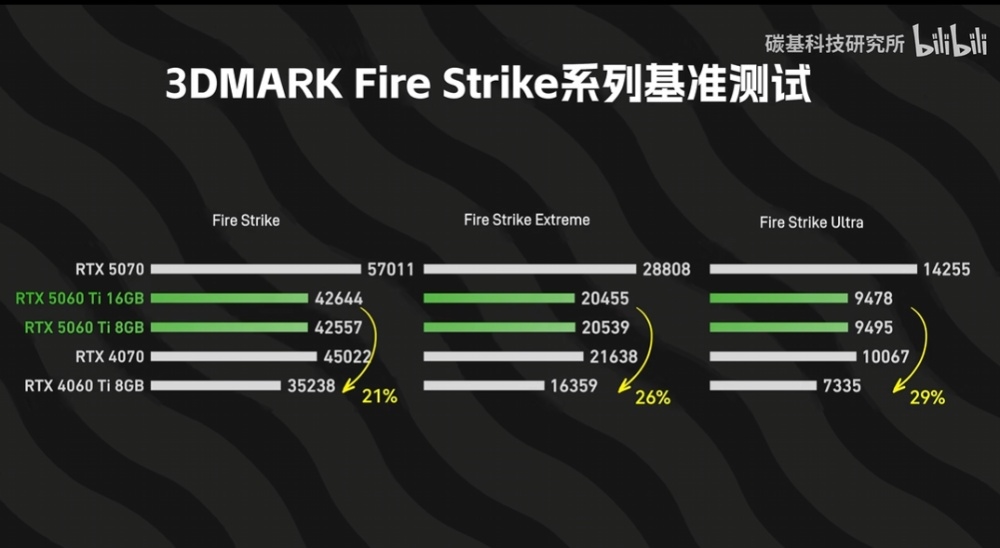
In the 3DMark Fire Strike test, the scores of RTX 5060 Ti 8GB and 16GB are almost the same, and the performance is improved by up to 29% compared to the previous generation RTX 4060 Ti 8GB.
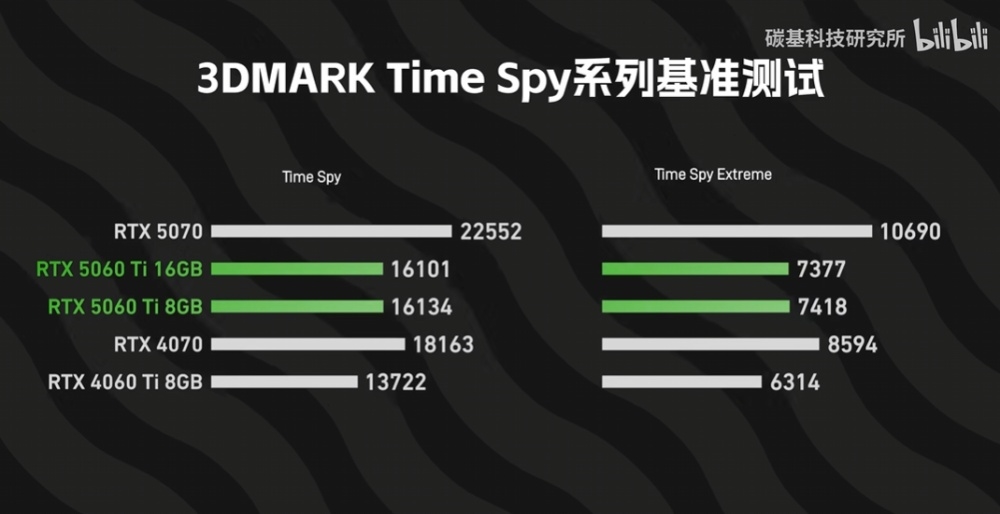
In the 3DMark Time Spy test, the scores of the two are also very close. Both are around 16,000 points in Time Spy, and around 7,400 points in Time Spy Extreme mode.
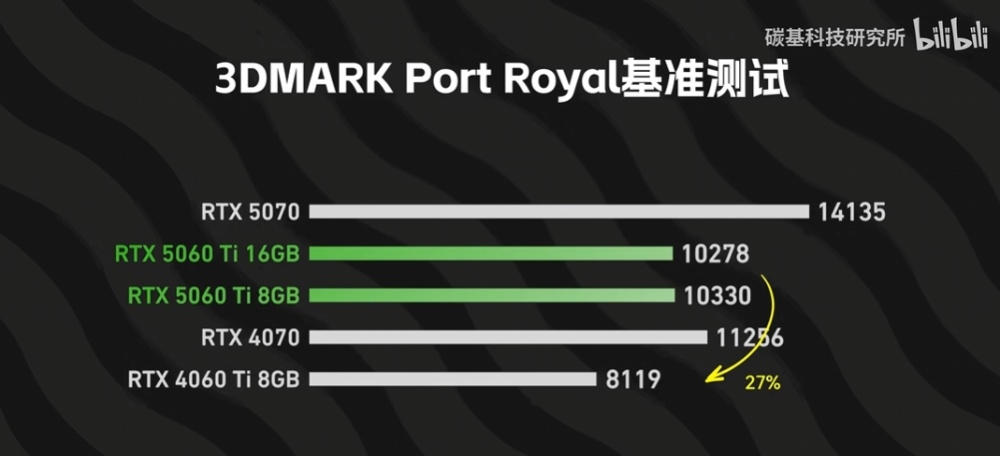
In the 3DMark Port Royal ray tracing test, both scores were around 10,000 points.
However, in some games, especially those that consume more video memory, the performance of the RTX 5060 Ti 8GB begins to lag behind the 16GB version.
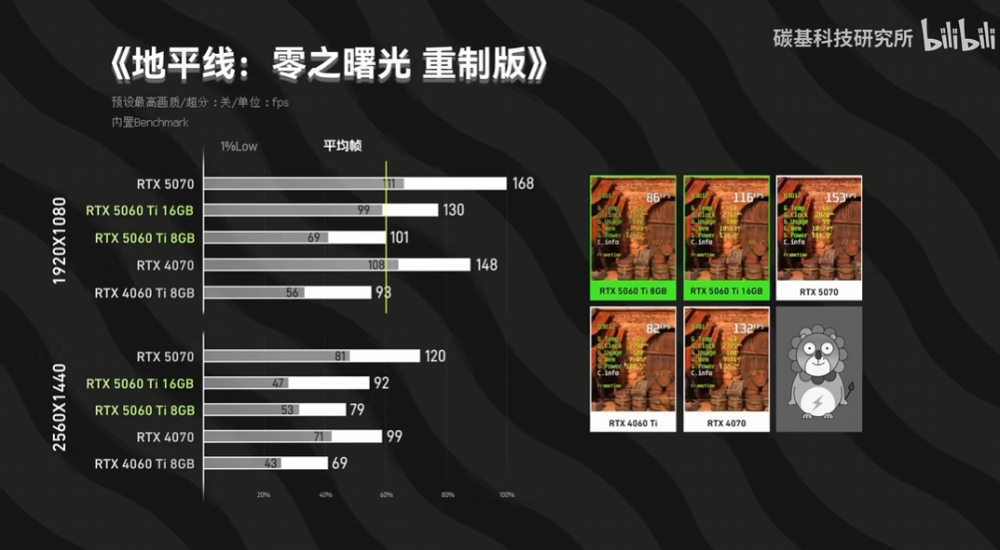
For example, in "Horizon: Zero Dawn Remastered", at 1080p resolution, the average frame rate of RTX 5060 Ti 16GB is 130fps, which is 28.71% higher than the 8GB version; at 2K resolution, the 16GB version is also 16.46% ahead of the 8GB version.
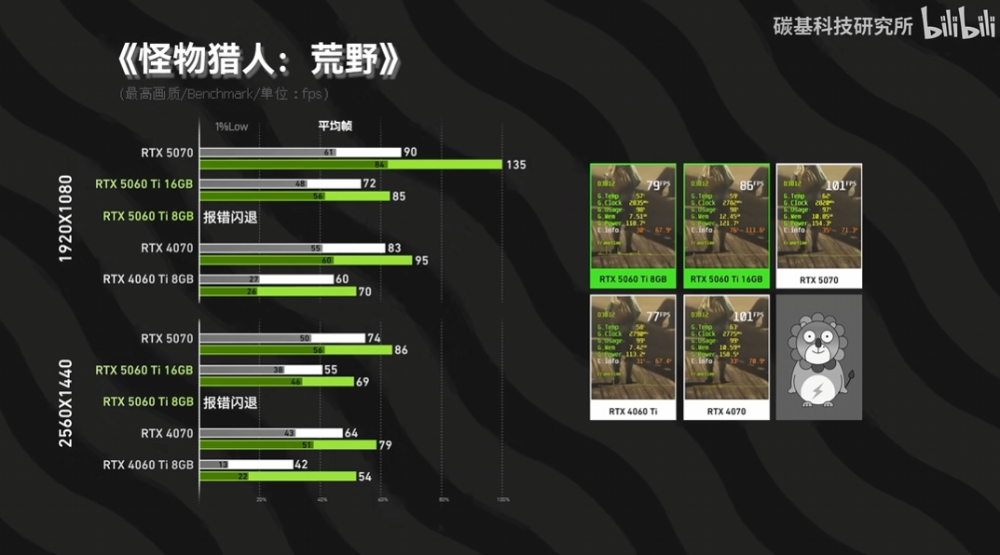
In "Monster Hunter: Wilderness", the RTX 5060 Ti 8GB version suffered from insufficient video memory, causing the game to crash, while the 16GB version performed normally, reaching an average of 85fps at 1080p resolution and 69fps at 1440p resolution.
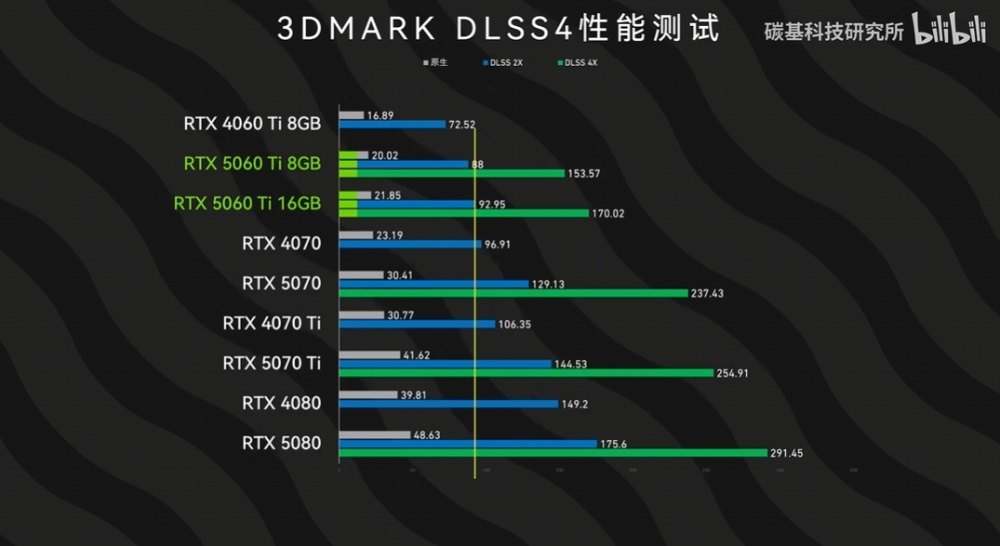
After turning on DLSS 4, there is a gap in the 3DMark running scores alone. In the 3DMark DLSS 4X test, the RTX 5060 Ti 16GB scored 170.02, which is 153.57 ahead of the 8GB version, with a margin of 10.71%.
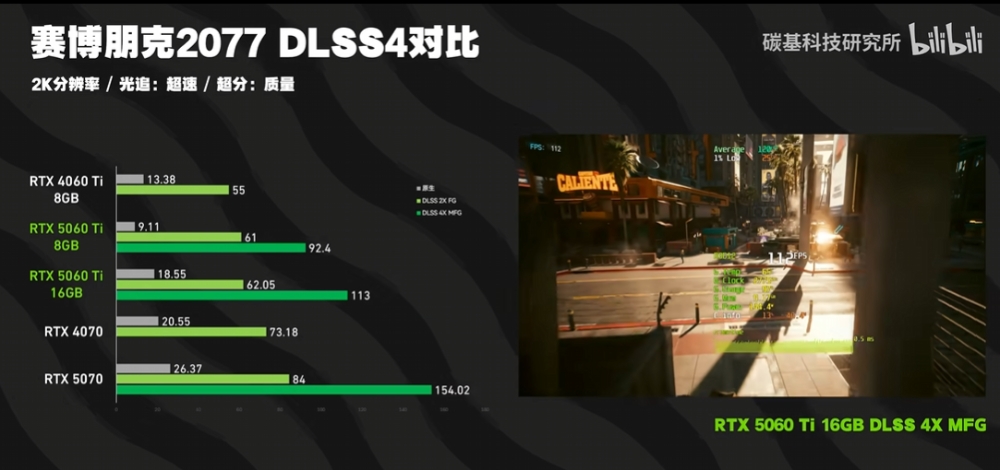
In "Cyberpunk 2077", after DLSS 4 is turned on at 2K resolution, the DLSS 4X MFG score of RTX 5060 Ti 16GB is 113, while the 8GB version is only 92.4, and the 16GB version leads by 22.30%.
In fact, in our tests, RTX 5060 Ti 8GB also frequently exceeded the graphics memory in various games and AI applications.
A few years ago, it only appeared at 4K resolution, but now there are many games at 1080P resolution that will use up the video memory.
Therefore, it is recommended that when purchasing a new graphics card, it is best not to consider 8GB of video memory.