Researchers at Chalmers University of Technology in Sweden have developed a nanocoating made of metal-organic framework materials (MOFs). The surface is covered with dense and sharp "nano-spikes" that can physically pierce the outer membrane of bacteria and kill them. This mechanism does not rely on the release of antibacterial agents or heavy metal ions, and is expected to reduce the risk of developing drug-resistant bacteria while inhibiting bacterial colonization.
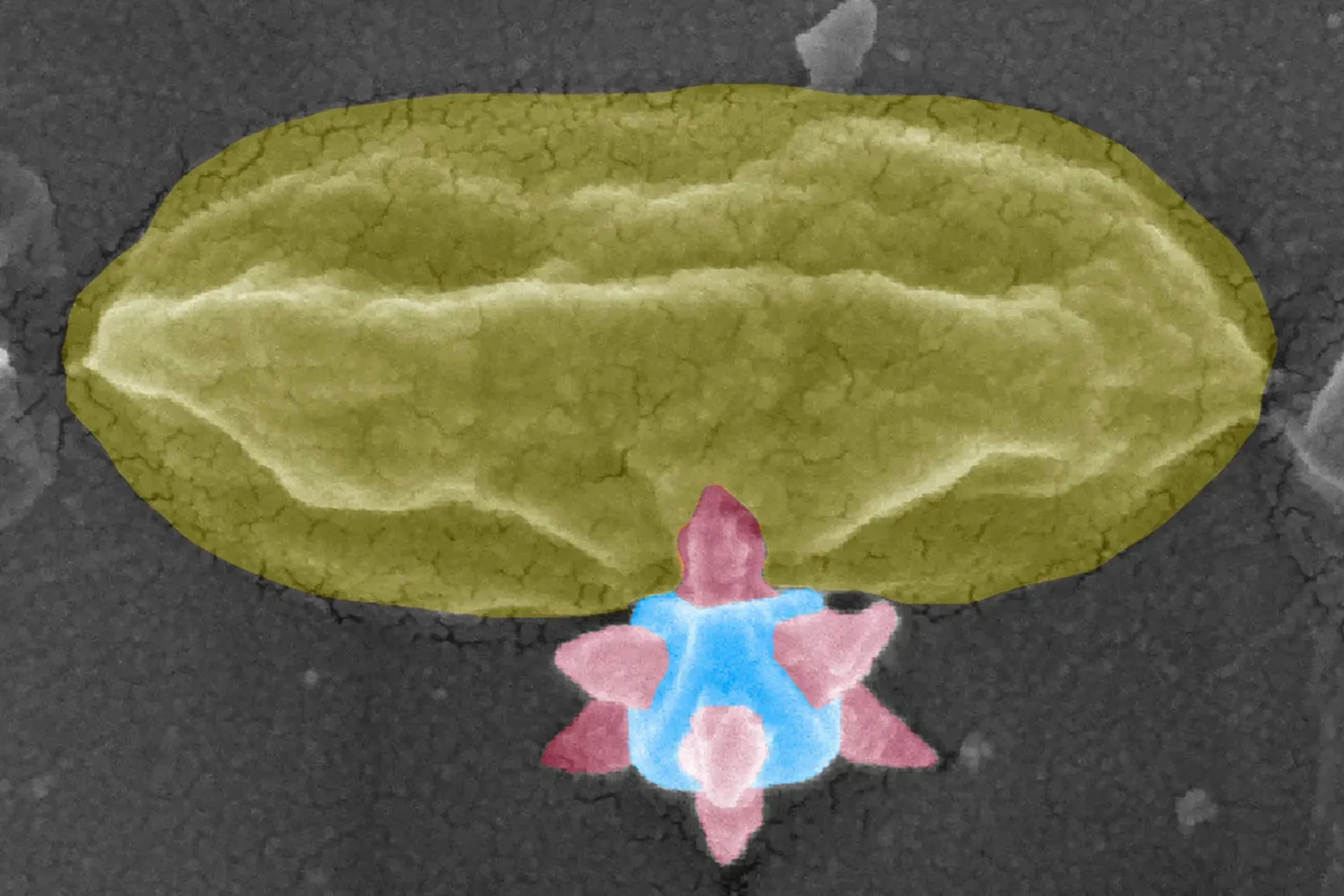
The team grew two layers of MOF crystals on the substrate, and by precisely controlling the crystal growth, a nano-spike array with specific spacing and density was formed between the two layers. When a single bacterium lands on such a surface, its outer cell membrane will be pierced at multiple points, thereby losing its protective effect and being killed. If the spacing between the spikes is too large, the bacteria may "leak through" and stick to the smooth surface below. If the spacing is too small, the stress will be dispersed and the killing effect will be weakened.
The researchers hope that this MOF antibacterial coating can be used on the surfaces of medical implants, catheters and other medical devices in the future to prevent the attachment of harmful bacteria and the formation of biofilms. The report also mentioned that similar "mechanical sterilization" surfaces can also be extended to non-medical scenarios such as ship hulls and inner walls of pipelines to inhibit biofouling.
Previously, MOF materials were used for sterilization, mainly relying on slow-release antibacterial drugs or metal ions, but this time the innovation lies in a purely physical puncture sterilization mechanism. The report also briefly reviewed the progress of bionic spiked surfaces inspired by cicada wings and dragonfly wings, as well as other materials such as copper-coated stainless steel that achieve sterilization by damaging the outer membrane of bacteria.