
Abstract:
In July 2024, AMD updated the CPU technology roadmap at the "AMD Tech Day 2024" held in Los Angeles, USA, and publicly confirmed for the first time that the Zen 5 series will be followed by the Zen 6 series architecture. For the desktop platform, AMD has prepared Olympic Ridge, which will continue to use the existing AM5 platform.
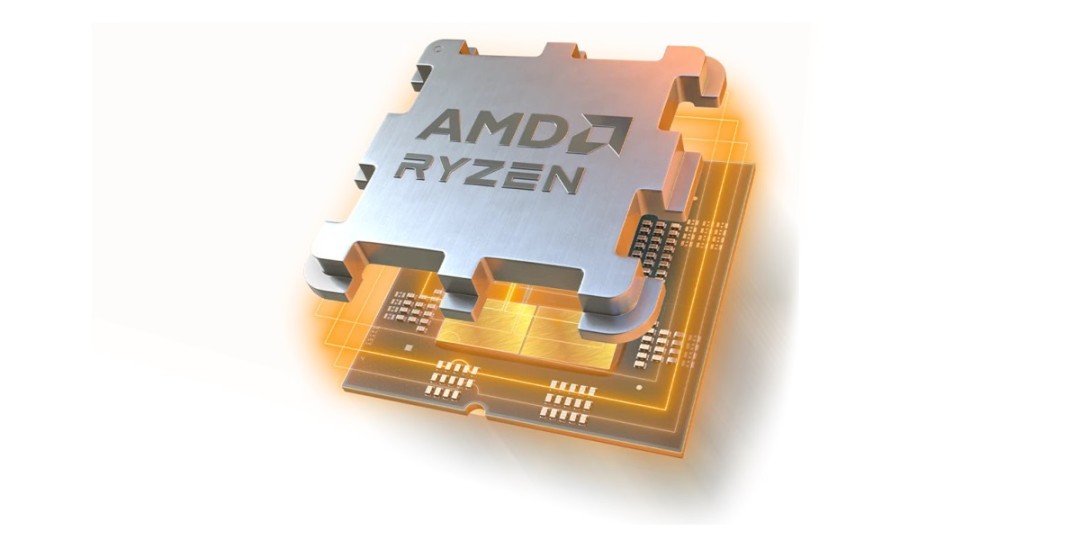
According to Wccftech reports, Olympic Ridge has been postponed from the original first quarter of 2027 to after COMPUTEX 2027, probably scheduled from July to August. The reason is that AMD plans to change the process for producing CCDs used in Olympic Ridge, from TSMC's N2 or N2P process to N2X. Consumer-side Zen 6 products have already missed 2026, and now being delayed further means that the desktop platform is likely to only see Intel launch new products in the first half of 2027.
N2, N2P and N2X all belong to TSMC's 2nm process nodes, of which N2 is the first-generation process. N2P provides additional improvements, reducing power consumption by 5% to 10% (at the same frequency and number of transistors), or improving performance by 5% to 10% (at the same power and number of transistors). N2X is further enhanced to push performance to the highest level. According to TSMC’s previous statement, N2X has a higher FMAX voltage than N2 and N2P, ensuring better performance, including data center CPU/GPU and dedicated ASIC.
It is rumored that Olympic Ridge continues the dual CCD + single IOD design, with a single CCD having up to 12 Zen 6 cores. In addition, each CCD has 48MB of L3 cache, which means that each core corresponds to 4MB, which is the same as the existing Zen 5 configuration. The flagship 24-core desktop processor will have an L3 cache of 96MB without adding 3D V-Cache technology. The accompanying IOD will be a new design, manufactured using the N3P process. AMD will add new power management solutions, and will also update the memory controller to support higher-speed DDR5, as well as some new DIMM designs, such as CUDIMM memory modules.
Comments