
Abstract:
Apple has just released the iPhone 18 Pro and iPhone 18 Pro Max, but news about the next generation of iPhones has begun to emerge. According to the latest reports, Apple plans to launch a special model in 2027 to commemorate the 20th anniversary of the original iPhone, which is currently generally referred to as the "iPhone 20". If the current rumors eventually come true, this device may usher in the largest design change since the iPhone X.
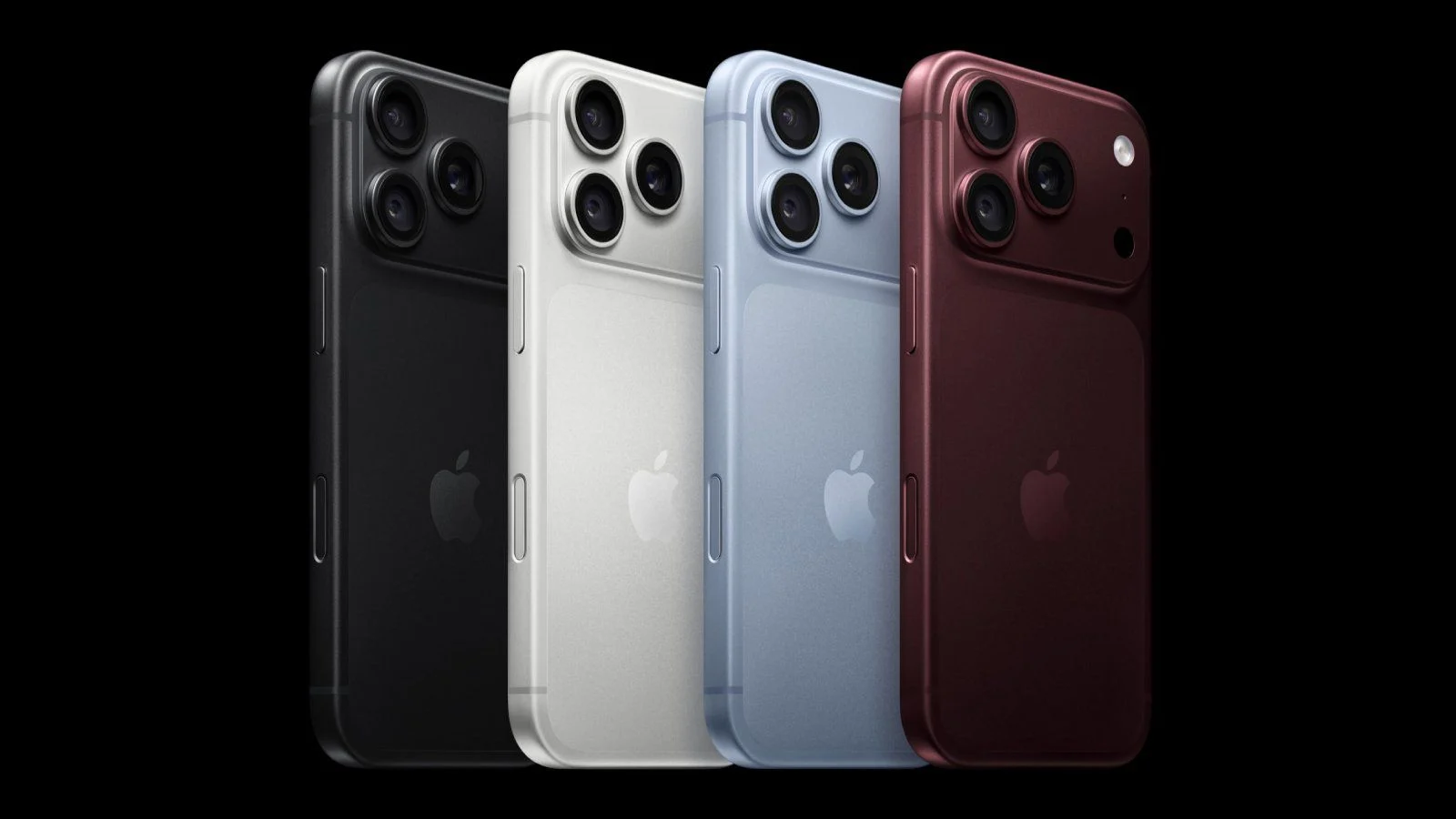
The original iPhone, officially released by Steve Jobs in 2007, will celebrate its 20th anniversary in 2027. Apple allegedly hopes to take this opportunity to launch a monumental iPhone and redefine the Pro series with a new industrial design. Bloomberg reporter Mark Gurman previously reported that this 20th anniversary iPhone will use "curved glass around the corners and edges" while further narrowing the screen frame.
Judging from the information disclosed so far, Apple’s goal is not just to make the frame narrower, but to bend the screen glass along the edges and four corners of the fuselage, making the metal frame almost invisible during normal use. The final effect may be close to the front of the fuselage made of a single piece of glass, visually further eliminating the boundaries between the traditional mobile phone screen, frame and fuselage.
This design is considered the most substantial redesign since the iPhone X in 2017. iPhone X cancels the physical Home button for the first time and uses Face ID, allowing the screen to be further extended to the edge of the body. The 20th anniversary iPhone may continue to advance on this basis, allowing the display area to truly cover the four corners and side edges of the phone, resulting in a more complete borderless effect.
However, there is still great uncertainty about the specific design of the 20th anniversary iPhone. Apple's internal product development plans may change at any time, and such a radical design also faces manufacturing process challenges. In particular, bending the glass to the four edges requires solving a series of problems such as the display panel, glass strength, touch recognition, accidental touch prevention, drop durability, and internal component layout. Therefore, it remains to be seen whether the final production version can fully achieve the effects currently rumored.
In addition to appearance, the 20th anniversary iPhone is expected to usher in a series of internal hardware upgrades. Apple may use the second-generation 2nm process chip, which is the A21 Pro. The iPhone 18 Pro released in 2026 has already been the first to be equipped with the A20 Pro and has switched from TSMC's 3nm process to the 2nm process. Therefore, the A21 Pro in 2027 is expected to further improve performance and energy efficiency on this basis.
Battery technology may also be changing. Apple is said to be researching new batteries using silicon anode materials. Compared with traditional graphite anodes, silicon can store more lithium ions per unit mass, so it can theoretically increase capacity without significantly increasing battery volume. If this technology is eventually used in the 20th anniversary iPhone, Apple is expected to provide longer battery life while maintaining the body size.
In terms of memory, Apple was also revealed to be evaluating mobile high-bandwidth memory technology. Related solutions may use vertically stacked DRAM to increase memory bandwidth. For iPhones that increasingly rely on local artificial intelligence computing, higher memory bandwidth can help the device process large AI models faster and improve the response speed of complex tasks.
The screen itself may also receive a major upgrade. Previous news said that Apple is considering using a thinner and brighter new generation of OLED panels, which may use Samsung OLED's COE, which is "color filter on package" technology. By integrating color filters into the packaging structure, the overall stacking thickness of the display can be reduced while improving light utilization, improving brightness while reducing power consumption.
In terms of display size, Apple may continue to offer two models. Relevant news said that the 20th anniversary iPhone Pro may be equipped with a screen of about 6.4 inches, and the Pro Max may be about 7 inches, slightly larger than the 6.3 inches and 6.9 inches of this year’s iPhone 18 Pro and iPhone 18 Pro Max. However, these dimensions are still early rumors, and the final specifications may be adjusted.
Another change worth noting is the physical buttons. Apple is said to be exploring ways to integrate the buttons directly into the frame of the fuselage, so that the buttons themselves no longer undergo traditional mechanical movement, but can still give users a feeling similar to physical presses through tactile feedback. If this design is finally realized, the side of the fuselage will be more concise, which will also help to further enhance the visual effect of "a whole piece of glass".
Apple may also continue to advance the technology of hiding the Face ID component under the screen. Although the current iPhone 18 Pro does not fully implement under-screen Face ID, if the 20th anniversary model can solve this technical problem, the front camera and biometric sensor can be further hidden, thus clearing the last important obstacle for a true full-screen design.
In contrast, although the upgrade of the iPhone 18 Pro just released this year is not small, the overall appearance still continues the design language of the iPhone 17 Pro. Its main changes focus on internal hardware, including the A20 Pro chip manufactured with a 2-nanometer process, a smaller smart island, a 48-megapixel Fusion main camera that supports variable aperture, longer battery life, and a larger vapor chamber cooling system.
Apple said that the A20 Pro can achieve up to 20% improvement in CPU performance and 40% improvement in GPU performance compared to the A19 Pro. The new iPhone 18 Pro also improves heat dissipation during long-term high-load operation through a larger vapor chamber, allowing the chip to maintain high performance for a longer period of time.
So for consumers who are considering whether to buy the iPhone 18 Pro, the question may become whether to upgrade now or wait for next year's 20th anniversary model. If users value processor performance, camera, battery life and currently available products, iPhone 18 Pro still provides a significant upgrade; but if users are more sensitive to appearance design, then the 20th anniversary iPhone is obviously more worth looking forward to.
However, there is still about a year until the fall of 2027 release, and Apple’s product planning may still change. In particular, technologies such as curved glass full screens, hidden buttons, silicon negative batteries, and under-screen Face ID are all likely to be eventually delayed or even cancelled. MacRumors also pointed out that Apple has been revealed to be developing under-screen Face ID many times in the past, but the related technology has not really entered mass production for a long time, so it is not appropriate to treat all rumors as confirmed specifications at the moment.
If half of the multiple solutions currently exposed can eventually enter mass production, the 20th anniversary iPhone may become the most disruptive generation product since iPhone X. For the just-released iPhone 18 Pro, it is more like an important generation for Apple to transition to 2nm chips, end-side AI and new heat dissipation technology. The next real appearance revolution may not arrive until the 20th anniversary iPhone in 2027.
Comments