
Abstract:
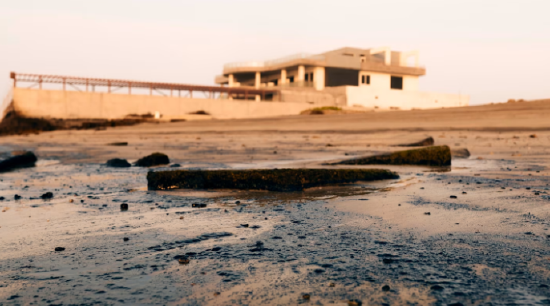
The oil spill caused by Iran's attack on oil tankers near the Strait of Hormuz is spreading to the coast of the United Arab Emirates (UAE), causing black oil on beaches and threatening the survival of sea turtles and dolphins. Contamination from the oil spill, the first to reach the coast of the United Arab Emirates, turned waters offshore in one town black and forced three emirates to close beaches this weekend.
The pollution comes as the UAE attempts to project a "business as usual" image to lure tourists back to Dubai, the Middle East's most popular destination. Currently, Dubai's beaches have not been directly affected by the oil spill.
More than 100 ships have been attacked since the conflict began. Iran has stepped up attacks over the past month in an attempt to tighten control of the critical waterway. Meanwhile, the White House is threatening to resume strikes against Iran ahead of next week's U.S. midterm elections.
Maritime monitoring agency Windward recorded a total of 12 oil spills between July and September, the largest of which occurred offshore Oman, with the pollution extending over 2,000 kilometers. On September 29, a large oil stain 13 kilometers long and 20 kilometers wide was discovered near the Oman enclave of Musandam, only dozens of kilometers away from a desalination plant. Another oil spill occurred near a desalination facility in the United Arab Emirates.
The arid Gulf region relies on coastal desalination plants to produce fresh water. These facilities desalinate by pumping seawater, and their sophisticated filtration membranes used to remove salt can be damaged by oily seawater. However, there is currently no evidence that the desalination facilities have been contaminated.
Oil spills can also have serious impacts on seabirds, as well as animals such as dolphins and sea snakes that need to surface to breathe.
Marine scientist Henrik Stahl said he has recently noticed an increase in small oil spills near the Sharjah Marine Science Research Center where he works. The research center is located on the east coast of the UAE, facing the Gulf of Oman south of the Strait of Hormuz. So far, studies have not confirmed any specific impact from the oil spill, but the center is about to start monitoring hydrocarbons in seawater.
Starr said: "This is a fairly unique ecosystem, especially rich in turtle resources. Turtles are one of the species that may be directly affected."
Residents in the UAE first noticed the oil spill when an unusual smell began to permeate urban areas. Residents from the southern Dubai region even took to social media to report the issue.
The UAE's environment department said it was carrying out oil spill cleanup work and asked fishermen to avoid the affected area.
Satellite images show that the oil pollution zone on the sea surface has been further extended. Images released by the Umm al Quwain municipality showed dark water washing up on the coastline of closed beaches. The emirate is dotted with mangroves along its coast, providing important habitat for marine life.
An employee at a hotel in Umm Al Quwain said: "We can see oil leaks and we can smell the smell. We can see black matter." However, the employee added, "The situation seems to be improving because we see people moving on the beach and people swimming in the sea."
Local authorities also closed beaches in Ras Al Khaimah. The emirate is building a massive Wynn resort and casino project. Windward said its satellite analysis found "new dark streaks that appear to be consistent with oil pollution" in the area on Monday. Sharjah has also closed its beaches.
Before the war, about one-fifth of the world's oil and liquefied natural gas were transported through the Strait of Hormuz. Currently, ships are still passing through the strait under U.S. air cover, but traffic is only a fraction of pre-war levels.
According to Windward statistics, at least five merchant ships have sunk, including two Iranian oil tankers that were attacked by the US military. Additionally, at least seven ships were abandoned by their crews after being attacked.
The latest ship to sink is the Cape Dao, a bulk carrier owned by Emirati shipowners. The ship had been drifting at sea for several weeks. The Singaporean container ship "GFS Pride" also sank earlier this month, causing containers and shipwrecks to be scattered in the waters off Oman's Musandam Peninsula.
The U.S. Navy issued a notice to sailors on Wednesday, warning all "neutral ships" to avoid the Strait of Hormuz, citing the "current geopolitical situation" and increased U.S. law enforcement against Iranian shipping. Currently, Iranian shipping is subject to a blockade by the United States.
Comments