
Abstract:
A new study led by USDA scientists has found that the levels of Omega-3 fatty acids in farmed salmon have declined significantly in recent years. Researchers believe this change is related to changes in fish feed in the aquaculture industry. As small fish resources in the ocean dwindle, the aquaculture industry gradually reduces the use of fishmeal and fish oil, turning to soybeans, rapeseed and other land crops and their oils as feed ingredients. This may not only undermine the widely publicized nutritional advantages of salmon, but also bring new pressures on terrestrial ecosystems and climate.
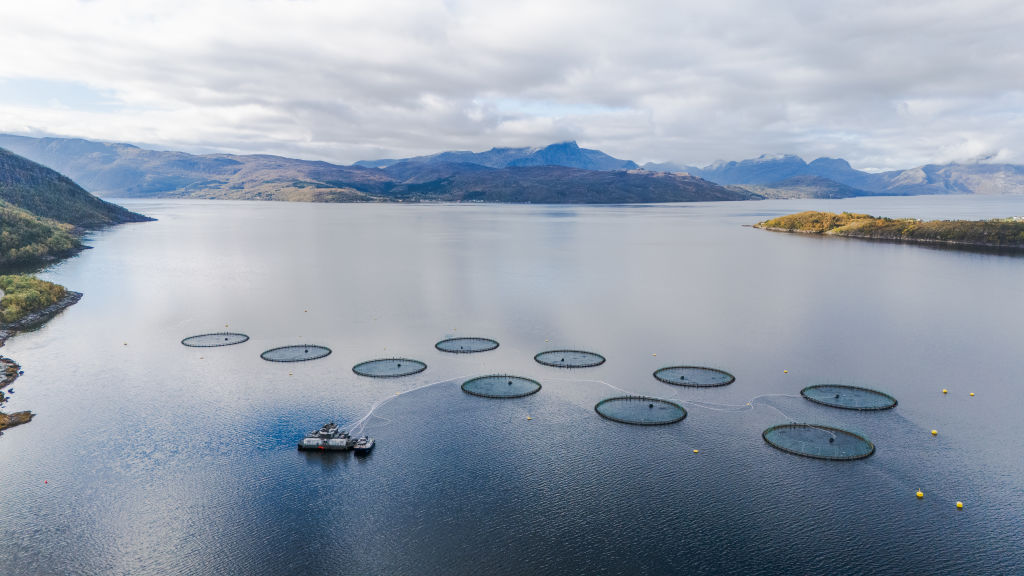
"Eat more fatty fish" has always been an important recommendation in the nutrition community. As the advice spread widely, global consumer demand for salmon grew, and farmed production climbed accordingly. Currently, about 70% of the salmon consumed globally comes from cage and pen farming. The USDA Dietary Guidelines recommend that adults eat at least 8 ounces (about 227 grams) of fish per week, with a preference for fish such as salmon that are rich in "heart-healthy" omega-3 fatty acids. However, new research shows that the levels of these fatty acids in farmed salmon have dropped significantly, which means that long-standing nutritional recommendations from organizations such as the USDA and the American Heart Association may no longer accurately reflect the nutritional status of farmed salmon today.
The researchers emphasized that the current sample size is not large enough to support revision of government dietary guidelines, so larger and more representative studies are still needed. The USDA declined an interview request and did not respond to questions via email. Research results show that the main reason for the decrease in Omega-3 content in farmed salmon is the decrease in the proportion of marine-derived ingredients in the feed. Salmon itself is a carnivorous fish. In the past, it mainly relied on fish meal and fish oil made from small fish as feed ingredients. However, these small fish have been overfished for a long time. As marine resources become increasingly scarce, the aquaculture industry begins to turn to land crops such as soybeans and rapeseed and their oils. A 2016 study found a similar nutritional decline and attributed it to a shift from farmed feed to crop ingredients.
This change creates an ironic situation: nutritional advice originally intended to encourage people to eat healthy fish has promoted the rapid expansion of the global farmed salmon industry, and the expansion of the industry may be eroding the nutritional value of salmon for which it was originally promoted.
Salmon play an important role in the rapid development of the global aquaculture industry. Salmon has long been viewed as a protein source with both nutritional and environmental advantages for people who are concerned about healthy eating and want to reduce their intake of land-raised protein, especially beef. Global farmed salmon production increased approximately threefold between 2000 and 2020, far more than any other finfish. Today, aquaculture is one of the fastest-growing food production systems in the world, with much of that growth driven by consumer demand for fish such as salmon that are promoted as particularly healthy.
However, the environmental impact of farmed salmon has also been criticized by researchers and environmental groups. Fish waste and feed residues can pollute water bodies and threaten wild salmon populations. To meet growing aquaculture demand, more and more small fish are being harvested as feed ingredients, which not only impacts marine ecosystems but also puts pressure on coastal fishing communities that rely on these fish and other wildlife.
As small fish stocks dwindle in the world's oceans, the aquaculture industry is turning more to land crops as feed ingredients, including soybeans and soybean oil. Researchers point out that this shift, while reducing reliance on marine resources, has created new environmental problems.
About half of the world's soybeans are produced in South America, where parts of tropical rainforests and other important climate-regulating ecosystems are being cleared to grow feed crops. Matthew Hayek, a researcher at New York University who studies the environmental impacts of protein production, said soybeans are an important source of protein and oil for the aquaculture industry. According to relevant research, over the past two decades, the global consumption of soybeans by all fish farming industries has corresponded to an area of forest expansion and deforestation equivalent to an area equivalent to Nicaragua or Bangladesh.
However, Hayek also pointed out that it is difficult to directly attribute the deforestation caused by soy consumption to a single fish. Other studies have found that the proportion of crop-based ingredients in farmed salmon feed is increasing. Norway is the world's largest producer of farmed salmon. In 1990, about 90% of its farmed feed ingredients came from the ocean. By 2020, this proportion had dropped to about 23%.
Environmental organizations also pointed out that about 90% of the soybeans used to farm salmon in Norway come from three Brazilian companies, and some of the soybean raw materials of these companies come from areas where the Amazon rainforest has been illegally logged. Another study found that between 2000 and 2020, greenhouse gas emissions per kilogram of farmed fish produced doubled after Europe and the UK switched to crop-based feed for farmed fish.
“This is just trading one problem – overexploitation of marine resources – for another – overexploitation of land resources,” said Laura Lee Cascada, director of the Responsible Aquaculture Project.
Nonetheless, as the global population grows and demand for seafood continues to rise, the aquaculture industry is expected to continue to expand. Nutritionists and researchers believe farmed fish, including salmon, will play an important role in the future of global protein supplies. But some environmental groups point out that the growth in demand for salmon is mainly coming from rich countries, which do not have serious nutritional gaps.
Cascada believes that the farmed salmon industry claims to be "providing additional protein to the world", but in fact, it is more supplying protein that is not necessarily urgently needed to countries in the Global North, while the cost is borne by countries in the Global South.
In the United States, members of Congress are pushing for legislation that would make it easier for salmon farming companies to operate in offshore federal waters by simplifying the licensing process. In February 2026, environmental groups and fishermen wrote to members of Congress opposing the U.S. Marine Aquaculture Research Act (MARA Act). Supporters believe that locating farms in deeper offshore waters can reduce pollution problems faced by sensitive nearshore ecological environments; opponents believe that this will allow a factory farming model similar to land-based industrial animal husbandry to enter the open sea.
This study reminds people that the nutritional value of salmon is not a fixed number, but is closely related to the farming method, feed source and ecological environment. As the global aquaculture industry continues to expand, how to meet human nutritional needs while avoiding overexploitation of marine resources into terrestrial ecological damage may become an important issue that the aquaculture industry must face in the future.
Comments