
Abstract:
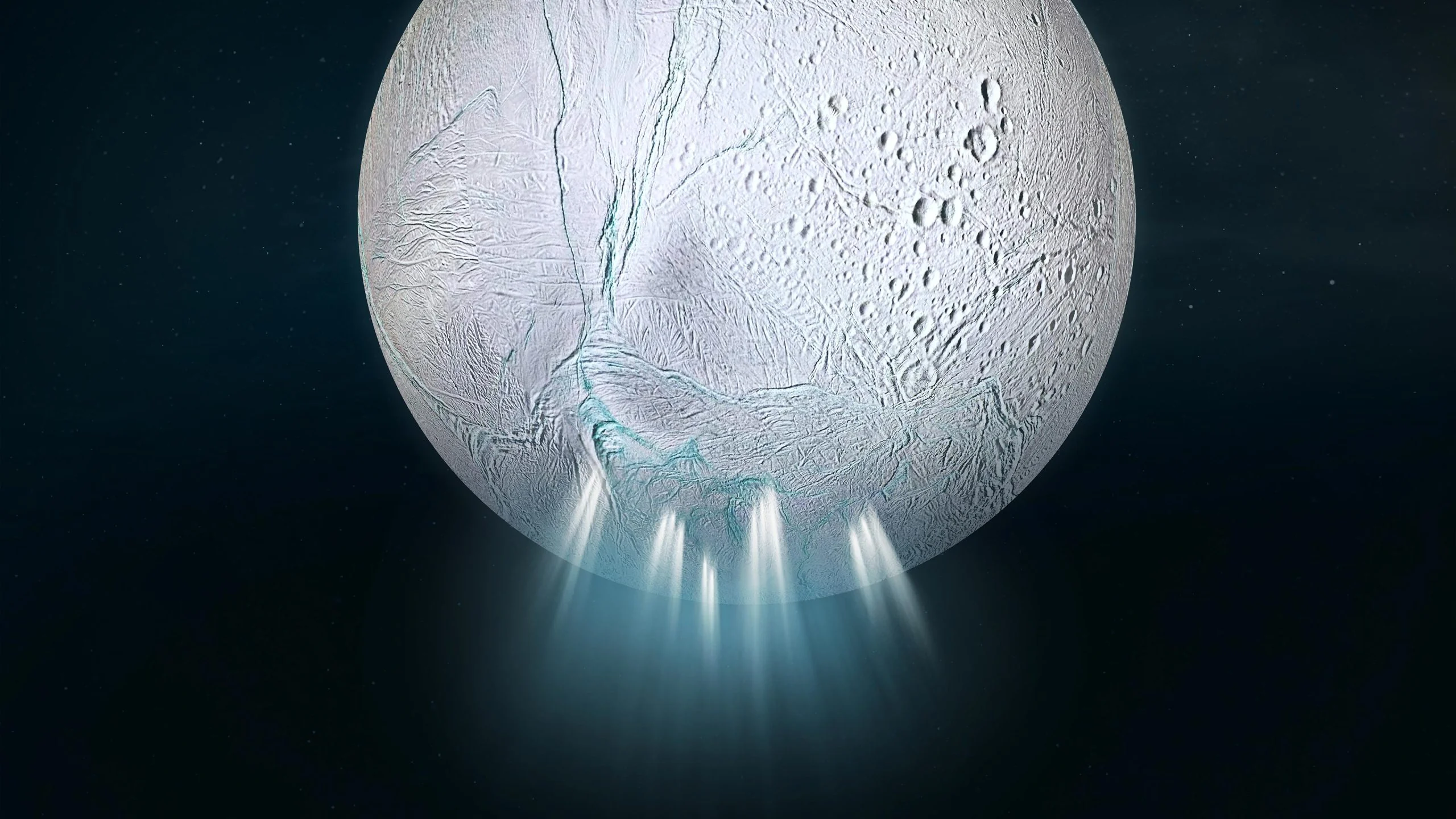
If life exists on Saturn's moon Enceladus, a few grains of ice flying into space may provide clues. There is a global ocean beneath Enceladus' thick icy crust. Near the moon's south pole, water escapes through cracks in the ice, ejecting vapor and ice particles that form plumes hundreds of miles high, some of which replenish Saturn's E ring.
When droplets freeze as they pass through cracks, different salts collect in different areas of the same droplet. When the droplets break up, the ice particles that form carry a different mixture of salts with them. A study published in Science Advances suggests that the same process may also concentrate organic molecules into individual ice particles, making them easier for spacecraft to detect.
NASA's Cassini probe arrived at Saturn in 2004 and has flown through the plume multiple times, allowing it to sample material from the ocean without landing or drilling through miles of ice. It detected salts, organic compounds, and evidence of water reacting with seafloor rocks.
In the new study, the team analyzed nearly 1,000 salt-rich ice grains recorded by Cassini's Cosmic Dust Analyzer. Some ice particles are rich in sodium chloride, the main component of table salt; others are mainly carbonates, phosphates, hydroxides or potassium-containing salts.
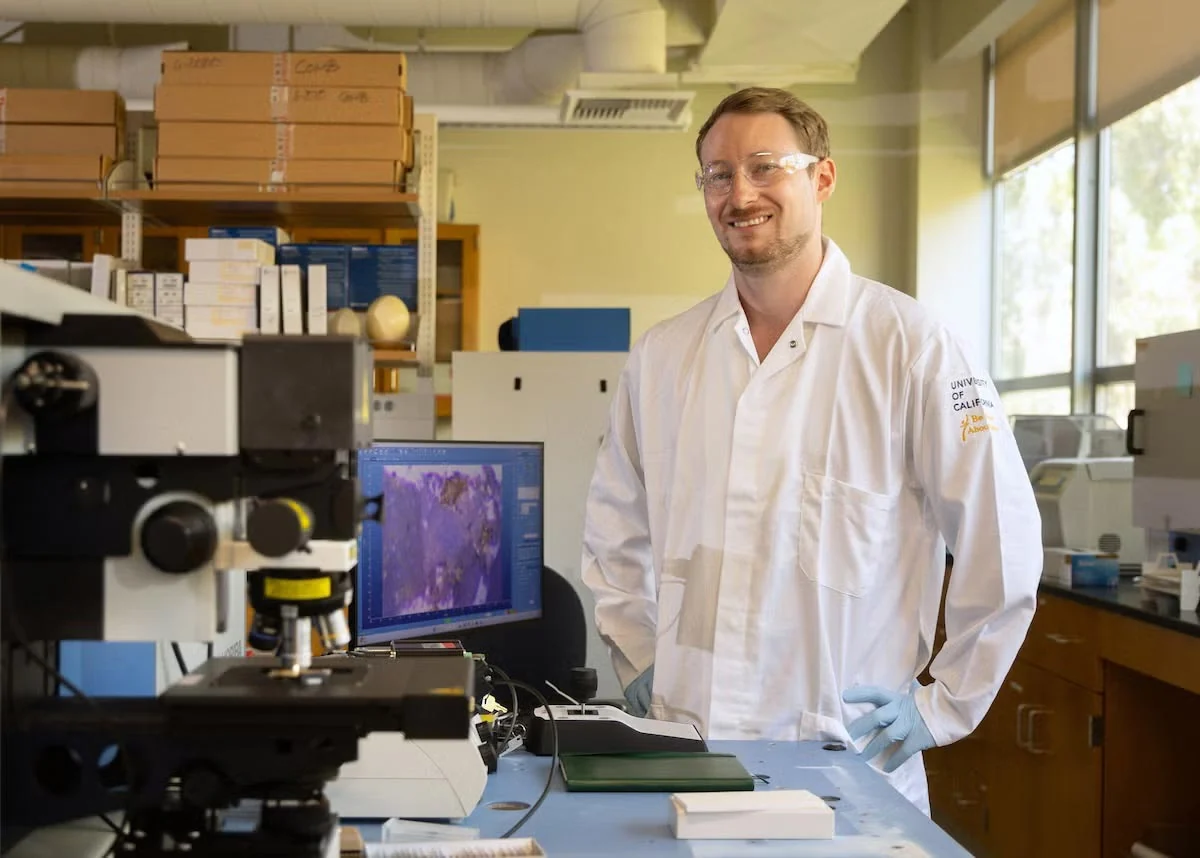
"We showed that each ice particle is not necessarily just a small scoop of a sample of the ocean," said study co-author Fabian Klenner, assistant professor of planetary science at UC Riverside. "It is more like a fragment of a much larger ocean droplet, and the freezing process has separated the salt within the droplet before it breaks up."
The researchers combined Cassini observations with laboratory experiments, thermodynamic calculations and droplet cooling models. In the lab, they froze droplets of alkaline salt water formulated to resemble Enceladus' ocean. Significant salt accumulation areas formed in larger droplets that cooled relatively slowly; the smallest droplets froze the fastest and were more uniform in composition.
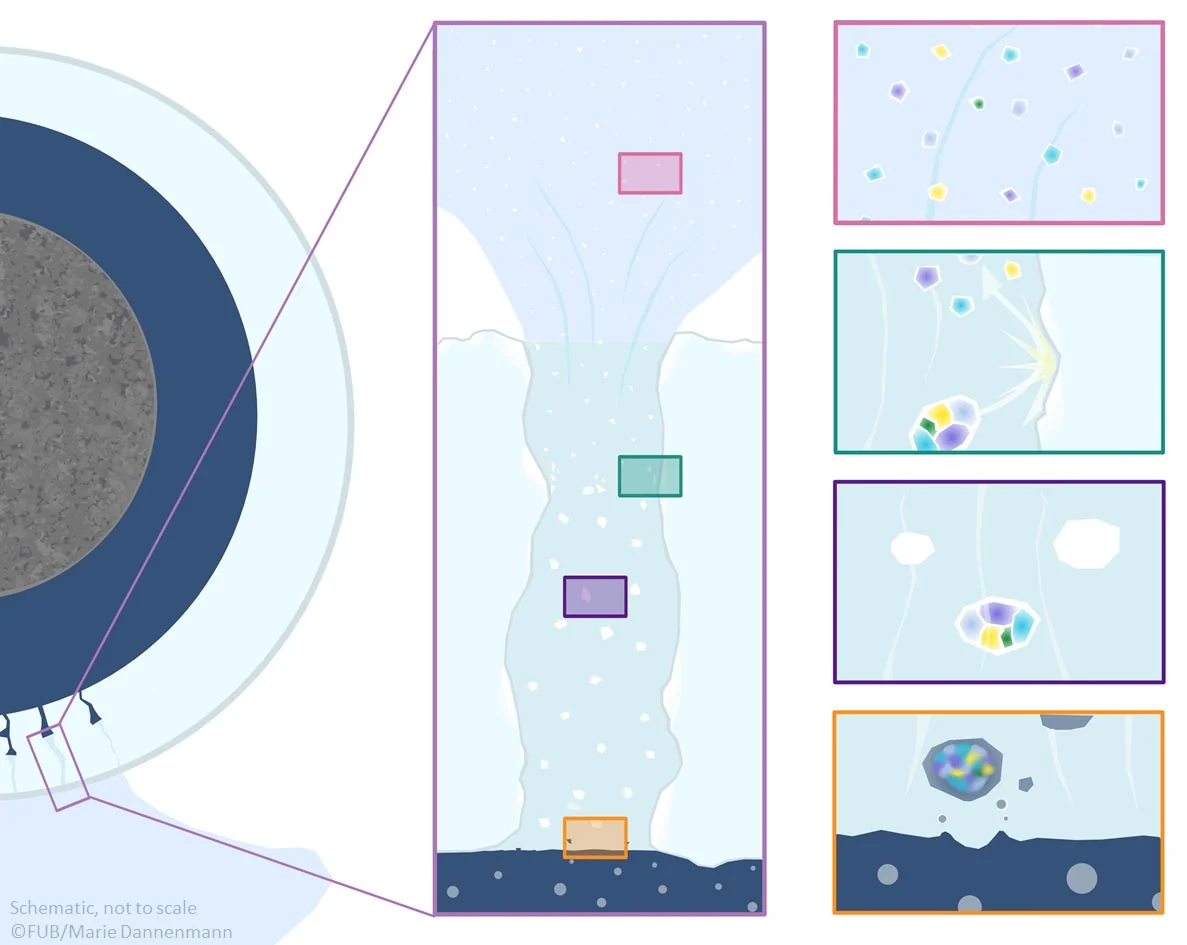
"When these droplets freeze relatively slowly, different salts can segregate into different regions within the same ice particle," Klenner said. "For example, sodium chloride may be concentrated in one area and potassium chloride in another. As the ice particle accelerates inside the vent, collisions with the ice wall knock it into small fragments of different compositions. This is the mechanism we proposed."
In the team's model, bubbles burst at the ocean surface, throwing droplets into vapor rising along the vents. The droplets freeze on the way up, giving the salt time to separate. As the vent narrows near the surface, the vapor and frozen droplets accelerate to hundreds of miles per hour. Subsequent impact with the ice wall breaks the droplets into micron-sized fragments, one micron is about 0.00004 inches.
Frank Postberg, a professor of planetary science at Freie Universität Berlin who led the study, said: "Enceladus actually does a lot of the sample preparation work for us, which usually requires a lot of effort in geochemistry laboratories. The components in the ocean are separated from each other and at the same time concentrated into individual ice particles."
Putting many particles together in one measurement can dilute rare compounds, making them difficult to detect. Measuring ice particles individually preserves these differences, while sampling large numbers of ice particles helps scientists reconstruct the ocean's chemical makeup.
Analyzing large numbers of individual ice particles increases our chances of discovering interesting components and gives us a more complete understanding of the entire ocean, Klenner said. "The most useful information is in the differences between ice particles. Future missions should analyze as many individual ice particles as possible."
A similar process could also explain why certain organic compounds are particularly abundant in only a small portion of Enceladus' ice grains, Klenner said. He said: "This tells us something important about the search for life on Enceladus. If the molecular signatures of life are present, they are probably concentrated in only a few ice particles. It is those ice particles that future spacecraft will have to find."
This research was funded by NASA's Astrobiology Program, NASA's Habitable Worlds Program, and the European Research Council, and the paper was published in Science Advances on September 25, 2026.
Comments