
Abstract:
NASA engineers recently conducted tests at the Jet Propulsion Laboratory in Southern California, USA, and successfully allowed the tip of the rotor of a new generation Mars helicopter to briefly exceed the speed of sound. The tests were conducted in a "25-foot space simulator" that can simulate the thin, cold carbon dioxide atmosphere of Mars, and a total of 137 tests were completed.
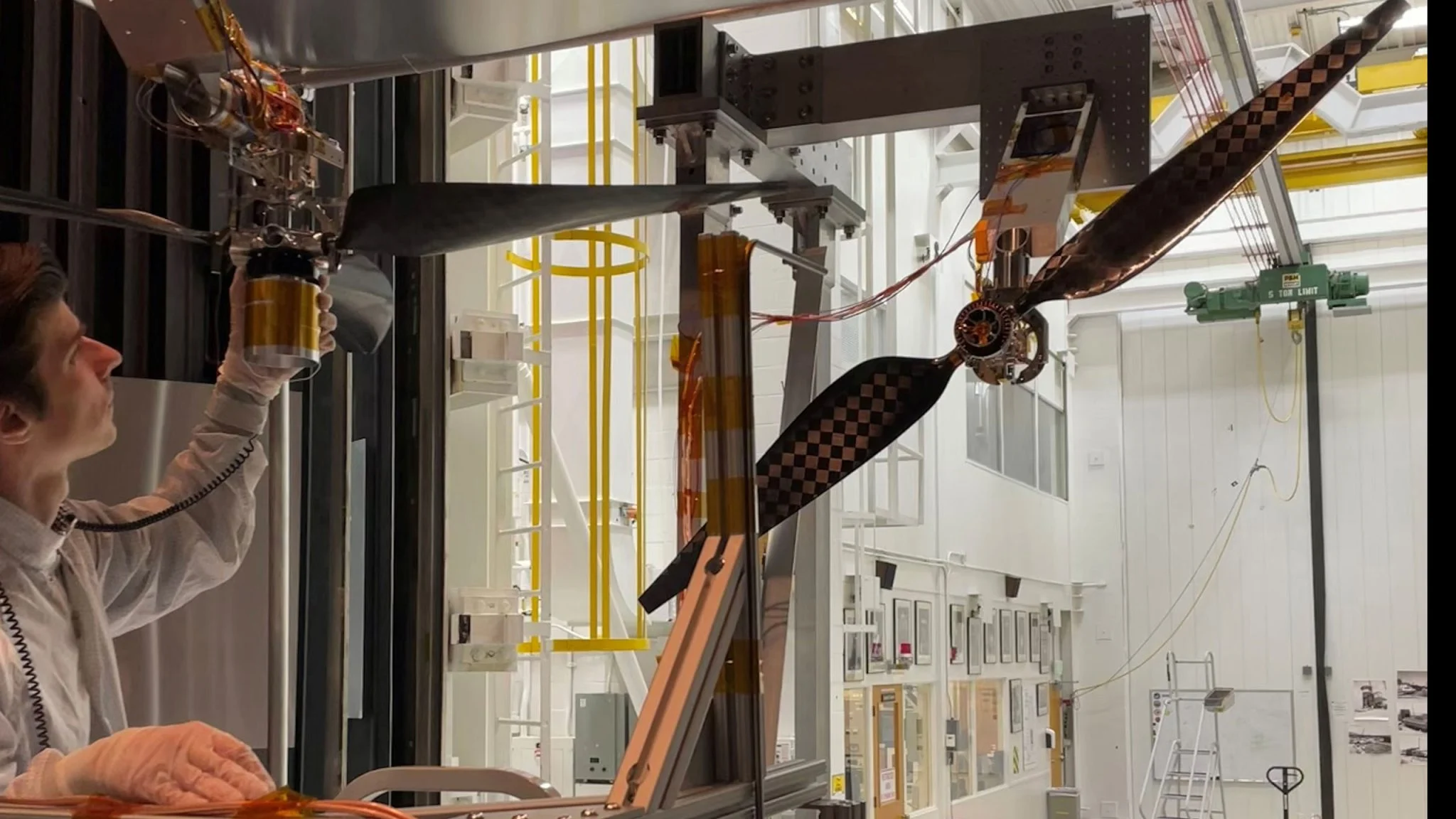
The density of the Martian atmosphere is about 1% of that of the Earth, making it difficult for helicopters to obtain sufficient lift. To improve flight performance, engineers must spin the rotors at extremely high speeds. Previously, when NASA's "Ingenuity" Mars Helicopter performed its mission, the rotor speed was limited to less than 2,700 rpm to avoid complex aerodynamic effects that may occur after approaching the sound barrier, and to prevent sudden airflows such as dust devils from pushing the rotor tip into a supersonic state.
This test used a three-blade rotor developed by American Aviation Environmental Corporation. Engineers first extracted the air from the simulated cabin, then injected carbon dioxide with a pressure close to the Martian environment, and gradually increased the airflow speed and rotor speed. When the rotational speed reaches 3750 rpm, the rotor tip speed reaches about Mach 0.98. Subsequently, the team continued to increase the windward airflow, and finally pushed the rotor tip speed to Mach 1.08.
The results show that supersonic rotation increases the aircraft's lift by about 30%. This means that future Mars helicopters are expected to carry heavier scientific instruments, more advanced sensors and larger-capacity batteries, allowing them to perform longer-duration, low-altitude exploration missions covering a wider range.
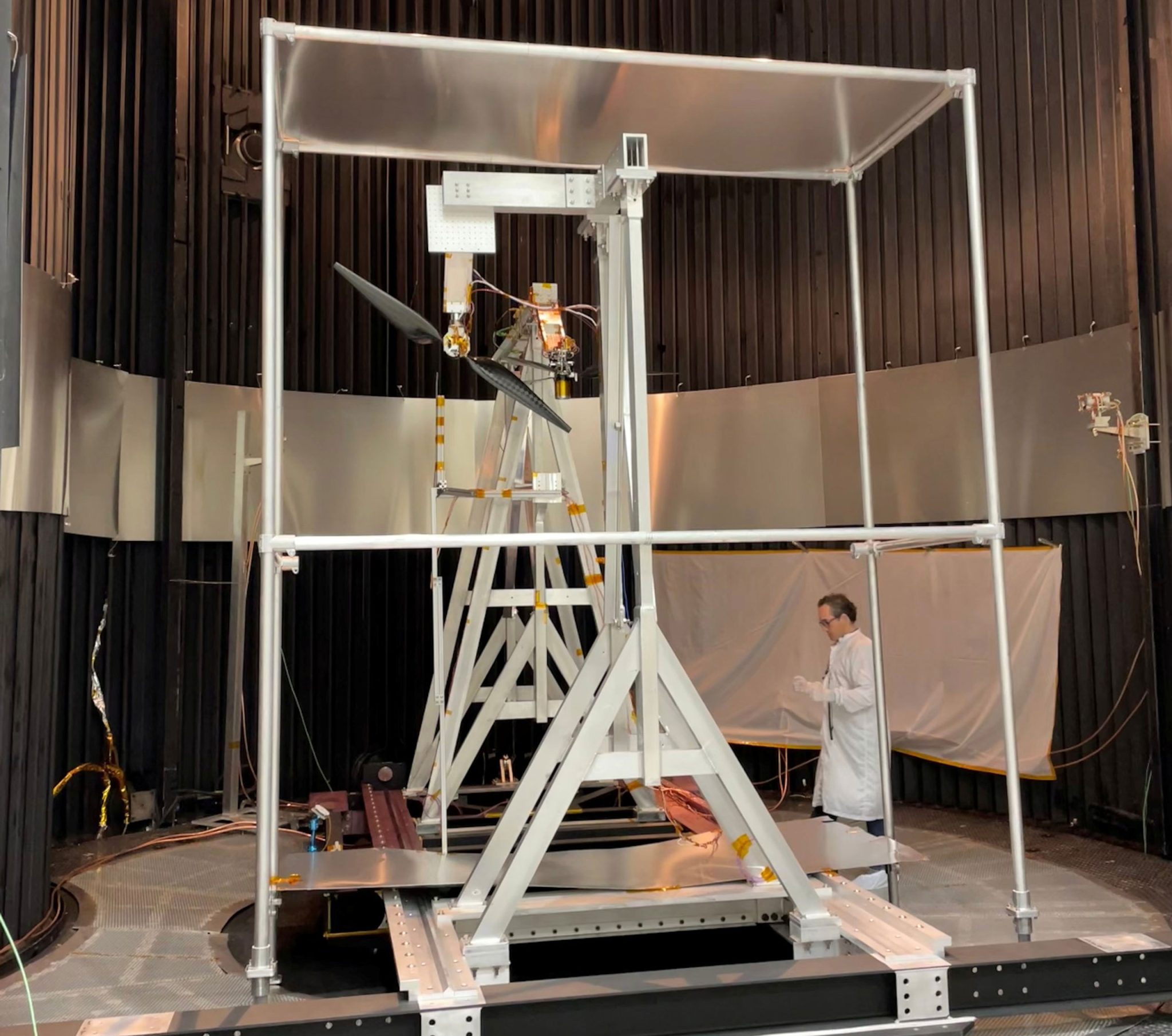
The research team also tested a two-blade rotor designed for the SkyFall mission concept. Because its blades are slightly longer, a similar near-supersonic tip speed can be obtained when the rotation speed reaches about 3570 rpm.
Aerodynamicist Shanna Witherow-Mazer of NASA's Ames Research Center said that the team originally expected the rotor speed to reach Mach 1.05, which would be ideal, but the final test reached Mach 1.08. Engineers are still analyzing the data and may find greater room for thrust improvement in the future.
Relevant test results have been incorporated into the design requirements of the "SkyFall" mission. The mission plans to draw on the technical experience of "Ingenuity" and deliver three new-generation Mars helicopters to Mars as early as December 2028. The test campaign is funded by NASA's Mars Exploration Project and aims to improve the payload capacity and flight performance of future Mars aircraft.
Comments