
Abstract:
Alcohol poisoning caused by methanol contamination is relatively rare in countries with strict alcohol regulations, but it is still a serious problem in areas where counterfeit alcohol is widespread. Such events occur almost every year and can cause death, blindness and permanent disability.
A few years ago, a methanol poisoning incident occurred in a backpacker hostel in Laos, resulting in the deaths of six foreign tourists. In 2025, Türkiye also experienced a larger-scale fake alcohol poisoning incident, killing 160 people and leaving more than 250 people with varying degrees of physical injuries. Both incidents are believed to be related to the consumption of alcohol tainted with illegally produced methanol.
Methanol is also worrisome because it only takes tiny doses to cause serious consequences. About 10 milliliters of methanol, or two teaspoons, can cause permanent blindness and kidney failure; ingesting more can be fatal.
There are three main types of alcohol commonly found in daily life: ethanol found in alcoholic beverages, isopropyl alcohol used for disinfection and cleaning, and methanol, an industrial chemical used in windshield washer fluid, antifreeze and solvents. Only ethanol is suitable for drinking, but some fake wine producers dilute ethanol with methanol. This may be done because methanol can create the illusion of higher alcohol content, is not taxed like drinking alcohol, and is cheap, boosting profits.
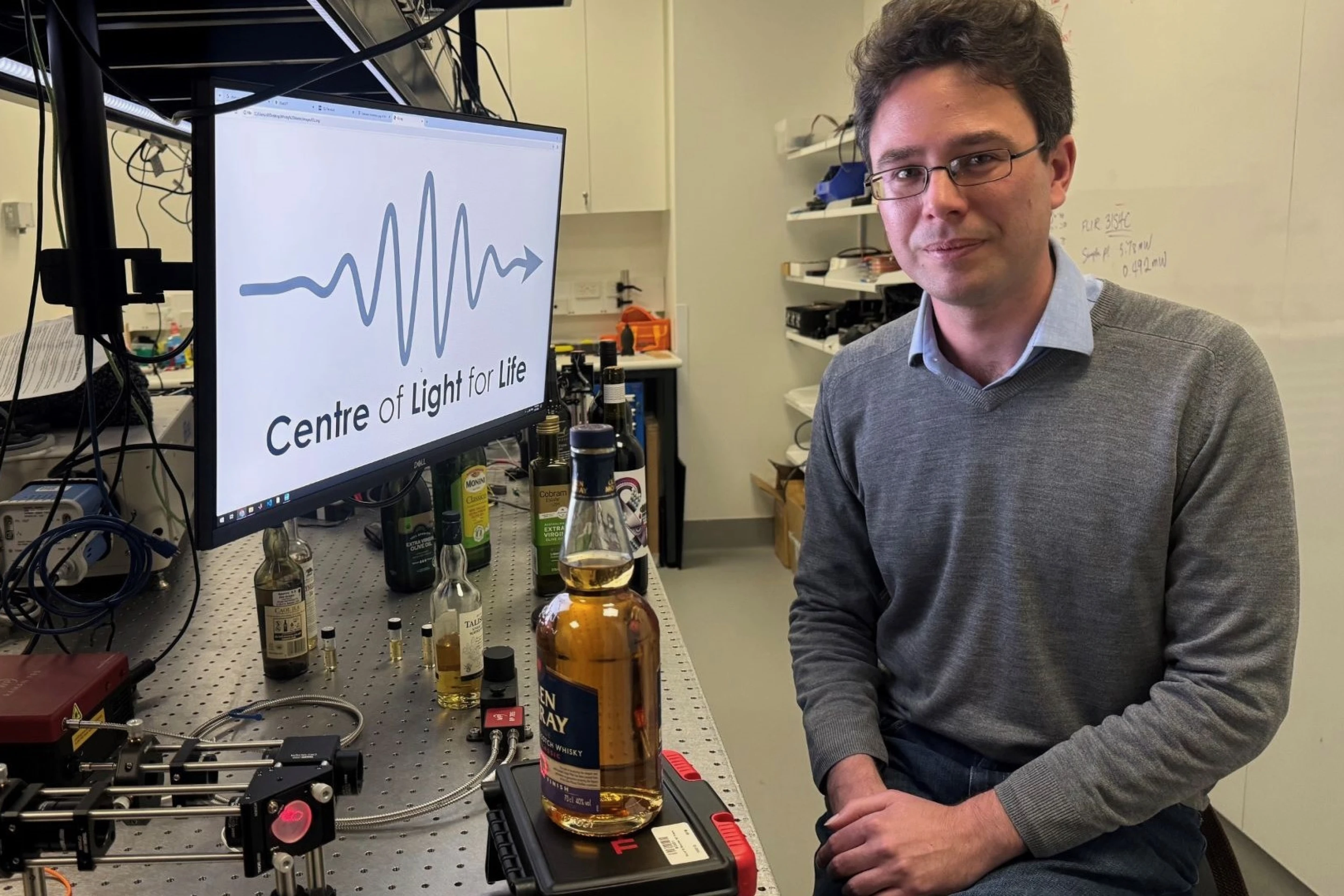
Regular alcohol manufacturers usually adopt strict quality control systems, and all products undergo extensive testing. This type of testing is not only expensive but also takes a long time. Until scientists at the University of St. Andrews in Scotland and the University of Adelaide in South Australia, Australia, made a new discovery, it wasn't possible to test the wine without opening the bottle and sending a sample to a lab.
The researchers used a technique called Raman spectroscopy to read what they call a "liquid's unique chemical fingerprint." The principle is to irradiate a laser beam into a liquid and then analyze the scattering changes caused by the light hitting the liquid surface and exciting the liquid molecules. Different liquids develop different spectral signatures, and these signatures can reveal the chemical composition of the liquid.
By precisely shaping the laser beam and changing its wavelength, the researchers were able to filter out interference caused by the wine bottle itself. Therefore, this detection method does not require opening the bottle, making it one of the most important breakthroughs in this research.
The research team detected methanol in whiskey, and the detected concentration was about one-tenth of the internationally recognized safety standard. While being extremely reliable, this technology is also cheaper and faster than traditional laboratory testing, so it is expected to become an important tool in the global fight against counterfeit wine.
Big wine-producing countries such as Australia may benefit significantly, as wine fraud costs the global industry billions of dollars every year. However, the potential for this approach extends far beyond the alcohol industry. In the future, researchers hope to use it to identify counterfeit perfumes, detect pesticide contamination in olive oil, and further improve quality control throughout agriculture.
This new technology is currently targeted at large organizations such as customs agencies, alcohol manufacturers and distributors, and food safety regulators. It may reduce the risk of counterfeit wine finding its way onto store shelves, but consumers may still be at risk. Avoiding unusually low-priced alcoholic beverages and products with incomplete or non-standard label information are still effective ways for consumers to protect themselves.
Comments