
Abstract:
A study published in "PNAS Nexus" predicts that by 2085, the high-risk areas for elephants to attack farmland in southern Africa may expand by 33% to 100% compared with the base period. The research team pointed out that population growth and the expansion of agricultural land are the main drivers of rising conflict risks, and that drying climate will also exacerbate the problem, but the impact will be relatively small.
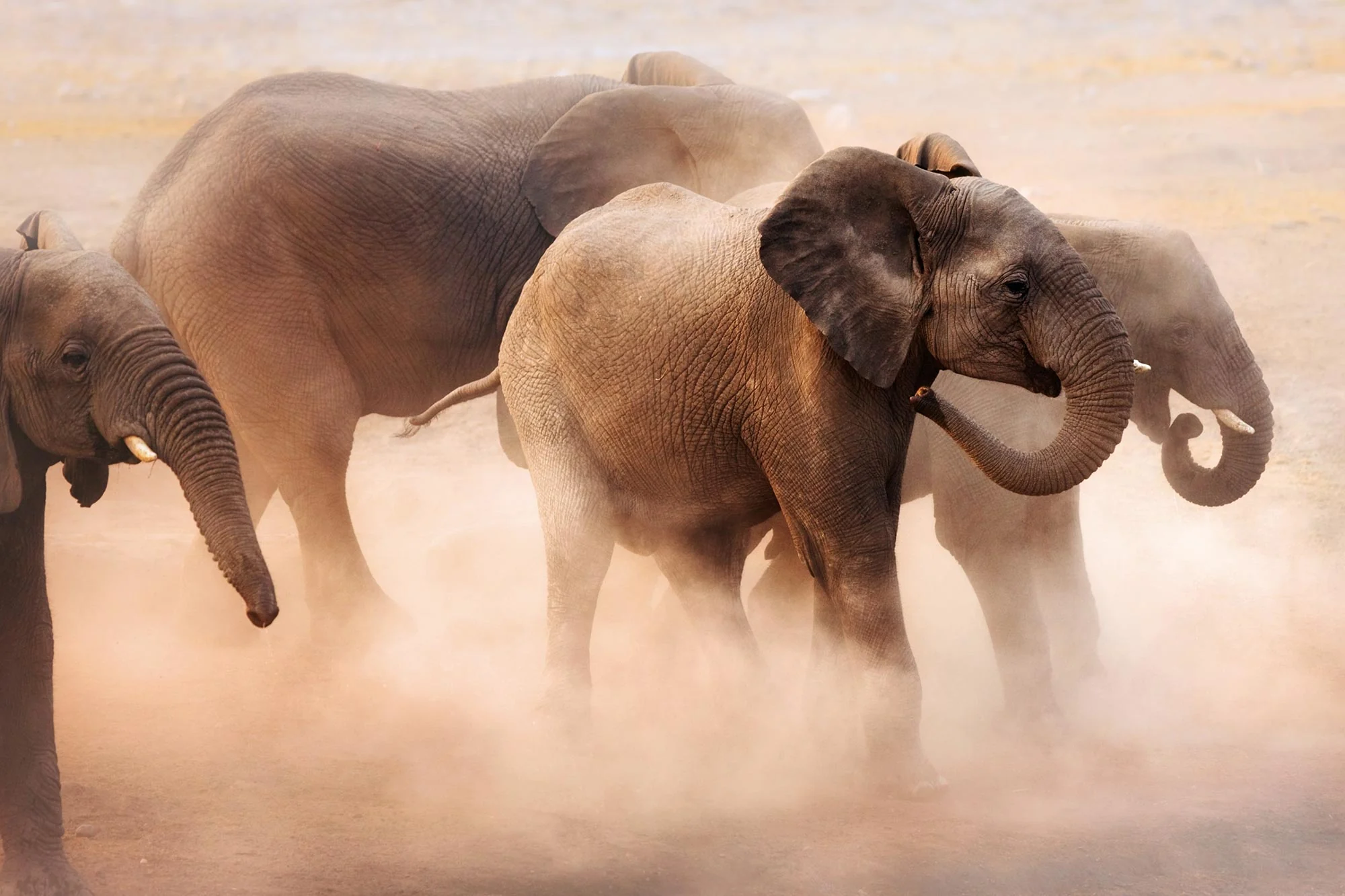
The research is based on crop attack records in 38 community reserves in Namibia from 2004 to 2020, and combines statistical analysis and machine learning models to analyze factors such as population, land use, vegetation and climate. The researchers then used the model over a wider region, including Namibia, northern Botswana, and parts of Angola and Zambia, to extrapolate potential risk changes to the end of the century. More than 90% of recorded conflicts involve elephants invading farmland.
More than 290,000 African savannah elephants live in southern Africa, accounting for about 70% of the total number of African savannah elephants. As farmland and settlements expand into elephant habitats, competition between humans and elephants for space and food increases. Elephants destroying crops can harm farmers' harvests and incomes, and may also undermine local community support for wildlife conservation.
The model shows that population growth is associated with an increase in crop attacks; the expansion of farmland and construction land during the rainy season is also associated with an increase in attacks. Drier conditions in protected areas will reduce the natural food and water sources available to elephants, making them more likely to enter neighboring farmland to forage. Vegetation cover and greenness, population density, and proximity to roads, rivers, and fences also influence the distribution of high-risk sites.
Potential hotspots identified by the study include north of Etosha National Park, northeastern Zambezi region, and around the Okavango Delta and Moremi Game Reserve in northern Botswana. Historically, the average number of raids per map grid during the wet season has been ten times higher than during the dry season. Researchers caution that fences may lead elephant herds to a few passages and create conflict bottlenecks, which may not reduce overall conflicts but may shift the problem to other locations.
The four future scenarios modeled by the team all show an increase in crop raiding activity and high-risk areas. The forecast for rainy season attacks in the most aggressive “regional competition” scenario of population growth and land conversion is about twice that of the more sustainable development scenario; even the scenario with the worst climate impacts is not the one with the highest risk of conflict. The study therefore emphasizes that future outcomes depend on development and land planning choices, and that human-elephant conflict may be reduced if agricultural expansion is directed away from elephant sanctuaries and migration corridors and planned with local communities.
Comments