
Abstract:
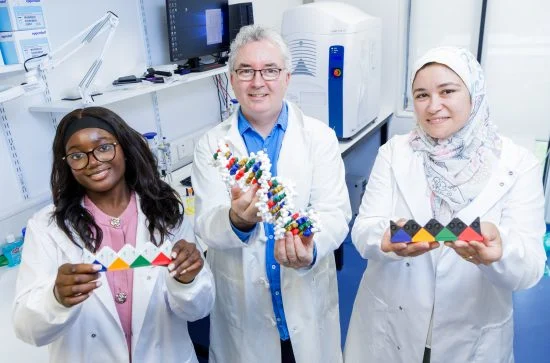
Researchers at Maynooth University in Ireland have developed a new type of DNA computer that can use the natural chemical reactions of DNA molecules in salt solutions to complete calculations without the continuous consumption of electricity like traditional electronic computers. The research team stated that this method enables DNA computing without continuous external power supply for the first time and achieves the fastest computing speed in existing DNA computing systems.
With the rapid expansion of artificial intelligence and data centers, the energy consumption of computing equipment is becoming an increasingly prominent issue. Researchers predict that by 2050, up to 20% of the electricity consumed by the U.S. commercial sector may be used for computing, and data center power demand may double in the next few years. In this context, how to reduce the energy demand of the computing process itself has become an important direction for researchers to find new computing architectures.
Damien Woods, a computer scientist at Maynooth University and senior author of the paper, said that people are currently accustomed to understanding computers as devices composed of silicon chips and transistors, but nature has actually evolved many computing mechanisms that can complete complex tasks with extremely low energy, and the human brain is one example. Researchers therefore hope to find calculation methods from the chemistry of life that are different from traditional electronic calculations.
Modern electronic computers almost all rely on transistors as basic switches, representing data through two states: "on" and "off". Each time a transistor changes state, it consumes a small amount of power, and when billions or even trillions of transistors are constantly switching at extremely high frequencies, these small power consumptions eventually add up to huge energy requirements.
DNA stores and processes information in a completely different way. The four chemical bases that make up a DNA chain can encode information in different arrangements, so the DNA molecule itself can theoretically be used as a computing medium. Unlike electronic computers that switch states through transistors, DNA computing can exploit chemical interactions between different DNA sequences to execute algorithms.
DNA computing is not a new concept. As early as the 1990s, Leonard Adleman, a computer scientist at the University of Southern California, used DNA molecules and biochemical reactions to solve the famous "traveling salesman problem", proving that DNA can be used to perform calculations. Since then, researchers have continued to develop new molecular algorithms, hoping to allow DNA to assume more of the functions of traditional computers.
However, there has always been a key issue in DNA computing, which is how to make the system have low energy consumption, stability and reliability at the same time, and do not require continuous manual intervention by researchers during the calculation process. Many traditional DNA computing methods require the constant addition of reagents or the provision of additional energy to allow chemical reactions to proceed as planned.
Woods' team took a different approach, one closer to the DNA origami technology that has emerged in recent years, rather than pitting large numbers of simple DNA strands against each other to find the answer.
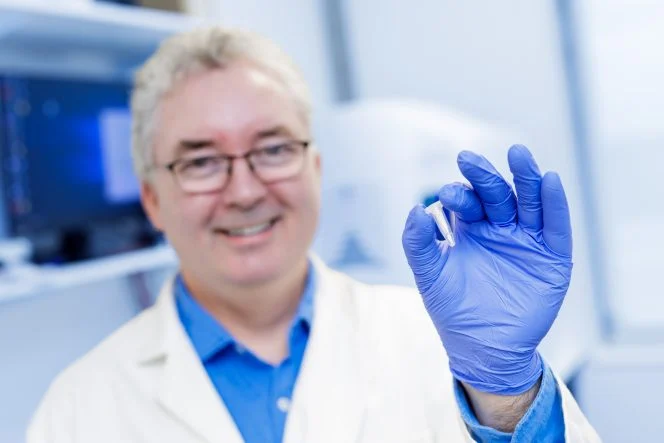
The researchers first used a longer nucleic acid "scaffold", then added a large number of shorter DNA fragments and placed them in a warm salt solution. As the solution gradually cools, the DNA molecules interact and form themselves into more stable structures. The resulting structure itself is the answer to the computational problem.
In this system, molecules interact and form a structure, and this structure is the result of the calculations, Woods explained. The most critical feature of the entire process is that the system can naturally evolve to the lowest energy state, so there is no need for continuous input of external energy to drive the calculation.
In other words, this kind of DNA computer does not continuously consume electricity to allow transistors to switch at high speeds. Instead, it allows the molecular system to find a lower energy, more stable state on its own, and uses the final molecular structure as the result.
The researchers used this method to run a variety of different programs, some with calculations as large as 100 bits. Experiments have shown that this system can indeed complete pre-designed mathematical calculations without the need for a continuous supply of electricity.
However, if you only look at the single calculation speed, there is still a huge gap between it and traditional silicon-based computers. For example, one of the fastest calculations in the experiment was to add 3 and 10, and even then it took about 30 seconds to get the result. For ordinary electronic computers, this speed is almost negligible.
But the researchers emphasized that the value of DNA computing does not lie in competing with the CPU for single calculation speed. DNA molecules can perform highly parallel chemical reactions, and a large number of different calculations can be performed simultaneously in the same tiny reaction system. Therefore, this type of computer is better suited to handle certain problems that can be broken down into a large number of parallel tasks.
Abeer Eshra, one of the co-first authors of the paper, said that this reaction can occur quickly in a test tube. Although the speed is still far less than that of a silicon-based computer, compared with other DNA computing systems, this method is currently the fastest solution.
DNA also has an advantage that traditional electronic computers cannot match, and that is its extremely high data storage density. Theoretically, one gram of DNA can store hundreds of millions of gigabytes of data, which means that a large amount of human digital information may even be compressed into a very small physical space in the future.
If you combine the ultra-high storage density of DNA with low-energy data reading and writing technology, and then use molecular computing mechanisms that naturally tend to low-energy states to perform specific tasks, it is possible to form a data processing system that is completely different from traditional electronic computers.
This computing method is especially suitable for scenarios that do not require high-speed real-time processing, but require long-term storage and processing of massive information. Compared with traditional hard drives, solid-state drives, and data centers, DNA can both store information at extremely high densities and remain stable for long periods of time under appropriate conditions.
Researchers believe that DNA storage and DNA computing may be further integrated in the future, making DNA not only a "molecular hard drive" but also able to directly calculate the data stored in it without having to convert all the information into electronic signals first.
This means that future data centers may not necessarily need to be composed of large numbers of high-speed chips and storage devices. In some specific applications, designed DNA molecules may simultaneously undertake data storage and computing tasks, and directly produce results through chemical reactions.
Of course, this technology is still in the very early stages of research. The speed of completing a simple addition in 30 seconds is obviously not comparable to modern CPUs, GPUs and even microcontrollers. In practical applications, DNA computing also needs to solve many problems such as calculation scale, result reading, chemical reaction control, reliability, and batch manufacturing.
Therefore, the significance of this research does not mean that traditional electronic computers will soon be replaced by DNA, but it proves that computing does not necessarily require continuous consumption of electrical energy. The researchers demonstrated an entirely different computing paradigm by letting a molecular system evolve on its own to a stable state.
As AI, cloud computing and data centers continue to drive up global computing energy consumption, this type of computing method that consumes very little energy or even does not require continuous power supply may gradually gain more attention. In the future, DNA computing may not become a substitute for general-purpose computers, but in areas such as specific algorithms, massive information processing, and long-term data storage, it may develop advantages that are difficult for electronic computers to replicate.
Comments