
Abstract:
In the field of materials science, glass has attracted much attention due to its unique disordered atomic structure and wide range of daily and industrial applications. However, the uncontrollability during extreme high temperature processing has long restricted the development of new functional glasses. An international joint scientific research team from the University of Birmingham (UK) and TU Dortmund University (TU Dortmund University) in Germany has made breakthrough progress. Researchers cleverly drew on ancient chemical strategies used in traditional silicate glass manufacturing for thousands of years, and successfully achieved precise reconstruction and chemical control of the internal atomic structure of metal organic framework (MOF) glass during the melting process, giving this type of cutting-edge material new physical properties and processing advantages.
As a new inorganic-organic hybrid material that deeply combines metal ions with organic ligands, MOF glass (such as ZIF-62) has a unique microporous structure and shows great application potential in the fields of carbon dioxide capture, hydrogen storage, seawater desalination, and advanced membrane separation. However, traditional MOF glass often needs to be heated to high temperatures above 300°C to soften and melt. This temperature is extremely close to the thermal decomposition limit of the material itself, which not only greatly increases the difficulty of large-scale industrial processing and molding, but also easily destroys its key pore structure.
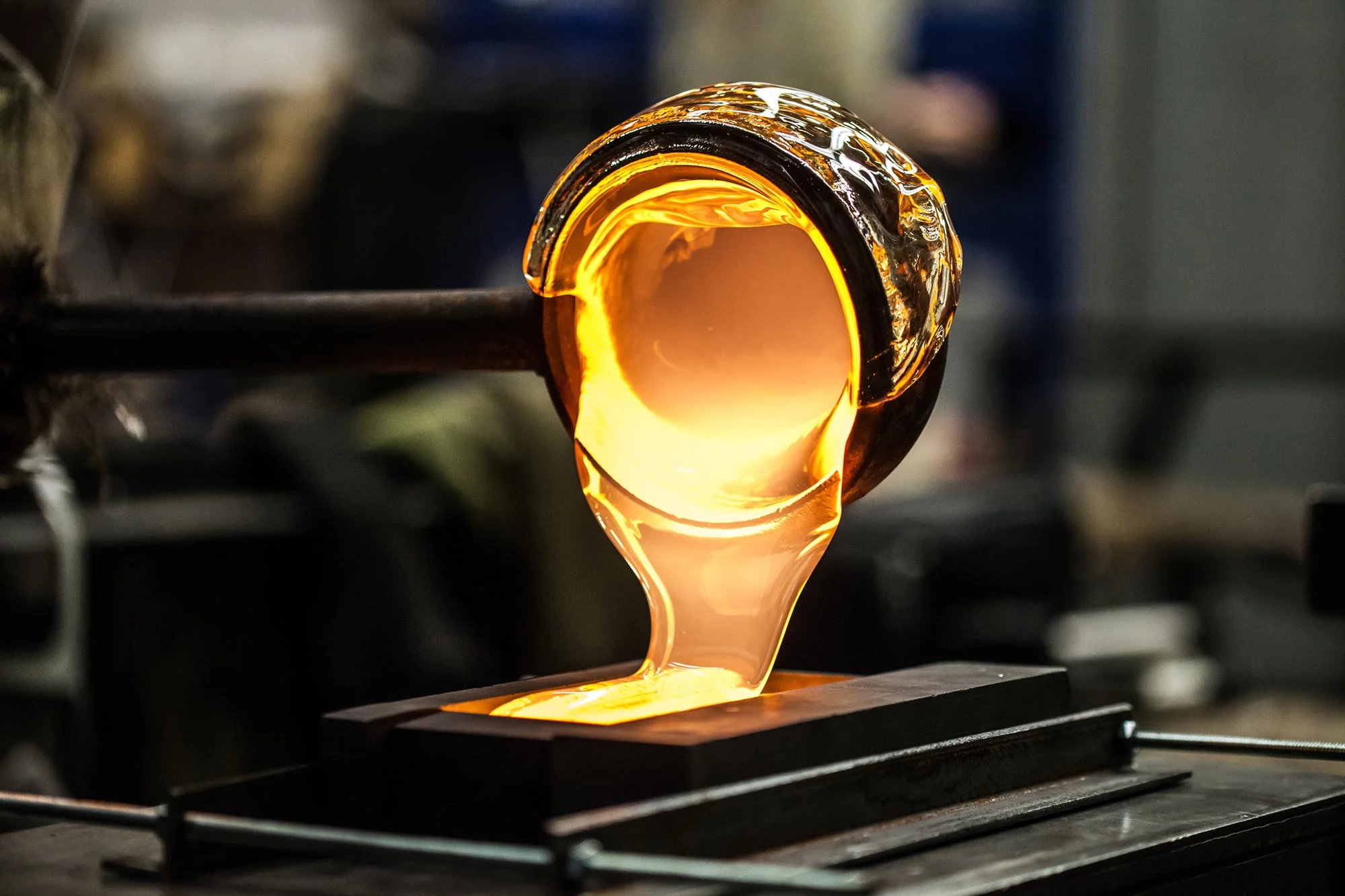
In order to break through this processing bottleneck, the scientific research team turned their attention to the ancient glass modification technology. In the traditional glass industry, workers usually add a small amount of alkali metal compounds such as sodium or lithium to silica sand to lower the melting point and viscosity. The researchers transferred this logic to the field of MOF glass and successfully achieved efficient intervention in the material's internal atomic connection network by introducing trace amounts of sodium or lithium compounds during the melting process of ZIF-62.
In order to reveal this chemical modification process at the atomic scale, the research team used the British National High Field Solid-State Nuclear Magnetic Resonance (NMR) Facility to carry out high-temperature solid-state NMR spectroscopy experiments, and combined it with machine learning computational modeling based on artificial intelligence to observe the interaction between the additive and the glass network in real time. The data shows that the added sodium ions not only fill the micropores inside the material, but also directly replace some zinc atoms, locally dissociating and reconstructing the original tight lattice network. This reorganization of the microstructure significantly reduces the softening temperature of the material and greatly improves its fluidity in the molten state, while retaining the original pore characteristics of the material to the greatest extent.
Industry experts pointed out that this research successfully proved that the modification principle of traditional silicate glass is fully applicable to modern complex metal-organic hybrid materials. By accurately rewriting the chemical and atomic structure of MOF glass in the molten state, researchers have not only reduced the manufacturing energy consumption and process threshold of this type of high-performance materials, but also opened up a broad scientific path for the future development of new next-generation engineering glasses with specific gas adsorption, catalysis and highly selective separation functions.
Comments