
Abstract:
The Ministry of Finance of Thailand announced today that
the cabinet has approved an increase in the consumption tax rate for imported electric vehicles from 10% to 35%, a range of up to 25 percentage points, effective January 1, 2027.
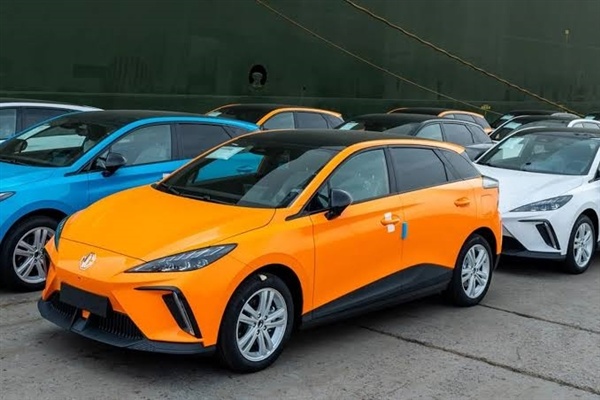
According to the plan of the Thai Ministry of Finance, the tax targets electric vehicles that are imported as complete vehicles and do not use parts produced locally in Thailand.
The new tax system is divided into three tiers according to the degree of localization. Models built in Thailand and with a high proportion of local parts and components enjoy the lowest tax rate. Models that have submitted production plans and are partially dependent on imported parts are subject to the middle tier. Models that are purely imported and have no local production plans are subject to the highest tax rate of 35%.
Thailand’s Ministry of Finance has previously given an example of the impact of this tax rate adjustment on the final vehicle price: an imported electric vehicle priced at 1 million baht (approximately RMB 200,000) will need to pay a tax of 100,000 baht at a 10% tax rate; if the tax rate rises to 35%, the price will immediately rise by at least 250,000 baht (approximately RMB 50,000), an increase of more than a quarter.
This means that the price advantage of purely imported electric vehicles in the Thai market will be significantly weakened.
It is not difficult to guess the intention of Thailand’s current tax rate adjustment. It is to protect car companies that have already invested in building factories locally and force brands that are still waiting to build factories quickly.
Since import tariffs on some electric vehicles have been reduced to zero under the ASEAN-China Free Trade Agreement, Thailand cannot directly activate tariffs, so it chooses to use consumption tax to adjust the tax burden difference between imported cars and local cars. It also tilts the calculation standard of "local content" towards high-tech parts such as motors and batteries.
However,
This policy is beneficial to Chinese car companies that have built or are building factories in Thailand. Locally produced electric vehicles are not affected by the 35% import tax, and their cost advantages will be further amplified.
BYD's factory in Rayong Province has been put into operation, Changan Automobile's first overseas new energy manufacturing base has also been established in Thailand, and brands such as Chery and GAC Aian are also accelerating their localization layout. Those brands that still rely on pure imports will face huge price pressure.
Comments