
Abstract:
A 12-year study of wild Asian elephants in Sri Lanka shows that when the population continues to decline to a certain level, the social system of Asian elephants may cross a critical tipping point, leading to the disintegration of long-term social relationship networks, shrinking group sizes, reduced connections, and increasing isolation, ultimately threatening the long-term survival of the entire species.
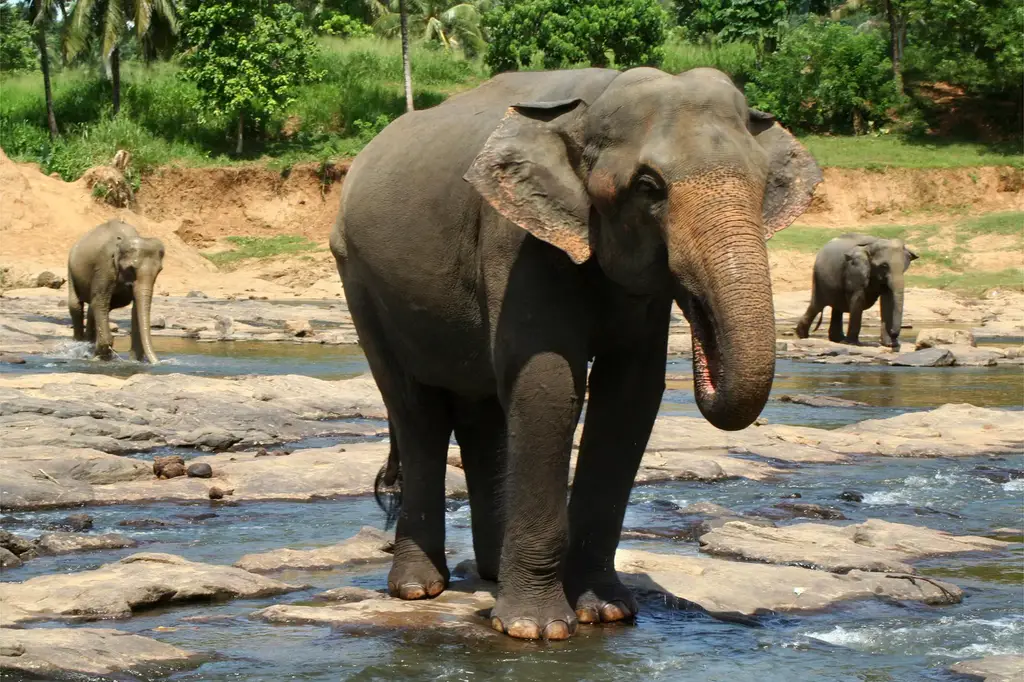
The study, published in the journal Science, points out that animal societies can usually withstand the loss or replacement of some members, but ongoing demographic changes may eventually trigger fundamental shifts in social organization. This risk is particularly acute for Asian elephants, which have complex social structures. The social system of Asian elephants is mainly based on matrilineal family relationships, forming a hierarchical and closely connected social network. However, poaching and human-wildlife conflicts continue to increase, leading to increased mortality among elephants and the continued erosion of these important social bonds.
The research team analyzed individual observation data accumulated by 443 wild female Asian elephants in Sri Lanka over a 12-year period, hoping to understand the long-term impact of the slow loss of the population on social organization, and how member replacement reshapes the elephant group relationship network.
The study found that as the number of individuals who died and permanently left the population gradually exceeded the number of new members, the Asian elephant population finally crossed a social tipping point and its social network structure changed significantly. Elephant herds are shrinking in size, splitting into more smaller groups and becoming less connected to each other. By 2018, nearly 69% of the female Asian elephants tracked when the study began had disappeared from the study population.
Further analysis shows that this fragmentation of social structure is not just due to the reduction in the number of individuals. The researchers found that the weaker but equally important social bonds between surviving individuals were gradually breaking down, causing the network of connections within the entire population to further shrink. Although Asian elephants as a whole still retain some multi-level social structures, their social cohesion and group resilience have been significantly impacted.
The researchers note that these changes may have significant lagged effects. Even if the population begins to recover in the future, the damaged social relationship network may not be able to be quickly rebuilt, and the weakening of the social structure may in turn affect the population's ability to recover, forming a long-term negative cycle.
Researchers who participated in the relevant review article said that the problem of elephant population decline may seem distant to many people, but its impact may be far greater than the public imagination. The research team also expressed concern that some countries have cut funding for wildlife protection and reduced investment in scientific research and law enforcement in recent years. They believe that such policy changes may weaken the results of international conservation cooperation and put many long-term conservation projects at risk of termination.
The researchers believe that this finding shows that wildlife conservation efforts cannot only focus on population changes, but should also simultaneously monitor the social relationship networks between animals. For a species like the Asian elephant that relies heavily on social collaboration and knowledge transmission, maintaining the integrity of the social structure may be as important as maintaining population size.
Comments