
Abstract:
Astronomers recently confirmed the discovery of S301, the fastest star currently known to orbit in the center of the Milky Way. This star is orbiting the supermassive black hole at the center of the Milky Way at high speed. Its astonishing speed not only breaks the observation record, but also provides new opportunities for studying physical laws in extreme gravitational environments.
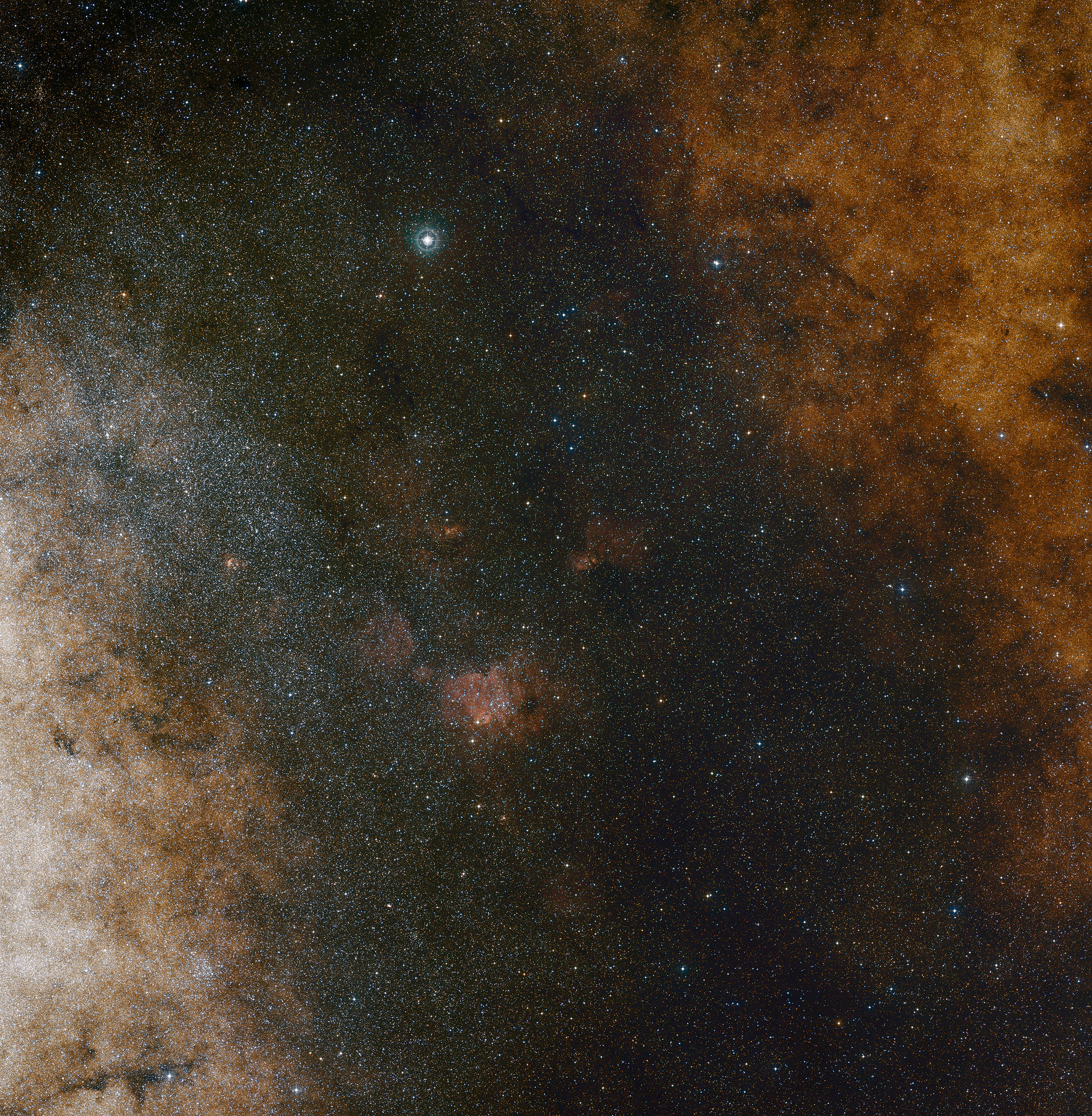
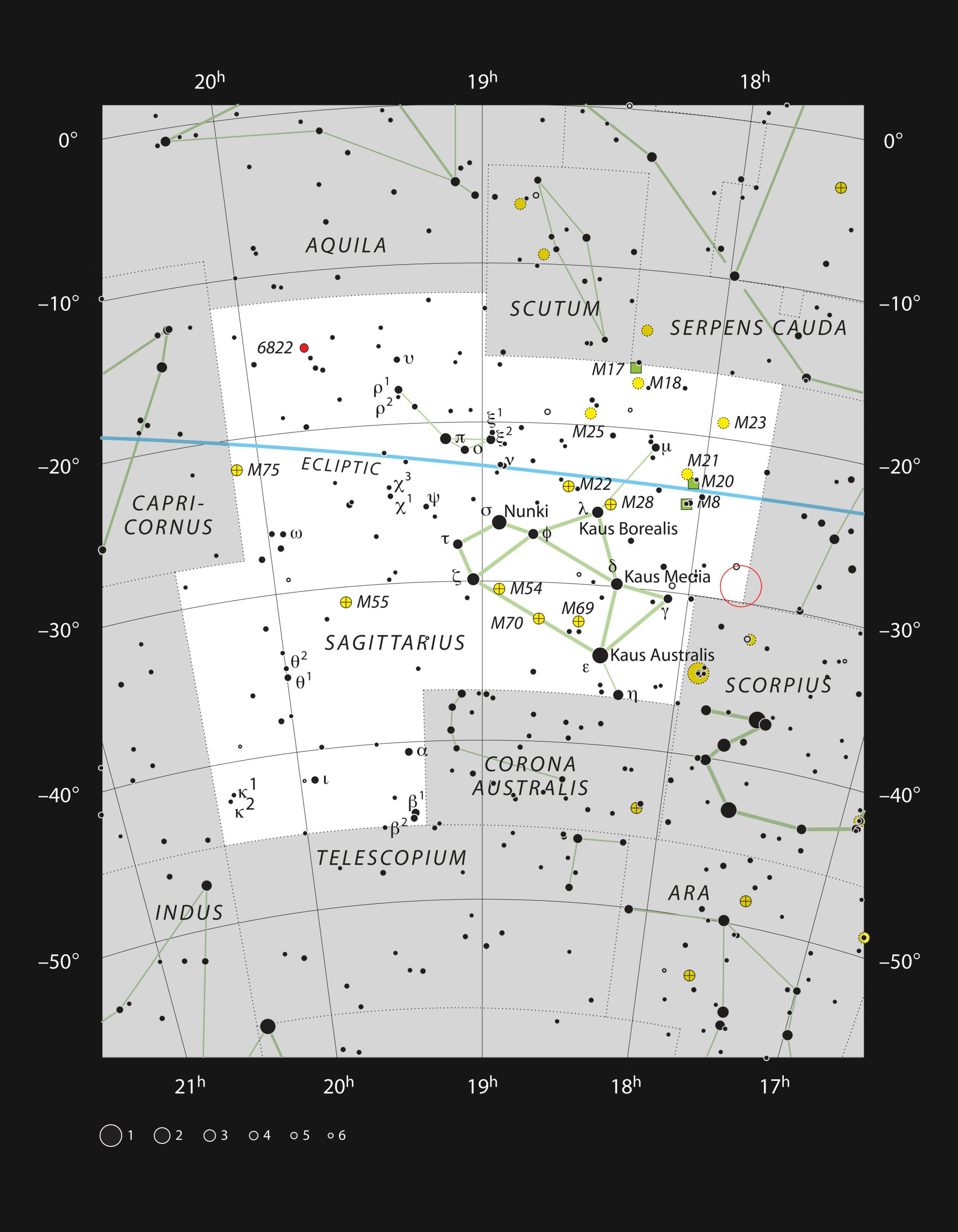
This star is located in the center of the Milky Way and orbits a supermassive black hole called Sagittarius A*. Sagittarius A* has a mass equivalent to millions of suns and is one of the most important gravitational centers in the entire galaxy.
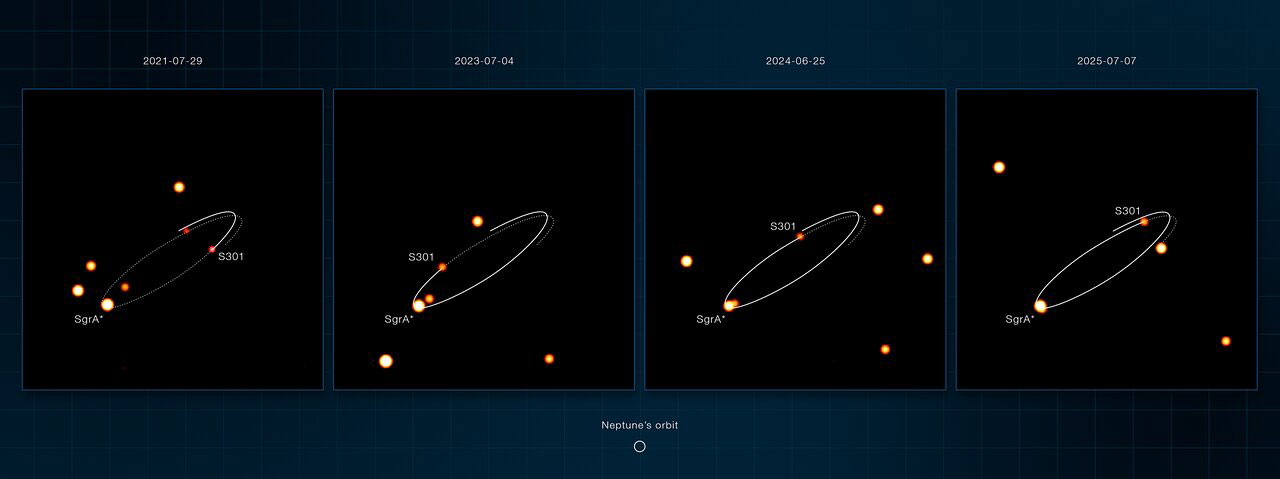
The research team used data accumulated from long-term observations to conduct precise analysis of the orbits of multiple high-speed stars near the center of the Milky Way. In the process, the researchers discovered that the star reached unprecedented speed levels as it orbited the black hole, making it the fastest star ever observed orbiting the black hole at the center of the Milky Way.
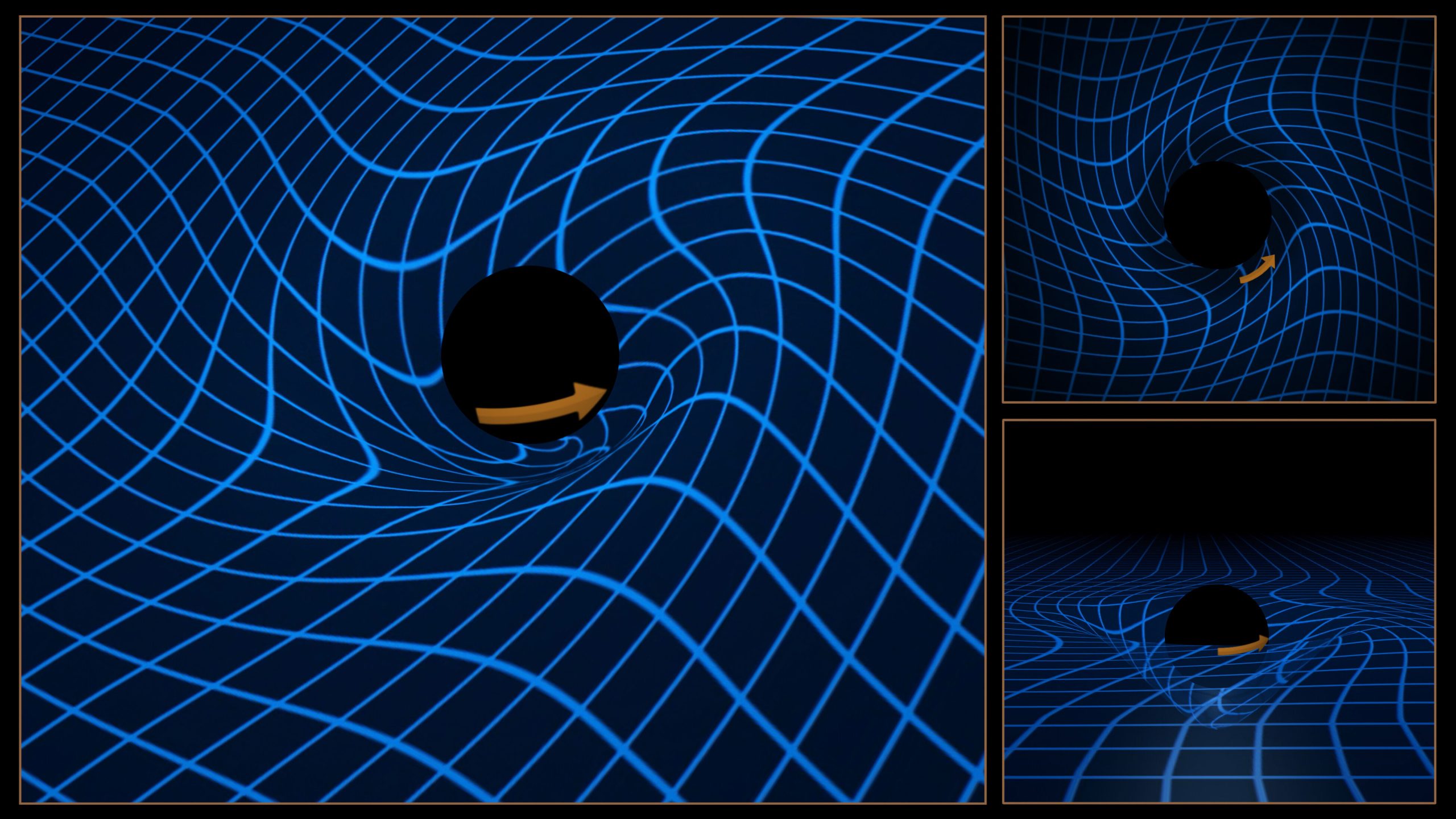
Due to its extremely close proximity to the black hole, the star must withstand extremely strong gravitational effects. Researchers point out that it is this extreme environment that allows it to achieve astonishing orbital speeds. Unlike the Sun's slow motion around the center of the Milky Way, the star's motion near perigee reaches nearly one of the speed limits humans can directly observe in the Milky Way.
For astronomers, such high-speed stars are of special value. They are not only an important tool for studying the environment at the center of the Milky Way, they can also help scientists test whether the predictions of Einstein's general theory of relativity in ultra-strong gravitational fields are accurate.
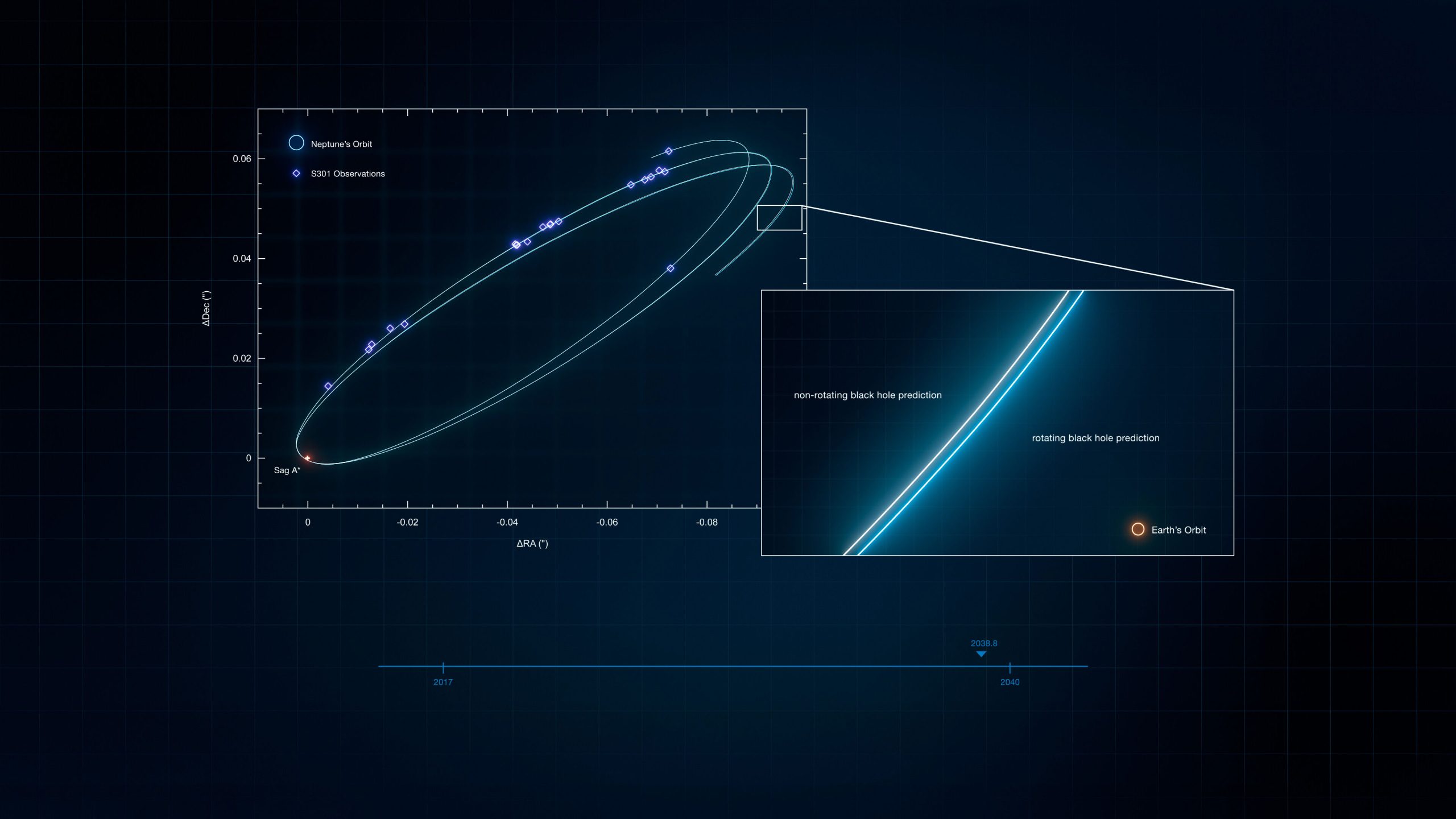
In fact, over the past few decades, continuous observations of high-speed stars in the center of the Milky Way have repeatedly verified important predictions of general relativity. These include gravity-induced orbital shifts, time dilation, and spectral changes. The new record holder discovered this time further expands the scope of scientists to test related theories.
As the performance of observation equipment continues to improve, it is expected to discover more celestial bodies that are closer to black holes and faster in the future. These goals will help humans gain a deeper understanding of the structure of space-time around black holes and how extreme gravity affects the motion of stars.
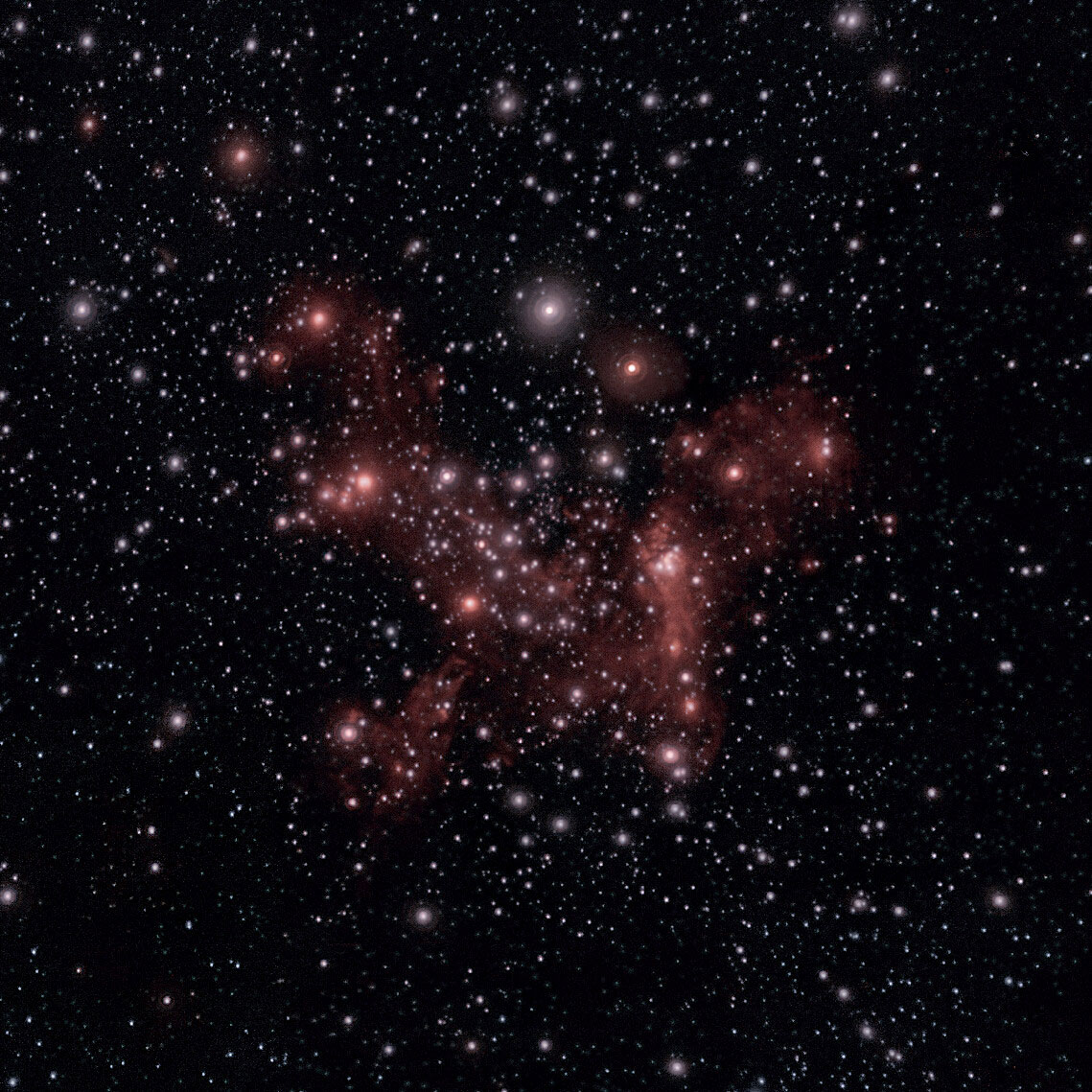
In addition to its theoretical physical significance, this discovery also helps reveal long-hidden structural features at the center of the Milky Way. Because the central region of the Milky Way is obscured by a large amount of dust, humans cannot directly observe its internal conditions. Therefore, scientists usually track the orbits of stars to infer the nature of black holes and the distribution of their surrounding environments.
The research team believes that every time a new high-speed star is discovered, it is equivalent to placing a natural detector in the center of the Milky Way. By analyzing the motion trajectories of these stars, astronomers can more accurately measure the black hole's mass, gravitational distribution, and surrounding material conditions.
As the next generation of large telescopes are put into use one after another, the scientific community expects to obtain more high-precision data about the center of the Milky Way in the next few years. And this record-breaking high-speed star is also helping humans further uncover the most mysterious areas of the Milky Way.
Comments