
Abstract:
Astronomers originally expected that there should be a huge number of tiny icy objects in the outer reaches of the solar system beyond the orbit of Neptune. However, using the James Webb Space Telescope and the Hubble Space Telescope to carry out the most in-depth investigation to date, the research team found that the reality is not consistent with some theoretical predictions: the number of these micro-celestial bodies is far less than previously expected.
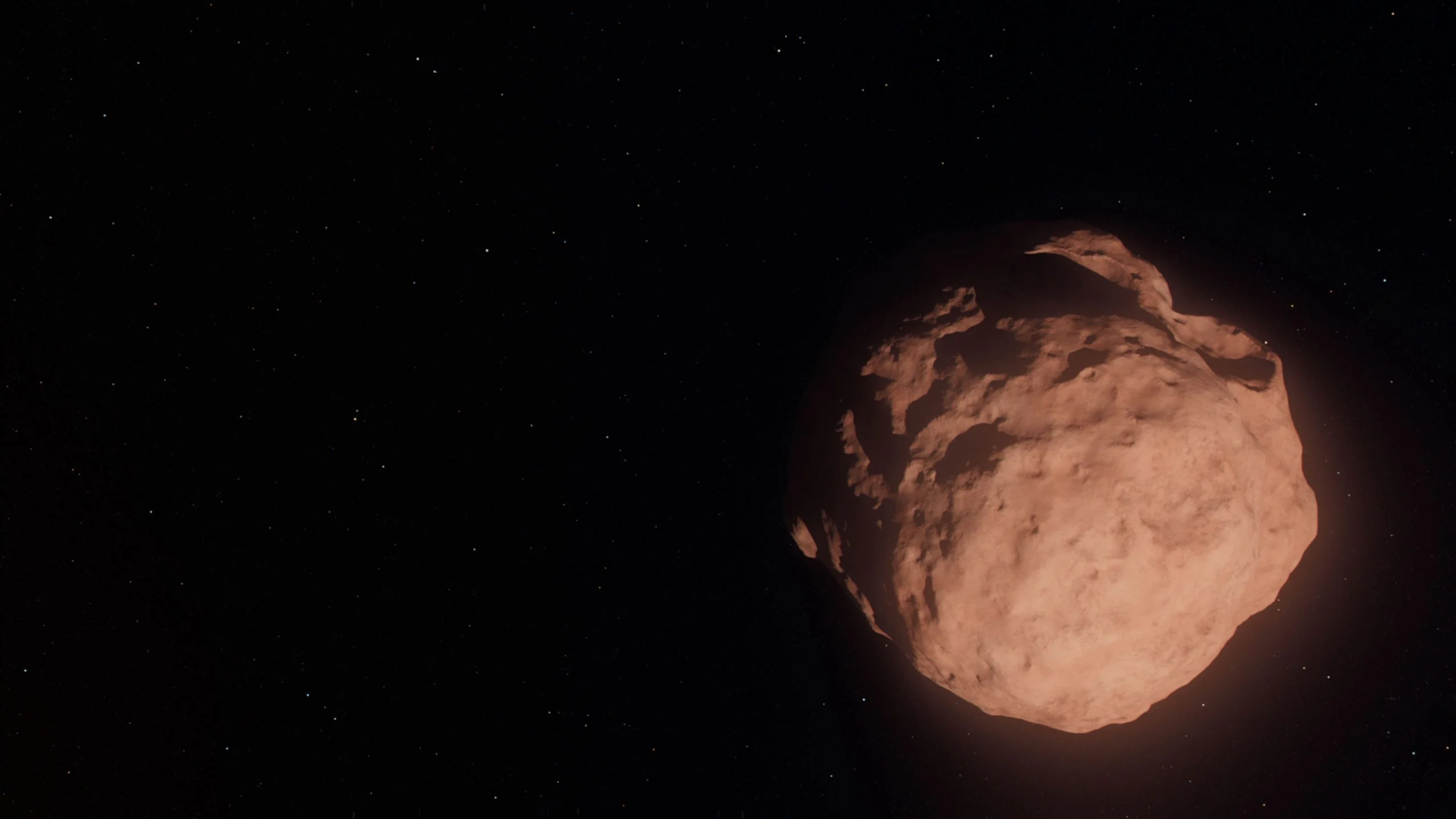
This research focuses on Trans-Neptunian Objects (TNOs), which are small icy objects distributed beyond the orbit of Neptune and are considered to be the "primitive building materials" left over from the early formation of the solar system. Because these objects retain important information about the birth stage of the solar system, they have always been important clues in studying the planet formation process.
In order to search for these extremely distant and faint objects, the research team jointly used the Hubble Space Telescope and the Webb Space Telescope for the first time to conduct simultaneous observations of the same sky. Hubble is responsible for observing the visible light band, while Webb is responsible for the infrared band. By combining the data of the two, researchers can determine the orbits, sizes and surface color characteristics of these celestial bodies.
During the investigation, the research team discovered a total of 27 previously unknown trans-Neptune objects. Some of these targets are among the smallest and faintest such objects ever directly observed. The minimum target diameter is about 5 kilometers, which is only one-fifth of the observation limit of the most advanced ground telescopes.
These objects are extremely faint, and most are more than 100 million times dimmer than objects visible to the naked eye. How dim is one of the targets? Researchers describe finding it as difficult as standing on Earth and observing a small group of fireflies glowing on the moon's surface.
Originally, scientists expected that the number of such objects should increase significantly as their size decreases. However, actual observations show that the number of small-sized trans-Neptunian objects is significantly less than predicted by some planet formation models.
This discovery is of great significance to understanding the history of the formation of the solar system.
The current mainstream theory is that dust and tiny particles orbiting the sun in the early solar system gradually gathered to form celestial bodies called "planetes". These planetesimals further collided and fused to form planets. However, the region outside Neptune failed to complete this process, so a large number of relics of the early stages of formation are still preserved.
Researchers originally thought that multiple collisions should continuously shatter these small celestial bodies, thus producing more and smaller fragments. However, the latest findings indicate that this does not appear to be happening as expected.
In addition to their small number, the colors of these objects also surprised researchers.
According to some models, after billions of years of collisions, the surface composition of small celestial bodies should be significantly different from that of large similar celestial bodies. However, actual observations have found that these newly discovered small trans-Neptunian objects have very similar color characteristics to larger members.
Since color is considered an important "fingerprint" of surface composition, this result means that these tiny celestial bodies may have retained the original characteristics of their formation over their long history and have not completely changed their surface properties due to frequent collisions.
The research team further analyzed two different types of trans-Neptunian objects.
One category is called "cold" trans-Neptunian objects. These celestial bodies always move in a nearly circular orbit near the main plane of the solar system, and are considered to have basically maintained the state they were in when they were born. The other category is called "hot" trans-Neptunian objects. Research believes that they were originally formed in the area between Uranus and Neptune. Later, as the outer giant planets migrated, they were ejected to more distant orbits by gravity. Now their trajectories are more inclined and highly elliptical.
Surprisingly, regardless of whether they belong to the "hot" group or the "cold" group, these celestial bodies show similar size distribution patterns.
The researchers said this means that the planetesimal formation process may not be very sensitive to the original star disk environment at the time. Regardless of whether the formation environment is denser or sparse, hotter or colder, the size distribution of the resulting planetesimals is quite similar.
What is even more interesting is that these celestial bodies still seem to retain the characteristic information of their "birthplace". Even after billions of years of orbital perturbations or even being ejected to distant areas, they still retain traces of their formation period in physical features such as color.
Researchers believe that this shows that these celestial bodies "remember" how they were born to some extent.
This discovery not only challenges some prediction models about the number of objects beyond Neptune, but also provides new constraints for understanding the planet formation mechanism in the earliest stages of the solar system.
As the Webb and Hubble telescopes continue to conduct deeper observations, astronomers hope to further explain why these microscopic objects are not abundant, why they can maintain their original surface characteristics for so long, and what these phenomena reflect the true history of the solar system's birth.
Comments