
Abstract:
As drones increasingly enter fields such as industrial inspections, agricultural monitoring, and scientific research and exploration, a seemingly simple but more energy-saving method of robot movement is attracting renewed attention. A research team from the University of Washington recently announced a miniature jumping robot called "DirectHop". Its design is inspired by natural jumping creatures such as fleas, but it adopts a completely different technical route from existing similar robots.
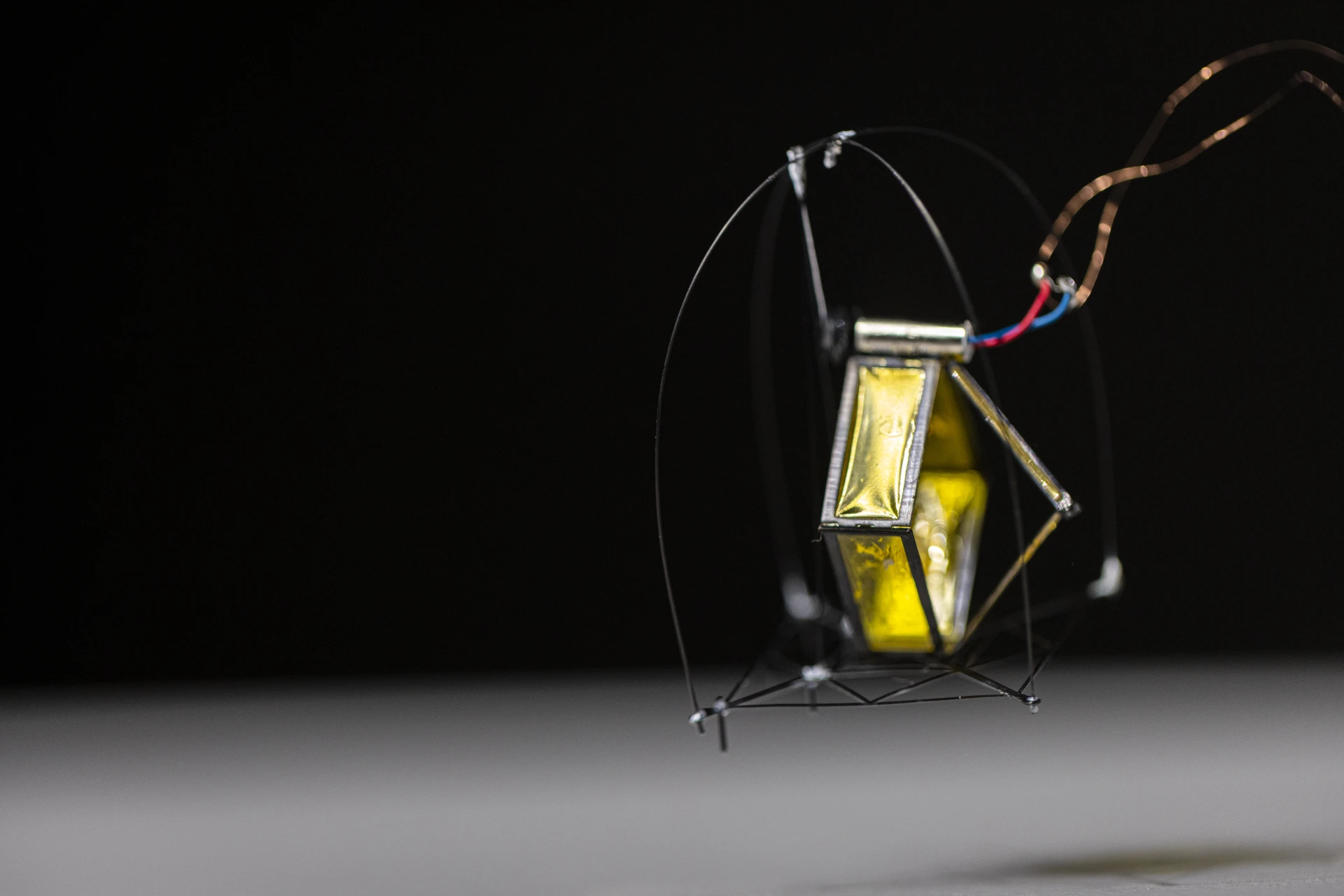
Researchers pointed out that in many scenarios, the energy consumption of jumping movement is much lower than that of flying. Take insects as an example. Mosquitoes need to continuously consume energy to maintain flight, while fleas only need to release energy at the moment of taking off to complete their movement. Theoretically, the energy efficiency of jumping can be nearly two orders of magnitude higher than flying. This means that in the future, a large number of cheap small jumping robots may be able to perform complex tasks at a much lower cost than drones, such as searching for gas leaks in oil refineries, monitoring irrigation and fertilization in farmland, and even undertaking planetary exploration missions.
To test this concept, University of Washington engineers developed DirectHop. The robot weighs about 1 gram and is only the size of a palm. It can complete multiple jumps in a row, and its jump height is high enough to cross the steps of standard stairs. The robot uses a micro motor and three foldable legs to work together to achieve precise take-off, with a height control error of only centimeters.
Unlike most jumping robots that imitate the structure of a flea, DirectHop does not use a spring energy storage mechanism. Traditional designs usually use springs to store energy and then release it instantly through the lock, thereby achieving amazing jumping capabilities. Although this solution can achieve long-distance jumps, it is difficult to accurately control the height and distance of each jump because the spring release is often an "all or nothing" action. In addition, manufacturing complex spring and latch structures in extremely small sizes is inherently challenging.
The research team therefore chose to abandon the spring system completely and instead used a micro DC motor to directly drive the jump. The developers say they found that the ultra-small motor can actually provide acceleration fast enough to directly generate the power needed to take off. This method is closer to the mechanism of large jumping animals such as frogs that rely on direct force exertion by muscles, rather than the model of fleas that rely on energy storage and then release.
The biggest advantage of this design is controllability. By adjusting the motor operation mode, the robot can freely adjust the jumping height, instead of being able to perform only a fixed mode of ejection action. The experimental results presented by the researchers show that DirectHop can be lightly lifted off the ground by a few millimeters, and can also take off with full force and jump over the steps of ordinary stairs.
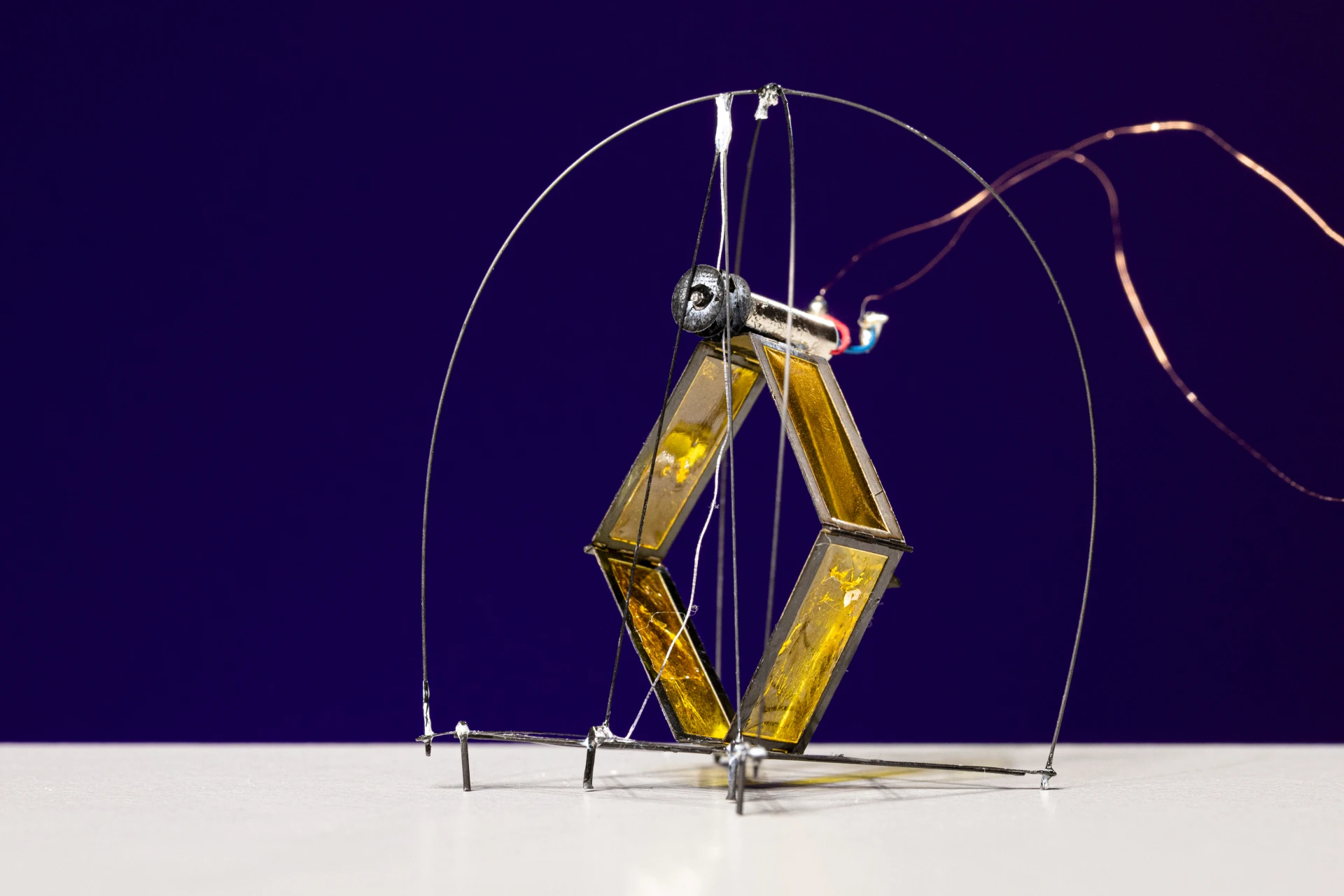
In addition to precise control of jumping, the research team believes that autonomous jumping robots also face two other key problems: the ability to turn over and the ability to move continuously. Many microrobots tend to roll over after landing and are unable to continue their mission once they lose their balance.
To solve this problem, DirectHop is equipped with a special rollover mechanism. When the robot lands, if its posture is abnormal, it can use the motor to drive its body to swing and return to its normal state autonomously. Test data shows that the success rate of the robot's first attempt to turn over is about 90%.
At the same time, DirectHop also has the ability to reload and jump continuously. After completing a take-off and landing, the system can quickly return to the ready state and continue with the next action. The current prototype is already capable of completing multiple rounds of jumping tasks in succession, which is unusual among robots of its size.
The research team said that according to their estimates, the transportation cost of this jumping robot is much lower than that of flying robots of the same scale. Since there is no need to continuously hover to consume energy, jumping robots may show obvious advantages in future application scenarios that require long-term autonomous operation.
However, DirectHop is still in the prototype stage. Researchers said that although the robot has solved the three core problems of controllable jumping, autonomous turning and continuous jumping, it still needs to further overcome challenges such as power supply integration, steering control and autonomous navigation in the future.
Research leader Sawyer Fuller said that in his opinion, the three most difficult technical obstacles for jumping robots are controlling the jumping distance, turning over autonomously, and continuously re-jumping. DirectHop has successfully crossed these thresholds through a new design. As the system continues to improve in the future, this type of micro-robot is expected to become another important autonomous mobile platform in addition to drones, playing a role in industry, agriculture, disaster relief and even space exploration.
Comments