
Abstract:
On the occasion of the 70th anniversary of the founding of China's aerospace industry, according to CCTV reports,
Tianwen-3 is planned to be launched around 2028 and bring Mars samples back to Earth around 2031. It is expected to be the first time humans have completed a Mars sampling return mission.
Currently, Tianwen-3 has entered the preliminary prototype development stage. Due to the limitation of the distance from Mars, the mission uses a plan of two launch vehicles to be launched in two phases to send the probe to Mars. The mission is extremely complex.
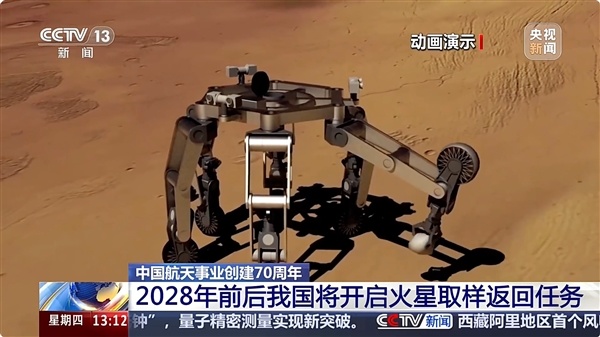
During China Space Day in 2026, the National Space Administration announced the selection results of cooperation projects for the Tianwen-3 mission. Five cooperation projects from different countries and regions were selected, including the Mars PEX spectrometer, the Mars molecular ion composition analyzer, the laser heterodyne spectrometer, the Mars surface object hyperspectral imager and the laser corner reflector array.
China is building a planetary protection laboratory to undertake tasks such as sample sterilization, unsealing, processing and biological risk assessment to provide support for Mars sample research.
Sun Zezhou, an expert in the deep space field, said that Mars is the celestial body most similar to the earth among the eight planets in the solar system. At first, Mars was thought to be very far away, but looking at the solar system, it takes 7 to 9 years to reach Jupiter, and it takes ten or even thirty years to reach Uranus and Neptune. In comparison, Mars is already very close.
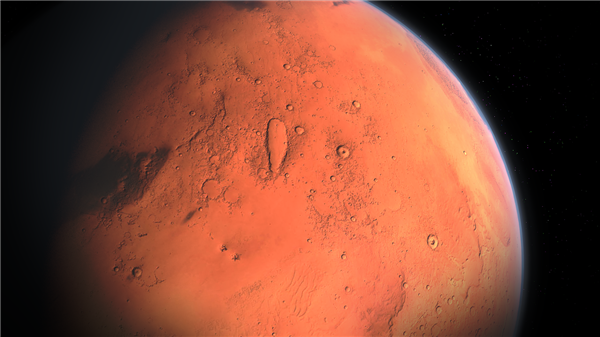
According to reports, about 3.5 billion years ago, there were certain similarities in the environmental conditions of Earth, Mars and Venus. Since then, the three planets have embarked on different evolutionary paths.
Studying why Mars quickly evolved into its current cold and dry state can provide an important reference for understanding long-term environmental changes on Earth.
Comments