
Abstract:
U.S. police are using an artificial intelligence tool called Raven to try to determine which specific property the photo was taken from just a photo of the interior of the house. Even if the photo doesn't include a view from the window, street signs or GPS location information, the washing machine, bathroom fixtures and interior decoration in the picture may be clues to identify the house. The technology can match ordinary indoor photos with listing information on real estate and short-term rental platforms, providing potential investigative leads for law enforcement officials while also raising concerns about personal privacy and mass surveillance.
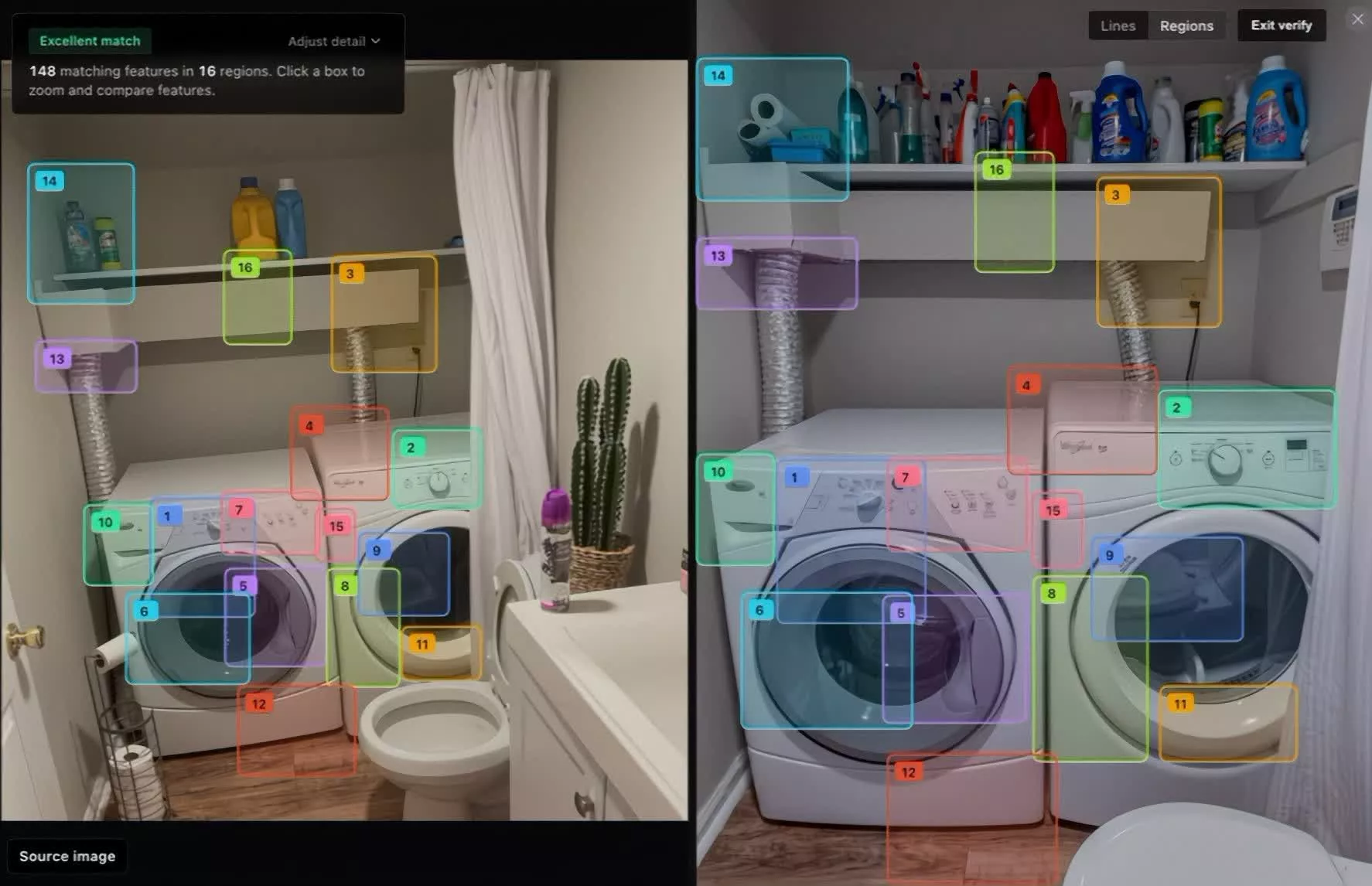
According to TechSpot report on October 12, 2026, this tool called Raven was developed by the American company Graylark Technologies. The system, formerly known as GeoSpy, was initially used to infer shooting locations based on architectural styles, topography and other geographical features in photos. As new features are added, it begins to try to extend the scope of identification to the interior of buildings, helping investigators locate specific properties from interior photos.
According to previous media reports, the Los Angeles Police Department and the Miami-Dade County Sheriff’s Office have purchased the rights to use Raven. However, there is still a lack of sufficient public data on whether law enforcement agencies use this tool extensively in actual cases and to what extent it can improve the efficiency of investigations.
What attracted attention this time was a demonstration video recently shown by Graylark CEO Daniel Heinen. In the video, the operator pulls an indoor photo from social media platform X that shows only a washer and dryer. Operators upload photos to Raven, select indoor and outdoor property locating functions, and specify the area to be searched.
After a few seconds, the system narrows the map down to an area in Charlotte, North Carolina, USA, and lists possible matching properties. The top result showed a short-term rental description with text such as "Renovated! Walking distance to downtown." The media later checked and found that this text was consistent with a specific listing on the Airbnb platform, and the indoor photos displayed in the listing also corresponded to the same property as the photos to be located.
In another demo, an operator uploaded a photo of a bathroom from social media. Raven then pointed the search scope to the Montecito, California area and gave a listing named "Montecito Beach Sand House" as a result. Relevant media verified that the text returned by the system directly corresponded to a listing introduction on the short-term rental platform Vrbo.
This means that the way Raven works is not to simply search whether there are exactly the same pictures on the Internet, but to try to identify unique features in the photos, and then find other possible corresponding photos and property information from real estate websites and short-term rental platform listings.
For example, an interior photo might include a specific model of washing machine, a unique bathroom layout, wall coverings, cabinet styles, or other decorative details. Individually, these elements may not be geographically specific, but if compared with a large number of listing images, it may be possible to narrow down the search to the properties that best meet your criteria.
This technology is significantly different from traditional reverse image search. Reverse image search is mainly used to find the same or similar images that have already appeared on the Internet, while Raven attempts to establish associations through scene characteristics between different photos. Even if the photo to be located is not identical to the image on the listing page, the system may still identify the same property based on their shared indoor environment.
This is also an important reason why this technology raises privacy concerns. In the past, one might have thought that it would be difficult to infer a specific address from an ordinary indoor photo, as long as the photo didn't come with GPS coordinates, streets or landmarks. But as artificial intelligence can process more complex visual features and combine them with large-scale public housing data, this judgment may no longer be reliable.
Graylark said that the company is strengthening Raven’s positioning capabilities in indoor scenes. Haining's introduction on social media said that this function can geolocate indoor photos of millions of short-term rental properties around the world. He believes that for law enforcement officers investigating human trafficking and exploitation cases, being able to link an unidentified interior photo to a specific location can provide investigative leads worth further verification.
For example, investigators may have a photo of an interior from social media, chat logs, or other sources, but not know which hotel, apartment, or rental the photo was taken from. If the system is able to find a possible match, police can further verify the information to determine whether there is a location relevant to the case.
However, the results provided by such techniques should be viewed as investigative leads rather than independent evidence of fact. Furniture, finishes, and fixtures in photos may appear in multiple listings, or the home may have been renovated or features changed since the time the photo was taken. Therefore, the matching results given by the system still need to be confirmed by other evidence.
Raven's technical foundation can be traced back to the initial development of GeoSpy. The system previously analyzed architectural styles, soil, vegetation and other geographical features to infer where a photo might have been taken. To achieve this goal, Graylark uses a large number of images from around the world to train the model.
Haining previously stated in an interview with technology media Indicator that indoor positioning capabilities were not the team’s original development goal. While testing a new version of GeoSpy, he accidentally uploaded a photo of his girlfriend taking a selfie in the bathroom, and the system pointed to San Francisco. Surprised by this, he began testing by downloading interior photos from real estate websites and found that the system was able to identify the correct city in many cases.
Haining speculated that the model was exposed to geotagged images containing indoor scenes during training, and that even if these images were not originally used specifically for indoor positioning, the model might have learned visual features associated with different locations.
This experience shows that artificial intelligence models may develop capabilities beyond the initial expectations of developers during the training process. However, just because the model can infer a certain city or region does not mean that it can necessarily accurately locate the specific house address. Narrowing search results to a city, identifying a building, and pinpointing a house are problems of varying difficulty.
According to the current public demonstration, Raven can indeed find the specific house corresponding to the photo in some cases, but it cannot locate any house in the world based on any indoor photo. TechSpot noted that the tool’s capabilities still appear to be limited by factors such as the range of properties it can search, and that specific results may vary based on region, number of listings, and photo content.
In fact, the performance of this system also depends on whether the data on the real estate platform is rich enough. If a property has a lot of photos posted on sites like Airbnb, Vrbo or Zillow, the system may have more data to match. Conversely, if a home has no public listing photos or the interior lacks distinctive features, locating it may be significantly more difficult.
It is important to note that Raven's capabilities may involve the automated collection and utilization of data from real estate platforms, and these platforms do not necessarily allow third parties to obtain information in this manner.
Airbnb told the media that protecting the privacy of platform users is very important. The company notes that listing photos often exclude location metadata, and hosts can choose to only show users a general location, with specific addresses typically not provided until a booking is confirmed. Airbnb also said it has deployed technical measures to try to limit automated crawling of website content and is reviewing the situation.
Airbnb also emphasized that the company has no cooperative relationship with Graylark and that its terms of service prohibit unauthorized data capture.
The real estate platform Zillow also stated that scraping its website data violated the platform’s terms of use, and said it would handle relevant issues through legal means if necessary. Short-term rental platform Vrbo did not respond to multiple requests for comment from the media.
These responses show that the development and application of artificial intelligence positioning tools may involve multiple issues such as platform data usage rules, user privacy protection and related legal responsibilities. Even if certain listing photos are publicly accessible to ordinary Internet users, that does not mean that the data can be automatically collected, integrated, and used to build new targeting systems without restriction.
At the same time, Raven's usage rights have also been adjusted.
404 Media previously reported that when GeoSpy was first made available to the public, users asked in the company's Discord community how to use the tool to track women. After the media contacted Graylark with questions, the company restricted access to the tool to government agencies and corporate users.
The change reflects the apparent dual use of technology that can infer places from photos. It can help police investigate serious cases such as human trafficking and exploitation. It can also be used to track private targets, infer other people's addresses, and even harass unsuspecting people.
Moreover, limiting access to ordinary users does not automatically eliminate all risks. When law enforcement agencies use such tools, they also need clear usage rules, access records, and oversight mechanisms to prevent systems from being used for investigative or private purposes that lack justification.
Another issue worth noting is that it's unclear whether Raven's marketing demo is representative of its general performance in real cases. Demonstration videos usually select cases that can easily demonstrate the technical effects, while photos in actual investigations may be blurry, have limited information, or lack public information for matching.
The Miami-Dade County Sheriff’s Office previously told 404 Media that the agency’s use of GeoSpy is generally limited and in the exploratory phase. The agency said that while the tool has been evaluated in a handful of cases, to date, no major investigative breakthroughs or arrests have resulted, and no case outcomes have relied solely or primarily on information generated by the tool.
This means that even if Raven can quickly find specific houses in some demonstrations, it cannot be concluded that it has become a stable and reliable positioning method in police investigations. It is currently more suitable as a supplementary tool to help investigators screen possible locations and then verify them through other methods.
From a broader perspective, Raven exemplifies how artificial intelligence is changing the privacy attributes of public images. In the past, a photo of a bathroom or a washing machine without a geotag was often difficult to directly map to a specific address; but when a large number of house photos, real estate information and visual recognition models are combined, these seemingly ordinary details may become location clues.
This does not mean that all indoor photos reveal the location where they were taken, nor does it mean that artificial intelligence can already track anyone’s home at will. However, as databases of publicly available images continue to expand and AI is increasingly able to make connections from disparate information, individuals will need to be more careful in their judgments of location cues in photos.
Ultimately, the core question raised by Raven is not just whether artificial intelligence can find a house based on an indoor photo, but how to define the boundaries of its use when this ability is used in law enforcement, commercial services, or other scenarios. For investigators, it could provide valuable clues; for casual users, it's a reminder that even if a photo doesn't have GPS information, the indoor environment itself may contain enough identifiable features.
With the further development of relevant technologies, the balance between platform data protection, law enforcement supervision, accuracy of positioning results, and personal privacy rights will become unavoidable issues in this field.
Comments