
Abstract:
The United Nations Environment Program recently released the "2026 Emissions Gap Report: The Irreversible Tipping Point", warning that the global average temperature rise is expected to exceed pre-industrial levels by 1.5 degrees Celsius. However, the report also pointed out that as long as countries immediately take more in-depth and rapid emission reduction actions, there is still a chance to control the excessive temperature increase to a minimum level and return it to within 1.5 degrees Celsius by the end of this century.
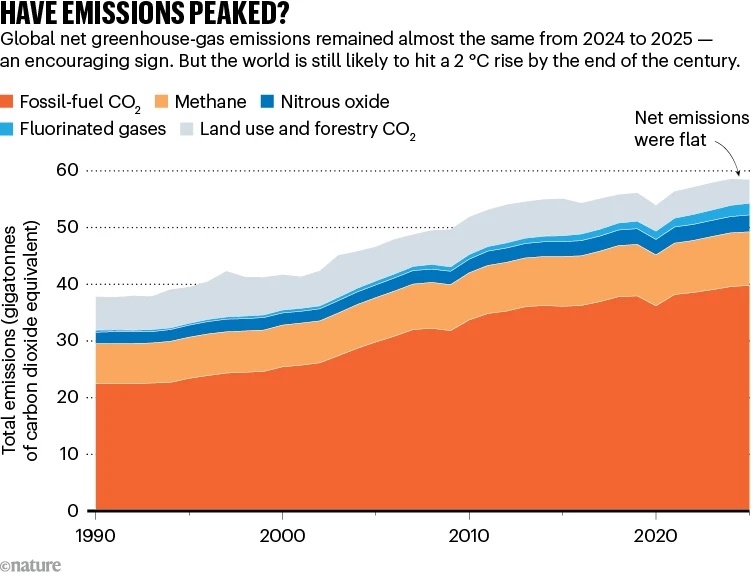
The report proposes that under the most optimistic and achievable "minimum excess" scenario, global temperatures will peak around the middle of this century, with a warming range of approximately 1.7 to 1.8 degrees Celsius. To achieve this goal, global greenhouse gas emissions must fall by 18% by 2030 compared with 2025 levels, by 45% by 2035, and by a further 69% by 2040.
UN Secretary-General Guterres emphasized when the report was released that exceeding 1.5 degrees Celsius does not mean failure or giving up. He said that mankind still has a chance to control the extent and duration of excess exceedances to a minimum and to reduce global warming to below 1.5 degrees Celsius before the end of this century.
The report believes that since the 2015 Paris Agreement established the goal of controlling global warming, countries have made significant progress in the development of renewable energy. At the same time, coal and oil are growing at a slower pace than previously expected in the global energy supply, and climate policies implemented in many regions are already starting to have an impact on reducing emissions. These changes indicate that there are now greater opportunities than in the past to further intensify climate action.
Anderson, Executive Director of the United Nations Environment Program, pointed out that every additional tenth of a degree Celsius increase in temperature, or every time the temperature rise continues for a longer period, will significantly intensify climate risks and impacts. She mentioned that severe floods, extreme high temperatures and wildfires experienced by many countries this year are concrete manifestations of the deepening impact of climate change. She emphasized that the international community must do everything it can to lower the temperature peak and ultimately control global warming levels back to within 1.5 degrees Celsius, and this goal is still possible.
The report also warned that if countries continue to adopt current policies, the global average temperature increase may reach 2.8 degrees Celsius by this century, and rise further thereafter. Even if all countries fully fulfill their currently submitted nationally determined contribution targets and continue to implement corresponding measures, global warming can only be limited to about 2.6 degrees Celsius.
This year's assessment is more severe than last year's forecast. The report pointed out that the United States' withdrawal from relevant climate agreements and the revision of historical emissions data estimates are important reasons for the deterioration of forecasts. In addition, since the release of the last emissions gap report, newly submitted nationally determined contributions by countries have generally not significantly improved global emissions reduction prospects.
Nevertheless, the report stresses that it is not impossible to control global warming back to well below 1.5 degrees Celsius. More and more research evidence shows that existing climate policies have effectively reduced emissions, which provides a realistic basis for further strengthening actions.
The report calls on countries to accelerate the implementation of key goals proposed during the first global stocktake. Relevant measures include tripling the global installed capacity of renewable energy to the current level by 2030, doubling the rate of improvement in energy efficiency, accelerating the transition away from fossil fuels in the energy system, reducing emissions of non-carbon dioxide greenhouse gases such as methane, and taking measures to curb deforestation and forest degradation.
However, the report points out that progress in most areas still lags behind the pace needed to achieve the goals. The new round of global stocktaking that is about to be launched is expected to further clarify priority areas for action, extend the quantitative goals to 2035 and 2040, and improve the implementability of the action plan through more specific and measurable indicators.
In order to comply with the "minimum exceedance scenario" set in the report, the transformation of the energy structure needs to be significantly accelerated. The report estimates that by 2035, the proportions of coal, oil and natural gas in global energy supply will need to fall by at least 55%, 15% and 5% respectively compared with 2025 levels; by 2040, these three figures will need to further expand to 75%, 30% and 35%.
The report finally emphasizes that the next decade or so will be a critical period in determining global climate trends. Although it is becoming increasingly difficult to avoid exceeding the 1.5 degrees Celsius target, through more decisive and rapid global coordinated actions, mankind still has the opportunity to mitigate the long-term impacts of climate change and gradually bring global temperatures back to a safe range.
Comments