
Abstract:
Scott Cooper, vice chairman of the U.S. Artificial Intelligence Task Force, said in an exclusive interview that the task force will work closely with the U.S. Department of Justice and other law enforcement agencies to promote artificial intelligence companies to implement safety regulatory requirements. Cooper said that the focus of the working group is not to evaluate cutting-edge AI capabilities, but to develop regulatory standards for developers based on existing criminal and civil laws.
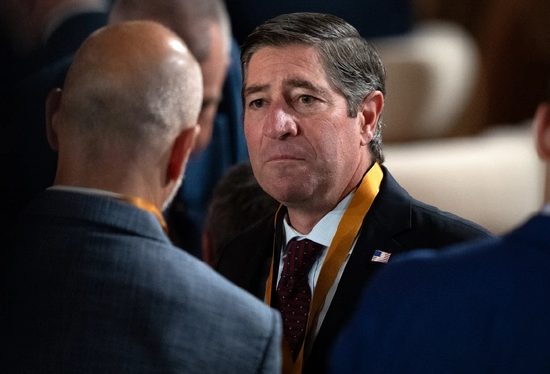
Cooper said in an interview: "You will see that we are coordinating various law enforcement agencies to clearly clarify the boundaries of the rules and our regulatory expectations for companies to the industry." Cooper is also in charge of the U.S. Office of Personnel Management.
Cooper said cross-law enforcement collaboration is only one part of the task force's overall security agenda. The working group will verify the commitments made by companies in recent AI agreements; conduct a comprehensive risk assessment of the technology; and ensure that the government has the resources to deal with model failures.
The White House charter states that the working group will work in conjunction with the Department of Justice and the Federal Trade Commission. Cooper also pointed out that the U.S. Securities and Exchange Commission and other agencies with existing laws that can be used to restrict AI developers will also be involved.
The vice chairman’s statement indicates that the United States will adopt a pragmatic and interventional AI regulatory approach, although the working group charter does not propose to promote new legislation - and the introduction of new laws is the core demand of many AI safety advocates.
Cooper is one of four federal officials appointed by Trump to plan how the government and technology industry will respond to AI threats. The working group will run for 120 days and will eventually issue an AI risk report covering potential threats to civil liberties and network security, regulatory standards for advanced models, and the possible impact of excessive regulation. Under the charter, White House chief of staff Susie Wiles has the authority to extend the task force's term or transfer functions to other agencies.
Director of National Intelligence Jay Clayton leads the working group as the new "AI czar"; Cooper, Under Secretary of Defense for Research and Engineering Emile Michael, and Federal Trade Commission Chairman Andrew Ferguson serve as vice chairmen. Cooper said the working group plans to hold its first formal meeting this week.
Legal experts warn that it will be a difficult challenge to rely on existing laws to hold AI developers accountable. Trump proposed this plan when he first proposed the establishment of a government AI task force in September. However, product liability and anti-hacking related legislation did not consider AI model scenarios when they were first formulated.
Cooper said: "Please give us 120 days to at least prove to you and the public that we are not just verbal statements, but have a set of practical measures to restrain corporate behavior."
Cooper acknowledged that lawmakers and the public are widely concerned about the catastrophic risks of AI, but he believes that the working group can promote industry innovation and release technological dividends while controlling risks.
Congressional policymakers have proposed a number of bipartisan legislative proposals to control the risks of cutting-edge AI models. When former Anthropic researcher Jacob Coxon resigned, he issued a stern warning about the existential threat of AI, further promoting calls for Congress to strengthen regulation.
Cooper said: "We are very confident in this regulatory path," adding that the working group will coordinate government and industry communication to investigate potential risks.
The president himself even took issue with the term "artificial intelligence" itself, signing an executive order in September to officially rename AI to his preferred term - "superintelligence." It is believed that the name change was in response to public panic about the technology, but Cooper said the purpose of the move was not to change the public's perception of AI.
"In the final analysis, we will use practical actions to change public perception: prove to the American people that we mean what we say. We should indeed continue to lead in this field, but at the same time, we can also achieve leadership in a responsible way from the perspective of security, economy, and national sovereignty." Cooper said.
Cooper is deeply involved in the technology field and was a managing partner of the well-known venture capital firm Andreessen Horowitz (a16z). He also leads the White House's "American Science and Technology Talent Program", which aims to recruit young AI and technology experts to serve in various federal government departments.
In an interview in February this year, Cooper said that the talent project planned to recruit 1,000 employees in the first phase. He said that about 380 new people have been recruited so far, and another 150 to 200 people are in the recruitment process.
“I am still very confident that this goal is completely achievable. Based on the current level of job applications we have received, we actually have a chance to exceed our goal.” Cooper said.
Comments